


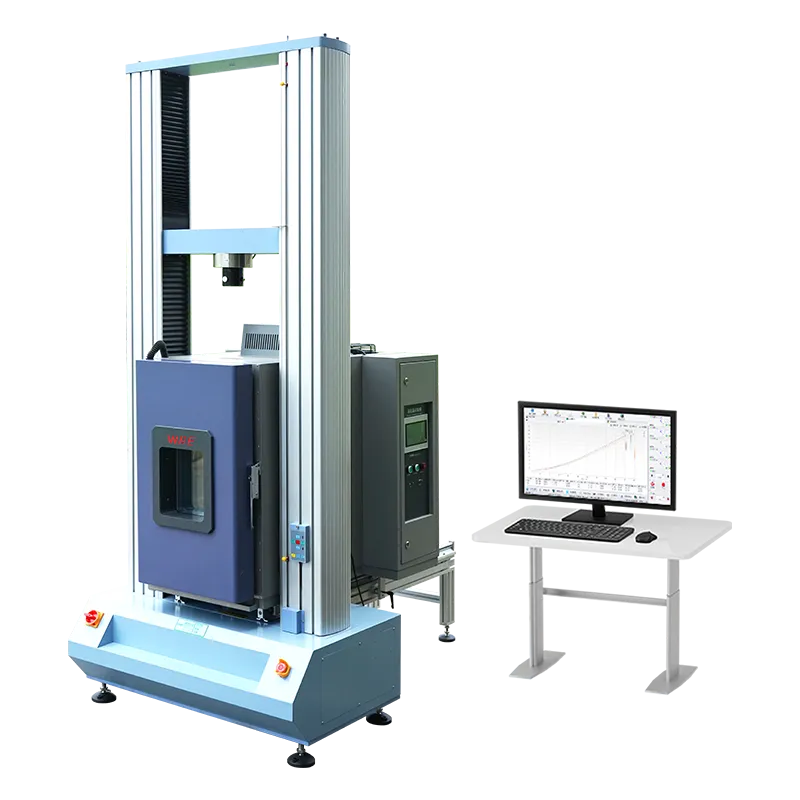
A comprehensive guide to material validation and mechanical performance analysis using state-of-the-art testing technology.
The Strategic Importance of Material Reliability
In the contemporary industrial landscape, the pursuit of structural integrity and material durability has become more than a standard—it is a competitive necessity. Whether in aerospace, automotive manufacturing, or the development of consumer electronics, understanding how a material behaves under stress is critical. To achieve this level of precision, engineers and researchers rely on the universal testing machine. This sophisticated equipment serves as the primary tool for evaluating the mechanical properties of various specimens, providing quantitative data that informs design decisions and ensures safety compliance across global markets.
The utility of a universal testing machine lies in its versatility. Unlike specialized single-purpose testers, these machines are designed to accommodate a wide array of fixtures, allowing for tensile, compression, and flexural tests on a single platform. By applying controlled loads and measuring the resulting deformation, the machine generates a stress-strain curve that reveals the elastic limit, yield strength, and ultimate breaking point of the material. This foundational data is essential for validating that a product can withstand the rigors of its intended environment without premature failure.
As manufacturing processes evolve toward more complex composites and miniaturized components, the demand for higher accuracy in testing has increased. Modern testing systems integrate advanced sensors and real-time data acquisition software to minimize human error and provide repeatable results. For organizations aiming to maintain high-quality assurance standards, investing in a robust testing framework is the first step toward long-term operational excellence and product innovation.
Precision Compression Testing Protocols
Compression testing is a fundamental procedure used to determine how a material reacts when it is crushed or flattened. This is particularly relevant for brittle materials such as concrete, ceramics, and certain types of polymers used in load-bearing applications. When utilizing a universal testing machine for compression analysis, the specimen is typically placed between two hardened platens. The machine applies an increasing downward force until the specimen either deforms significantly or fractures completely.
One of the most critical aspects of compression testing is ensuring the axial alignment of the specimen. Any eccentricity in the load application can introduce bending moments, which skew the results and lead to inaccurate strength measurements. Professional testing environments use self-aligning platens and high-precision crosshead controls to maintain perfect verticality throughout the test duration. This ensures that the data reflects the true compressive strength of the material, rather than the limitations of the testing setup.
Furthermore, compression testing provides insights into the material's modulus of elasticity and its ability to absorb energy before failing. For industries like the battery manufacturing sector or the semiconductor industry, understanding the compressive limits of housing materials and internal components is vital for preventing thermal runaway or mechanical damage during assembly. By simulating real-world pressure scenarios, the testing machine allows engineers to optimize wall thicknesses and material density for both weight reduction and maximum protection.
Advanced Flexural Strength Analysis
Flexural strength, also known as modulus of rupture or bend strength, is a measure of a material's ability to resist deformation under load. It is a critical parameter for materials that are expected to support weight over a span, such as beams, structural panels, and electronic circuit boards. In a flexural test, a universal testing machine typically employs a three-point or four-point loading system. The specimen is supported at its ends, and a load is applied to the center or at two specific points, causing the material to bend.
The choice between three-point and four-point bending depends on the material's homogeneity and the specific requirements of the testing standard (such as ASTM or ISO). Three-point bending is often preferred for its simplicity, but it concentrates the maximum stress directly under the loading nose. In contrast, four-point bending distributes the stress over a larger area between the two inner loading points, providing a more comprehensive view of the material's structural consistency. This is particularly useful for detecting internal flaws or voids in composite materials.
Digital extensometers and laser displacement sensors are frequently used in conjunction with the testing machine to capture precise deflection measurements. This data is then used to calculate the flexural modulus, which describes the material's stiffness in a bending scenario. For the 3C electronics industry, where thin-film plastics and glass displays are common, flexural testing ensures that devices can withstand being dropped or sat upon without the screen cracking or the internal chassis warping beyond repair.
Professional Insights for Equipment Selection
Selecting the right mechanical testing equipment requires a deep understanding of both your testing volume and the technical specifications of the materials in question. A primary consideration is the maximum load capacity. While a desktop testing unit may be sufficient for small plastic components, high-strength metals or large-scale composite panels require floor-standing models with significantly higher force ratings. It is essential to choose a system that allows for interchangeable load cells to maintain accuracy across different force ranges.
Another crucial factor is the integration of environmental control. Many materials exhibit different mechanical properties at extreme temperatures. Utilizing an universal testing machine with temperature chamber allows researchers to perform tensile and compression tests in simulated arctic or tropical conditions. This is vital for the automotive and aerospace sectors, where components must perform reliably at -40 degrees Celsius or survive the intense heat of an engine compartment.
Software capabilities should not be overlooked. A modern testing system should offer a user-friendly interface that allows for the creation of custom test sequences, automatic calculation of results, and comprehensive report generation. The ability to export raw data for further analysis in CAD or FEA software is a hallmark of a professional-grade testing solution. This connectivity bridges the gap between laboratory testing and digital product development, accelerating the time-to-market for new innovations.
Leading the Way with WBE Testing Solutions
At WBE, we specialize in providing high-end environmental and mechanical testing solutions tailored to the needs of modern industry. Our commitment to precision and reliability has made us a trusted partner for state-owned enterprises and private manufacturers alike. We understand that a universal testing machine is more than just a piece of hardware; it is the backbone of your quality control process.
Our product lineup includes the highly versatile electronic universal testing machine, designed for high-precision force and displacement measurements. Beyond mechanical testing, we offer a vast range of environmental chambers, such as the walk-in type temperature and humidity chamber and advanced thermal shock test chambers. These tools allow for a holistic approach to reliability testing, ensuring your products can survive both physical stress and environmental degradation.
The WBE advantage lies in our technical expertise and customer-centric approach. We provide comprehensive support, from initial model selection to installation and long-term calibration services. Our equipment is built to meet international standards, providing you with the confidence that your data is accurate and globally recognized. Whether you are in the semiconductor, new energy, or automotive sector, WBE has the specialized equipment to enhance your material analysis capabilities.
Frequently Asked Questions
Q1: What are the primary components of a universal testing machine?
A universal testing machine typically consists of a sturdy frame, a crosshead that moves vertically, a load cell to measure force, and a set of grips or platens to hold the specimen. It also includes an control system and software for data acquisition and analysis.
Q2: How often should a universal testing machine be calibrated?
Standard industrial practices recommend calibrating your machine at least once a year. However, if the machine is used heavily or moved to a new location, more frequent calibration may be necessary to ensure the accuracy of the force and displacement measurements.
Q3: Can a universal testing machine perform both tensile and compression tests?
Yes, that is exactly why it is called universal. By changing the fixtures from tensile grips to compression platens, the same machine can apply either pulling or pushing forces to analyze a wide range of material properties.
Q4: What materials can be tested with a universal testing machine?
Nearly any solid material can be tested, including metals, plastics, rubber, textiles, ceramics, composites, and adhesives. The choice of machine capacity and fixtures depends on the expected strength and size of the material.
Q5: How does a universal testing machine ensure measurement accuracy?
Accuracy is ensured through high-precision load cells with low linearity error, advanced encoders for displacement tracking, and sophisticated software that filters out noise and accounts for frame deflection during the testing process.
Ready to Enhance Your Testing Capabilities?
Contact our team of experts today to find the perfect testing solution for your laboratory or production line.