


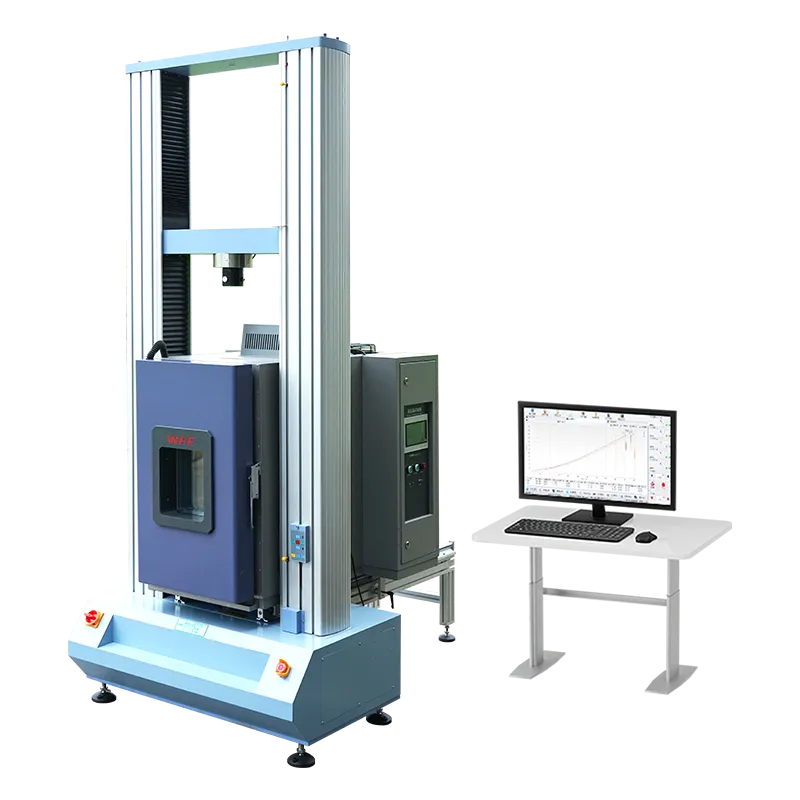
Understanding material strength and performance is crucial for product design, manufacturing, and quality control. The Universal Testing Machine (UTM) is a versatile and essential tool for evaluating the mechanical properties of materials, including tensile, compressive, bending, and shear strength. By providing precise and repeatable measurements, UTMs enable manufacturers and researchers to ensure that materials and components meet required specifications.
This article explains the applications, advantages, and best practices of using Universal Testing Machines for material strength and tensile testing.
What is a Universal Testing Machine?
A Universal Testing Machine is a testing device designed to apply controlled mechanical forces to materials or components. Its key functions include:
- Tensile Testing: Measures material elongation and tensile strength under a pulling force
- Compression Testing: Evaluates behavior under a pushing or compressive load
- Bending and Flexural Testing: Determines how materials respond to bending stress
- Shear Testing: Measures resistance to cutting or sliding forces
UTMs consist of a robust frame, precision load cells, crosshead motion control, and data acquisition software for real-time measurement and analysis.
Applications in Material Strength and Tensile Testing
1. Metals and Alloys
UTMs measure tensile strength, yield strength, elongation, and fracture points for metals and alloys, ensuring that raw materials meet engineering standards for automotive, aerospace, and construction industries.
2. Plastics and Composites
Plastics, composite materials, and polymer sheets undergo tensile and flexural testing to verify mechanical performance, elasticity, and resistance to deformation.
3. Rubber and Elastomers
Tensile testing of rubber materials ensures proper elasticity, tensile strength, and elongation at break, supporting product performance for seals, gaskets, and vibration-damping components.
4. Fibers and Textiles
UTMs evaluate the tensile strength and elongation of fibers, fabrics, and woven materials to ensure consistency, durability, and compliance with industry standards.
5. Construction Materials
Cement, concrete, and adhesive samples are tested for compressive and tensile strength, supporting quality assurance and regulatory compliance in construction projects.
Advantages of Using Universal Testing Machines
- High Accuracy and Repeatability: Provides precise measurement of force, displacement, and strain
- Versatility: Suitable for metals, plastics, composites, rubber, textiles, and construction materials
- Compliance with Standards: Supports ISO, ASTM, DIN, and other international standards
- Data Recording and Analysis: Generates force-displacement curves, stress-strain curves, and reports for quality control and R&D
- Customizable Fixtures: Adapts to different sample sizes, shapes, and testing requirements
UTMs are essential for product development, material certification, and quality control in research and industrial laboratories.
Best Practices for Material Strength and Tensile Testing
- Proper Sample Preparation: Ensure specimens are cut or molded to standard dimensions for consistent results.
- Fixture Selection: Use grips or clamps suitable for the material type and test type.
- Crosshead Speed Control: Adjust pulling or compression speed according to material specifications.
- Calibration and Maintenance: Regularly calibrate load cells and sensors for reliable measurements.
- Data Monitoring: Analyze real-time measurements to detect anomalies or unexpected material behavior.
Following these practices ensures reliable and repeatable test results, supporting material evaluation and product design optimization.
About WBE Instrument Technology
Guangdong WBE Instrument Technology Co., Ltd. specializes in high-precision Universal Testing Machines, Push-Pull Testing Machines, Mechanical Testing Machines, and Environmental Test Chambers.
WBE UTMs are designed for accurate tensile, compressive, bending, and shear testing across metals, plastics, composites, rubber, textiles, and construction materials. With advanced load cells, programmable control systems, and comprehensive data acquisition software, WBE helps manufacturers and researchers ensure material strength, optimize designs, and maintain quality standards in various industrial applications.
FAQ
Q1: What is a Universal Testing Machine used for?
UTMs are used to evaluate mechanical properties such as tensile, compressive, bending, and shear strength of materials and components.
Q2: Which materials can be tested using a UTM?
Metals, plastics, composites, rubber, textiles, fibers, and construction materials are commonly tested.
Q3: How does a UTM improve material quality control?
By providing accurate and repeatable measurements, UTMs help detect weak points, verify specifications, and ensure compliance with industry standards.
Q4: What types of tests can be performed on a UTM?
Tensile, compression, bending/flexural, and shear tests, as well as custom mechanical tests depending on material and fixture.
Q5: Why choose WBE Universal Testing Machines?
WBE UTMs offer precise load measurement, versatile fixtures, programmable cycles, and advanced data analysis to support R&D, quality control, and industrial applications.