


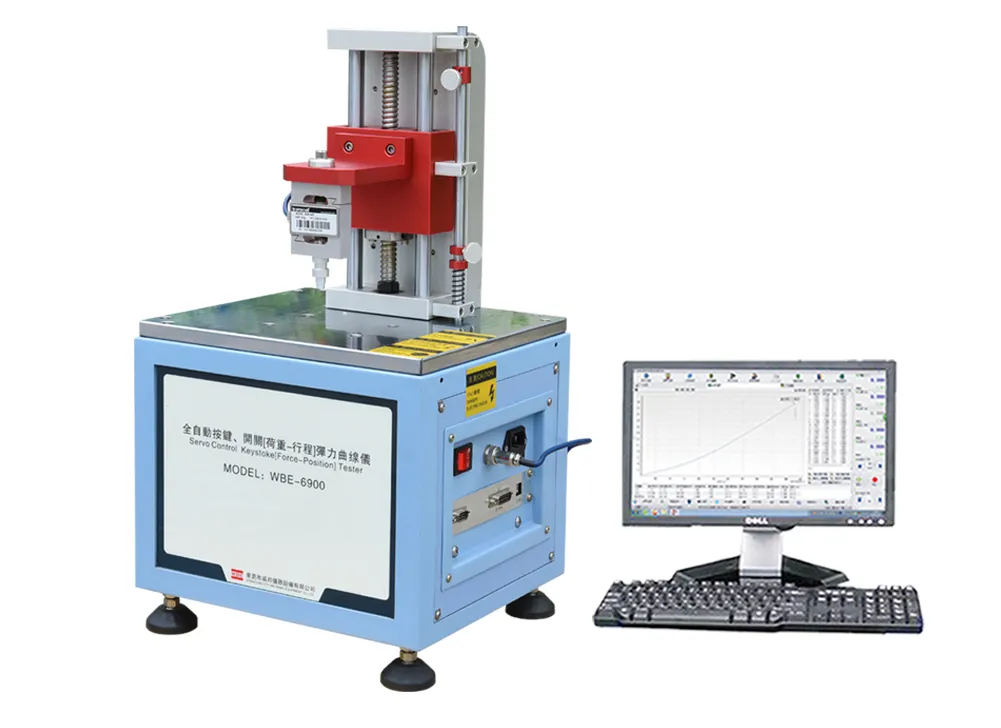
Universal Testing Machine vs Specialized Testers: Selection Guide
Introduction
Material testing plays a decisive role in modern manufacturing, research, and quality assurance. Whether evaluating metals, plastics, rubber, packaging materials, or electronic components, manufacturers rely on accurate mechanical data to ensure product safety, reliability, and compliance with international standards.
Among the wide range of testing equipment available today, the Universal Testing Machine has become one of the most widely used and versatile solutions. At the same time, many industries also deploy specialized testing machines designed for single-purpose tests, such as push-pull testers, peel testers, or compression-only systems.
This raises an important question for laboratories and manufacturers alike: Should you invest in a Universal Testing Machine or choose specialized testers instead?
This article provides a clear, practical answer by covering:
- Universal Testing Machine vs Specialized Testers: Which Should You Choose?
- How to Select the Right Universal Testing Machine for Your Application
- Typical Industries Using Universal Testing Machines
By the end, you will have a structured framework to make confident testing equipment decisions based on performance needs, cost efficiency, and long-term value.
1. Universal Testing Machine vs Specialized Testers: Which Should You Choose?
Before making any purchasing decision, it is essential to understand the fundamental differences between a Universal Testing Machine and specialized testing equipment.
1.1 What Is a Universal Testing Machine?
A Universal Testing Machine is a multi-functional mechanical testing system capable of performing tensile, compression, bending, shear, peel, and adhesion tests using interchangeable fixtures and accessories. Its flexibility allows a single machine to cover a wide range of materials and testing standards.
Typical test capabilities include:
- Tensile strength and elongation
- Compression resistance
- Flexural and bending performance
- Peel and bond strength
- Shear testing
Because of this versatility, the Universal Testing Machine is often considered the backbone of material testing laboratories.
1.2 What Are Specialized Testers?
Specialized testers are machines designed to perform one specific test or a narrow group of tests with high efficiency. Common examples include:
- Push-pull testing machines
- Compression-only testers
- Peel strength testers
- Packaging strength testers
These systems are optimized for speed, simplicity, and repeatability in a fixed testing scenario.
1.3 Key Differences at a Glance
|
Aspect |
Universal Testing Machine |
Specialized Testers |
|
Test Functions |
Multiple (tensile, compression, bending, peel) |
Single or limited |
|
Flexibility |
Very high |
Low |
|
Initial Cost |
Medium to high |
Low to medium |
|
Long-Term Value |
Excellent |
Limited |
|
Fixture Compatibility |
Wide range |
Fixed or limited |
|
Typical Users |
Labs, manufacturers, R&D |
Production lines, QC stations |
1.4 Which Option Is Better?
The answer depends on testing diversity and long-term strategy:
- If your testing requirements involve multiple materials, standards, or product types, a Universal Testing Machine offers better return on investment.
- If you perform one repetitive test at high frequency, a specialized tester may be more efficient.
In practice, many medium to large manufacturers choose a Universal Testing Machine as their core testing platform, supplemented by specialized testers where necessary.
2. How to Select the Right Universal Testing Machine for Your Application
Choosing the right Universal Testing Machine requires more than comparing prices. It involves understanding your testing environment, material behavior, and future expansion needs.
2.1 Define Your Test Requirements Clearly
Start by answering the following questions:
- What materials will you test (metal, plastic, rubber, packaging, composites)?
- What test types are required (tensile, compression, peel, bending)?
- Which standards must be followed (ISO, ASTM, GB, DIN, JIS)?
Clear answers ensure the selected Universal Testing Machine matches both current and future needs.
2.2 Load Capacity and Structural Design
Selecting the appropriate load range is critical.
- Light materials: 500 N – 5 kN
- Medium materials: 10 kN – 50 kN
- Heavy-duty materials: 100 kN and above
It is recommended to choose a machine with 20–30% higher capacity than the maximum expected test load to ensure safety and accuracy.
2.3 Control System and Precision
Modern Universal Testing Machines use servo motor control systems to provide:
- Stable test speed
- Precise displacement control
- Smooth load application
High-resolution load cells and encoders are essential for repeatable and reliable results, especially in R&D and certification testing.
2.4 Software and Data Management
Advanced testing software should support:
- Multiple test methods
- Automatic data analysis
- Stress-strain curve generation
- Customizable test reports
For companies pursuing digitalization and traceability, data export and system integration capabilities are increasingly important.
2.5 Fixture and Customization Capability
A high-quality Universal Testing Machine should support:
- A wide range of grips and fixtures
- Easy fixture replacement
- Custom fixture design for non-standard samples
This flexibility greatly extends the usable lifespan of the machine.
2.6 Service, Delivery, and Long-Term Support
Beyond technical specifications, consider:
- Manufacturing lead time
- On-site installation and training
- After-sales service responsiveness
- Spare parts availability
Reliable suppliers reduce downtime and ensure testing continuity.
3. Typical Industries Using Universal Testing Machines
Thanks to their adaptability, Universal Testing Machines are widely used across multiple industries.
3.1 Materials and Metals Industry
Applications include:
- Tensile and yield strength testing
- Compression testing
- Bending performance evaluation
Used by steel mills, aluminum processors, and materials laboratories.
3.2 Plastics, Rubber, and Polymer Industry
Common tests:
- Tensile strength and elongation
- Peel and adhesion strength
- Flexural modulus
Essential for injection molding, extrusion, and rubber product manufacturers.
3.3 Packaging and Consumer Goods
Used to test:
- Carton compression strength
- Packaging pull and peel strength
- Seal integrity
The Universal Testing Machine plays a key role in packaging quality control and logistics safety.
3.4 Electronics and Electrical Components
Applications include:
- Connector pull-out force
- Cable tensile strength
- Component durability testing
Precision and repeatability are critical in this sector.
3.5 Automotive and Aerospace
High-performance testing for:
- Structural materials
- Composite components
- Safety-critical parts
Here, the Universal Testing Machine supports both R&D and production validation.
4. Why Many Buyers Prefer Integrated Testing Solutions
As testing requirements become more complex, buyers increasingly look for suppliers that offer:
- Mechanical and environmental testing solutions
- Non-standard customization
- In-house manufacturing and quality control
- International compliance support
An integrated approach reduces coordination costs and improves overall testing efficiency.
5. A Reliable Partner for Universal Testing Solutions
Based on the selection principles discussed above, an ideal testing equipment manufacturer should demonstrate:
- Strong manufacturing capability to support both standard and non-standard systems
- Comprehensive quality certifications aligned with international standards
- Flexible customization for specialized testing needs
- Efficient delivery and responsive service
- Global market experience to support overseas customers
Guangdong WBE Instrument Technology Co., Ltd. aligns closely with these requirements. As a high-end testing instrument manufacturer, WBE focuses on mechanical and environmental testing systems, including Universal Testing Machines, push-pull testers, and customized testing solutions. With in-house sheet metal and machining centers, certified quality management systems, and expanding international service networks, WBE supports customers seeking reliable, efficient, and future-ready testing equipment.
By combining technical expertise, customization capability, and global service vision, WBE provides practical solutions for manufacturers aiming to strengthen quality control and testing confidence.
Conclusion
Choosing between a Universal Testing Machine and specialized testers is ultimately a matter of testing scope, efficiency, and long-term planning. While specialized machines excel in single-purpose applications, the Universal Testing Machine remains the most flexible and cost-effective solution for diverse testing needs.
By understanding machine capabilities, selection criteria, and industry applications, manufacturers can make informed decisions that support product quality, compliance, and innovation. Partnering with an experienced and capable testing equipment manufacturer further ensures that your investment delivers lasting value.