


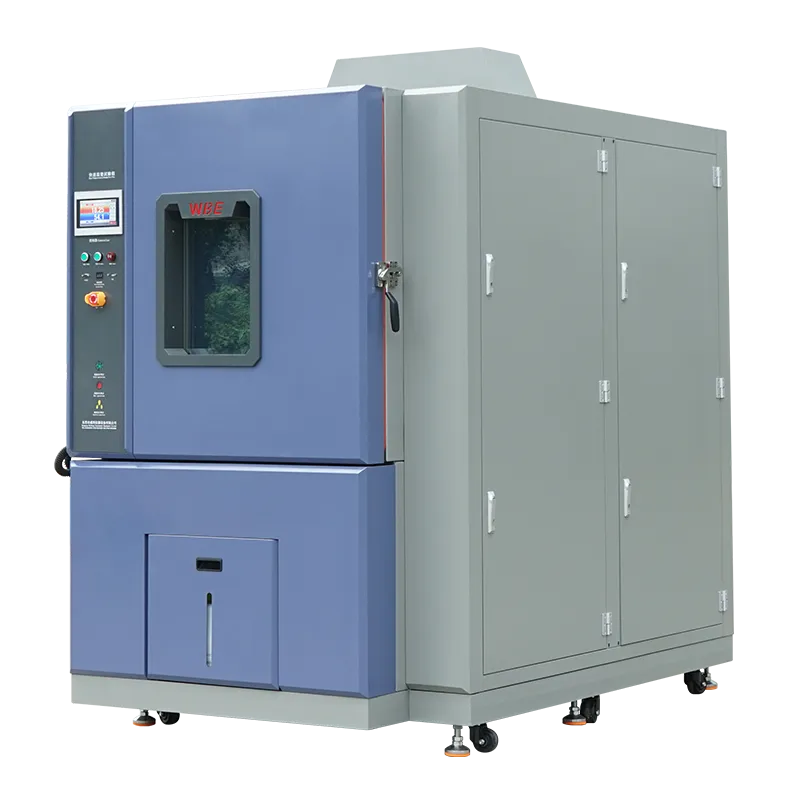
A comprehensive guide exploring the engineering intricacies and professional strategies for high-performance environmental testing equipment.
Introduction to Advanced Thermal Testing
In the modern industrial landscape, the reliability of electronic components, automotive parts, and aerospace systems is non-negotiable. As products become more complex, they are exposed to increasingly volatile environments. This necessitates the use of a rapid rate temperature exchange chamber, a specialized piece of equipment designed to simulate extreme and sudden temperature fluctuations. Unlike standard climate chambers, these systems are engineered to achieve temperature transition rates often exceeding 15 degrees Celsius per minute. This capability is vital for Environmental Stress Screening (ESS), where the goal is to force latent defects to the surface before a product reaches the consumer. However, achieving such high performance presents a unique set of engineering challenges that require sophisticated design solutions and high-quality manufacturing standards, which brands like WBE have mastered over years of research and development.
The primary objective of using a rapid rate temperature exchange chamber is to evaluate how materials and assemblies react to thermal expansion and contraction. When a device is subjected to rapid cooling or heating, different materials within it expand or shrink at different rates based on their coefficients of thermal expansion. This stress can lead to solder joint failures, hermetic seal breaches, or structural cracks. Therefore, the design of these chambers must be robust enough to handle the immense internal energy transfers while maintaining a uniform environment for the test specimen. In this article, we will delve into the critical technical hurdles faced by designers and the innovative solutions that ensure these machines deliver accurate, repeatable results under the most demanding conditions.
The Engineering Complexity of Thermal Gradients
Designing a rapid rate temperature exchange chamber involves balancing thermodynamics, fluid dynamics, and structural mechanics. One of the foremost challenges is the management of massive heat loads. To move the internal temperature from 150 degrees Celsius down to negative 70 degrees Celsius within a matter of minutes, the refrigeration system must possess enormous cooling capacity. This usually requires multi-stage compressors and high-efficiency heat exchangers. The difficulty lies in the fact that as the temperature drops, the efficiency of the refrigerant decreases, meaning the system must be over-engineered to maintain the required linear rate of change throughout the entire spectrum. This often leads to increased energy consumption and larger footprints, requiring engineers to find a sweet spot between performance and efficiency.
Another significant hurdle is the management of airflow. In a rapid rate temperature exchange chamber, simply cooling or heating the air is not enough; that air must be moved across the test specimen with high velocity and extreme uniformity. If the airflow is poorly designed, "dead zones" can occur where the temperature lags significantly behind the setpoint. This results in inaccurate data and potentially misleading reliability reports. Engineers use Computational Fluid Dynamics (CFD) to model the air path, ensuring that the centrifugal fans and ductwork provide a laminar flow that reaches every corner of the test workspace. Without this precision, the rapid rate of change becomes chaotic rather than controlled, compromising the integrity of the environmental stress screening process.
Advanced Control Systems and Logic
To solve the issues of temperature overshoot and undershoot during high-speed transitions, advanced control logic is essential. Standard PID (Proportional-Integral-Derivative) controllers often struggle with the lag inherent in high-power heating and cooling elements. When a rapid rate temperature exchange chamber is instructed to stop at a specific temperature after a 20-degree-per-minute climb, the residual energy in the heaters can cause the temperature to keep rising. Modern solutions involve fuzzy logic and predictive algorithms that anticipate the approach to the target temperature and begin throttling the power well in advance. This ensures a smooth "landing" on the target temperature, which is critical for maintaining the accuracy required by international testing standards like MIL-STD or IEC.
Furthermore, the integration of multi-sensor arrays provides a more holistic view of the chamber performance. Instead of relying on a single probe, designers now implement several high-precision sensors that feed data into a central processing unit. This allows the system to adjust fan speeds and valve openings in real-time based on the actual load inside the chamber. For instance, if a large, dense automotive battery pack is being tested, the system will recognize the higher thermal mass and automatically increase the cooling output to compensate, keeping the transition rate consistent. This level of automation reduces the margin for human error and ensures that the rapid rate temperature exchange chamber operates at peak efficiency regardless of the test subject's complexity.
Material Resilience and Insulation Challenges
The physical structure of a rapid rate temperature exchange chamber is subjected to intense mechanical stress. Frequent and violent shifts in temperature cause the inner stainless steel liner to expand and contract significantly. If the welding techniques or material grades are insufficient, this cycle can lead to metal fatigue and eventually, structural failure. To counter this, high-performance chambers utilize SUS304 or SUS316 stainless steel with specialized expansion joints that allow the inner shell to "breathe" without losing its airtight seal. Additionally, the insulation material—usually high-density polyurethane foam or fiberglass—must be applied with no gaps to prevent thermal bridging, which can cause condensation and ice buildup on the exterior of the machine.
Moisture management is another critical design factor. When transitioning from extreme cold to high heat, any moisture in the air will immediately condense and can even freeze on the cooling coils, leading to a loss of heat exchange efficiency. Solution-oriented designs include advanced dehumidification systems and dry air purging. By replacing the humid air with nitrogen or dry compressed air before the cooling cycle begins, the risk of frost formation is virtually eliminated. This not only protects the rapid rate temperature exchange chamber from internal corrosion but also ensures that the test specimen is not damaged by water droplets, providing a pure thermal stress environment that is repeatable across thousands of cycles.
WBE: Your Partner in High-Performance Testing
At WBE, we understand that the reliability of your product depends on the precision of your testing equipment. As a leading manufacturer in the environmental testing industry, WBE specializes in developing cutting-edge solutions that tackle the toughest thermal challenges. Our engineers have spent decades refining the technology behind every rapid rate temperature exchange chamber we produce, ensuring that our clients in the semiconductor, new energy, and aerospace sectors receive equipment that is both robust and highly accurate. We take pride in our ability to customize systems to meet specific linear or non-linear temperature transition requirements, providing a level of flexibility that is rare in the market.
Our product portfolio is designed to cover every aspect of reliability validation. From compact desktop units to massive walk-in systems, WBE offers unparalleled build quality and software integration. For those requiring intense thermal shock capabilities, our rapid rate temperature exchange chamber series provides the industry-leading performance needed for rigorous ESS protocols. Furthermore, we offer specialized equipment such as the walk-in type temperature and humidity chamber for large-scale components and the HAST high voltage accelerated aging test chamber for semiconductor reliability. When you choose WBE, you are not just buying a machine; you are investing in a partnership backed by comprehensive technical support and a commitment to global quality standards.
WBE's advantage lies in our vertical integration. We control the design, manufacturing, and software development processes, allowing us to implement innovations faster than our competitors. Our full range of products includes everything from thermal shock test chambers to mechanical testing machines, providing a one-stop shop for laboratory equipment. We invite you to explore our application cases to see how we have helped top-tier companies achieve their quality goals through superior environmental simulation technology.
Frequently Asked Questions
Q1: What is the primary benefit of a rapid rate temperature exchange chamber compared to a standard chamber?
The primary benefit of a rapid rate temperature exchange chamber is its ability to perform Environmental Stress Screening (ESS). By transitioning temperatures at 5 to 15 degrees Celsius per minute or more, it can reveal latent defects in products that standard slow-cycling chambers would miss, significantly improving the long-term reliability of the product.
Q2: How does a rapid rate temperature exchange chamber manage high energy consumption?
High-quality rapid rate temperature exchange chamber designs from WBE incorporate energy-saving features such as electronic expansion valves, frequency-controlled compressors, and optimized insulation. These technologies allow the system to provide maximum cooling power during transitions while scaling back energy use during stable soak periods.
Q3: Can a rapid rate temperature exchange chamber be used for battery testing?
Yes, it is frequently used for battery testing, especially in the electric vehicle industry. These chambers can be equipped with safety features like explosion-proof vents and fire suppression systems to safely handle the thermal runaway risks associated with high-energy lithium batteries during rapid thermal cycling.
Q4: What maintenance is required for a rapid rate temperature exchange chamber?
Regular maintenance involves checking the refrigeration pressure, cleaning the condenser coils, and calibrating the temperature sensors. Because a rapid rate temperature exchange chamber operates under high stress, it is also important to inspect door seals and fan motor bearings annually to ensure optimal performance and safety.
Q5: Is airflow uniformity guaranteed in a rapid rate temperature exchange chamber?
Airflow uniformity is achieved through precise engineering of the internal plenum and fan systems. In a rapid rate temperature exchange chamber, WBE utilizes high-velocity centrifugal fans and adjustable baffles to ensure that the air is distributed evenly across the entire workspace, maintaining a consistent temperature even with high-load specimens.
Conclusion
The design and implementation of a rapid rate temperature exchange chamber represent the pinnacle of environmental testing technology. By overcoming challenges in thermodynamics, control logic, and material science, these systems provide the essential data needed to ensure product longevity in an unforgiving world. As industry requirements continue to evolve, the demand for faster, more precise, and more efficient testing solutions will only grow. Partnering with an expert manufacturer like WBE ensures that your laboratory is equipped to handle these future challenges with confidence and precision.
Or explore our Product Catalog for more solutions.