


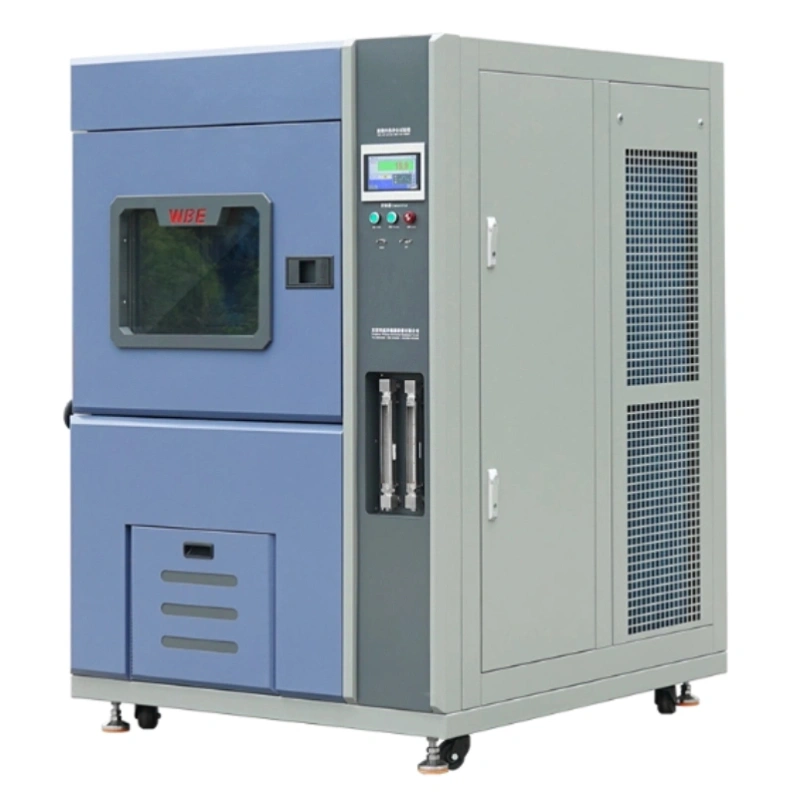
A comprehensive guide to understanding reliability testing through advanced climatic simulation and thermal stress analysis.
The Critical Importance of Environmental Simulation in Modern Manufacturing
In today industrial landscape, the pursuit of product perfection is not merely a goal but a necessity for survival. As electronics, automotive components, and aerospace materials become more complex, their susceptibility to environmental stressors increases exponentially. This is where environmental test chambers play a pivotal role. These sophisticated instruments allow engineers to simulate the harshest conditions a product might face during its lifecycle, from the freezing temperatures of high-altitude flight to the scorching heat of a desert floor. By utilizing environmental test chambers, manufacturers can identify potential failure points early in the development phase, saving millions in potential recall costs and safeguarding brand reputation.
The primary function of these chambers is to provide a controlled environment where temperature, humidity, and sometimes pressure or vibration can be precisely manipulated. When we discuss high and low temperature cycling, we are referring to the systematic exposure of a specimen to alternating thermal extremes. This process induces mechanical stress through thermal expansion and contraction, revealing weaknesses in solder joints, material bonds, and seal integrity. Without the rigorous data provided by environmental test chambers, the reliability of modern technology would be largely a matter of guesswork, rather than the calculated science it is today.
Deep Dive into High and Low Temperature Cycling Mechanics
Temperature cycling is a fundamental aspect of reliability testing that involves moving a product through specified temperature extremes at controlled rates. The engineering logic behind this is rooted in thermodynamics. Every material has a unique coefficient of thermal expansion. In a multi-material assembly, such as a printed circuit board with silicon chips and copper traces, different components will expand and contract at different rates. High-quality environmental test chambers are designed to manage these gradients with extreme precision, ensuring that the air distribution inside the workspace is uniform and the thermal load on the specimen is consistent.
During the low-temperature phase, materials often become brittle. This is critical for testing plastics and polymers used in outdoor environments. Conversely, the high-temperature phase can lead to chemical degradation, outgassing, or the softening of adhesives. The transition between these states is perhaps the most revealing part of the test. Rapid rate temperature exchange allows for the detection of "hidden" defects that a steady-state soak might miss. By calibrating environmental test chambers to specific ramp rates, such as 5 degrees Celsius per minute or higher, engineers can accelerate the aging process, effectively simulating years of field use in just a few weeks of laboratory testing.
Furthermore, the integration of humidity control within these temperature cycles adds another layer of complexity. Moisture can penetrate microscopic cracks during the warm phase and then freeze and expand during the cold phase, lead to catastrophic structural failure. Modern environmental test chambers must therefore possess high-efficiency refrigeration systems and precise moisture injection humidifiers to maintain the integrity of the test profile across the entire duration of the study.
Strategic Advice for Selecting the Right Testing Solution
Selecting the appropriate equipment for your laboratory requires a deep understanding of your testing objectives. Not all environmental test chambers are created equal. For instance, if your primary concern is military-grade electronics, you might require a chamber capable of reaching minus 70 degrees Celsius with rapid pull-down times. If you are testing large lithium-ion battery packs for electric vehicles, safety features such as explosion-proof vents and fire suppression systems become mandatory. The size of the chamber is another critical factor; the volume must be large enough to accommodate the specimen without obstructing airflow, as restricted air circulation can result in inaccurate temperature readings and localized "hot spots."
Strategic consideration should also be given to the control interface. Professional-grade environmental test chambers should offer programmable logic controllers (PLCs) that allow for complex multi-step profiles. Remote monitoring and data logging are essential for compliance with quality management systems like IATF 16949 or ISO 9001. When sourcing these machines, always evaluate the cooling system architecture. Whether it is a single-stage refrigeration system for moderate temperatures or a cascade system for extreme lows, the reliability of the compressor and the quality of the refrigerant will determine the long-term uptime of your testing facility.
Airflow Design
Ensuring vertical or horizontal laminar flow to minimize temperature deviation across the test samples.
Sensor Accuracy
Utilization of high-precision PT100 sensors for real-time feedback and PID control loop stability.
Material Quality
SUS304 stainless steel interior liners to prevent corrosion and ensure long-term durability under humid conditions.
Quantifiable Benefits of Rigorous Environmental Testing
The investment in high-end environmental test chambers yields significant returns across the entire product lifecycle. Firstly, it drastically reduces the time-to-market. By using accelerated stress testing, engineers can simulate five years of environmental exposure in just a few hundred hours. This allows for rapid iteration and faster design validation. Secondly, it minimizes the risk of catastrophic field failures. For industries like aerospace or medical devices, a single failure can lead to loss of life and insurmountable legal liabilities. Rigorous thermal cycling ensures that every component is "battle-tested" before it reaches the end-user.
Furthermore, utilizing environmental test chambers assists in material optimization. Engineers can compare how different alloys or coatings perform under stress, leading to more cost-effective material choices without sacrificing quality. From a marketing perspective, being able to provide certified test data enhances customer trust. In a competitive global market, the ability to prove that your product can withstand extreme environmental conditions is a powerful differentiator that justifies premium pricing and fosters long-term brand loyalty.
WBE: Your Expert Partner in Reliability Testing Solutions
As a leading manufacturer in the climate simulation industry, WBE has dedicated decades to perfecting the art of environmental stress testing. Our range of environmental test chambers is engineered to meet the most demanding requirements of the semiconductor, automotive, and new energy sectors. We understand that precision is non-negotiable, which is why our equipment is built with industry-leading components and undergoes rigorous factory calibration before delivery.
Our product portfolio is diverse, catering to various testing scales and intensities. For large-scale components, our walk-in type temperature and humidity chamber offers expansive workspace without compromising on control accuracy. For high-intensity thermal shock requirements, our thermal shock test chamber provides near-instantaneous transitions between temperature extremes, perfect for revealing latent material defects. We also specialize in specialized solutions such as the HAST high voltage accelerated aging test chamber, designed for the ultra-fast validation of electronic components.
At WBE, we don't just sell machines; we provide comprehensive testing solutions. From initial consultation to after-sales maintenance and calibration, our team of experts is committed to ensuring your laboratory operates at peak efficiency. Our commitment to innovation is reflected in our advanced control systems and energy-efficient designs, helping your facility achieve its sustainability goals while maintaining world-class testing standards. Learn more about our mission and technical expertise on our why choose WBE page.
Conclusion: Securing the Future of Product Quality
In conclusion, the role of environmental test chambers in modern engineering cannot be overstated. By providing a bridge between theoretical design and real-world performance, these chambers enable the creation of safer, more durable, and more reliable products. Whether you are conducting simple temperature soaks or complex humidity and vibration cycles, the data derived from these tests is the cornerstone of quality assurance. As technology continues to evolve, the demand for even more precise and versatile testing environments will grow, making the choice of a reliable equipment partner like WBE more important than ever.
Frequently Asked Questions
Q1: How do environmental test chambers simulate rapid temperature transitions?
Environmental test chambers utilize high-capacity refrigeration compressors and powerful electric heating elements, managed by a PID controller, to move air quickly across the specimen, achieving specified ramp rates for temperature cycling.
Q2: What is the typical temperature range for standard environmental test chambers?
Most standard environmental test chambers offer a range from -70°C to +150°C, though specialized models can extend these limits for specific aerospace or semiconductor applications.
Q3: Can environmental test chambers handle both temperature and humidity simultaneously?
Yes, many environmental test chambers are designed as "climatic" chambers, capable of controlling relative humidity (typically 10% to 98% RH) in conjunction with temperature to simulate tropical or coastal environments.
Q4: How often should I calibrate my environmental test chambers?
For most quality standards, it is recommended to calibrate environmental test chambers annually. However, for high-precision industries like medical devices, bi-annual calibration may be required to ensure ongoing accuracy.
Q5: What safety features should I look for in environmental test chambers for battery testing?
When testing batteries in environmental test chambers, look for explosion-proof chains, pressure relief vents, smoke detectors, and CO2 fire suppression systems to manage the risk of thermal runaway.
Ready to Elevate Your Testing Standards?
Contact the experts at WBE today to find the perfect environmental test solution for your specific industry needs. Our team is standing by to provide technical consultation and custom quotes.