


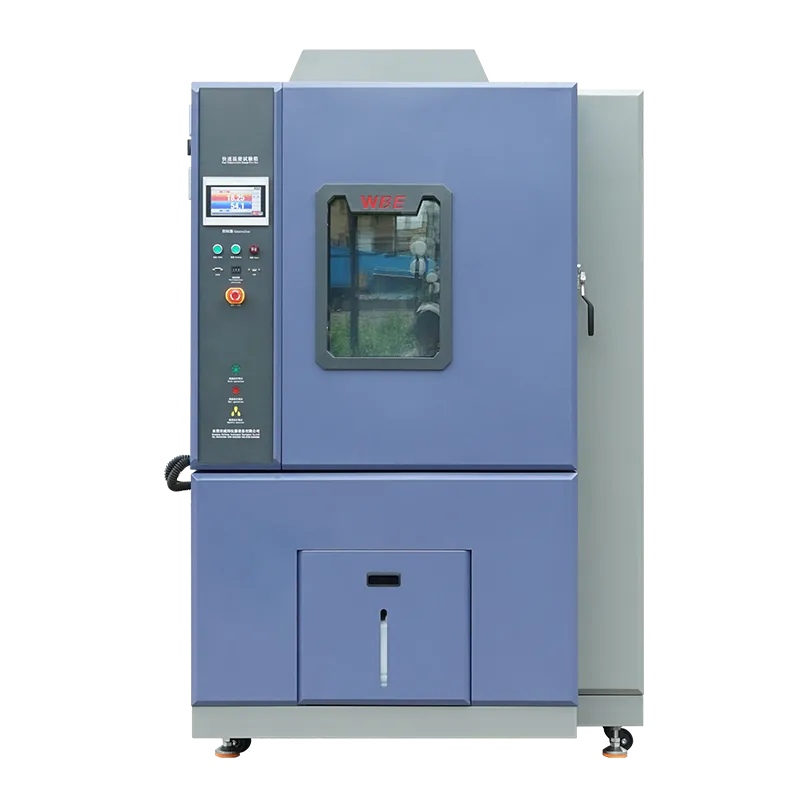
A comprehensive guide to simulation technology, reliability standards, and advanced industrial testing solutions.
The Imperative of Environmental Simulation in Electronics
In the contemporary landscape of semiconductor manufacturing and consumer electronics, the margin for error is virtually non-existent. Electronic components, ranging from micro-processors to high-capacity capacitors, are expected to perform flawlessly under a diverse array of climatic conditions. This is where environmental test chambers play a pivotal role. These controlled environments allow engineers to simulate years of field exposure in a matter of days, revealing potential failure points before a product ever reaches the consumer. By subjecting components to extreme temperatures, varying humidity levels, and atmospheric pressures, manufacturers can guarantee the long-term stability and safety of their technological innovations.
Stability testing is not merely a quality check; it is a fundamental requirement for global market entry. Whether it is the aerospace industry requiring components to survive the vacuum of high altitudes or automotive sensors needing to withstand the sweltering heat of a desert road, the use of environmental test chambers provides the empirical data necessary to validate these use cases. Without rigorous simulation, the risk of mass recalls and brand degradation increases exponentially. Therefore, understanding the mechanics and strategic application of these chambers is essential for any professional involved in hardware development and quality assurance.
Addressing Thermal Instability and Mechanical Fatigue
Temperature fluctuations are perhaps the most common cause of electronic failure. When a device is powered on and off, or moved between different environments, its internal components undergo thermal expansion and contraction. Over time, this cyclical stress can lead to solder joint cracking, delamination of printed circuit boards (PCBs), and the failure of delicate wire bonds. Advanced environmental test chambers are designed to execute precise temperature cycling profiles that mimic these real-world stresses. By oscillating between extreme heat and freezing cold, the chamber forces the material properties of the component to their limits.
Furthermore, the rate of temperature change is a critical factor in identifying latent defects. Rapid rate temperature exchange chambers are frequently employed to provide a more aggressive stimulus than standard ovens. This method, often referred to as stress screening, helps in identifying "infant mortality" in electronic batches. If a component is prone to failure due to poor manufacturing tolerances or material impurities, the thermal shock provided by high-quality environmental test chambers will likely trigger that failure during the testing phase rather than in the hands of the end-user. This proactive approach to reliability ensures that only the most resilient components move forward in the production cycle.
Mitigating Humidity-Induced Degradation
Moisture is the silent enemy of electronic longevity. High humidity levels can lead to oxidation, electrochemical migration, and the degradation of insulating materials. In many cases, moisture ingress into non-hermetic packages causes internal swelling, which leads to the "popcorn effect" during subsequent soldering processes. To combat this, environmental test chambers equipped with sophisticated humidity control systems are utilized to perform steady-state damp heat tests and cyclic humidity profiles. These tests evaluate how well protective coatings and housing seals perform over extended periods of exposure.
The integration of humidity and temperature testing allows for the simulation of tropical environments, where electronics are most susceptible to failure. By maintaining a relative humidity of 85% at a temperature of 85 degrees Celsius—a standard known as the 85/85 test—manufacturers can observe the acceleration of corrosion and ion migration. This level of insight is crucial for developing robust consumer electronics that are intended for global distribution. Through the strategic use of environmental test chambers, engineers can refine their material selection and sealing techniques, ensuring that the final product can withstand the most humid climates on Earth without compromising performance or safety.
Accelerated Lifecycle Testing and HAST
As product development cycles shorten, the need for faster testing results has grown. Highly Accelerated Stress Testing (HAST) has emerged as a vital methodology for evaluating semiconductor reliability. Unlike traditional environmental testing which may take weeks, HAST utilizes high pressure and temperatures above 100 degrees Celsius within specialized environmental test chambers to force moisture into the components at an accelerated rate. This reduces test times from 1000 hours to less than 100 hours, providing immediate feedback to design teams. This efficiency is paramount in the fast-paced semiconductor industry where being first to market is a competitive necessity.
Beyond speed, accelerated testing provides a statistical foundation for predicting the "Mean Time To Failure" (MTTF). By correlating the results from environmental test chambers with mathematical models like the Arrhenius equation, manufacturers can estimate the lifespan of their products under normal operating conditions. This data is invaluable for setting warranty periods and managing customer expectations. Modern testing facilities now integrate multiple stress factors simultaneously—such as vibration, altitude, and temperature—to create a "Combined Environment" test, offering the most realistic simulation of the complex stresses electronics face in the real world.
WBE: Your Partner in Professional Reliability Testing
As a leader in the environmental testing industry, WBE has dedicated over a decade to the research, development, and manufacturing of high-performance simulation equipment. We understand that the integrity of your electronic components depends on the accuracy of your testing data. That is why our suite of environmental test chambers is engineered with precision sensors and intuitive control systems to meet the most demanding international standards, including MIL-STD, IEC, and JEDEC.
- Climatic Precision: Our walk-in type temperature and humidity chamber offers large-scale testing capabilities for complete systems.
- Rapid Stress Testing: Discover our thermal shock test chamber for identifying latent mechanical defects instantly.
- Semiconductor Expertise: We provide advanced HAST aging test chambers specifically designed for the microelectronics sector.
- Mechanical Integrity: Explore our bond tester machines to ensure the structural strength of your component leads.
WBE differentiates itself through a commitment to customization and after-sales support. We recognize that every laboratory has unique requirements, whether it is a compact desktop high and low temperature chamber or a multi-room walk-in facility. Our engineering team works closely with clients in aerospace, automotive, and 5G telecommunications to provide tailored solutions that enhance product durability and global competitiveness. Visit our About Us page to learn more about our manufacturing excellence.
Conclusion: The Future of Reliability
The role of environmental test chambers in the electronics industry will only continue to expand as components become smaller, more powerful, and more integrated into our daily lives. From the batteries powering electric vehicles to the chips driving artificial intelligence, the demand for stability and reliability is universal. By investing in high-quality testing infrastructure, manufacturers do more than just follow regulations; they build trust with their customers and ensure the sustainability of their business in a competitive global market.
Ultimately, the data generated within these chambers serves as the blueprint for innovation. It tells engineers where the limits lie and empowers them to push those limits further. As we look toward a future of even more extreme applications—from space exploration to deep-sea monitoring—environmental simulation will remain the cornerstone of engineering excellence, ensuring that our technology remains stable no matter where the journey takes it.
Frequently Asked Questions
Q1: What are the primary benefits of using environmental test chambers for electronics?
The primary benefits include the early detection of design flaws, validation of material durability, and compliance with international safety standards. Environmental test chambers allow for accelerated aging, which helps manufacturers predict product lifespan and reduce the risk of field failures, ultimately saving costs and protecting brand reputation.
Q2: How do environmental test chambers simulate extreme high-altitude conditions?
Specialized altitude chambers combine vacuum pumps with temperature control systems to simulate low atmospheric pressure and extreme cold simultaneously. This is essential for testing aerospace components and high-altitude electronics to ensure they do not malfunction or suffer from dielectric breakdown in thin air.
Q3: Can environmental test chambers be customized for specific industry needs?
Yes, manufacturers like WBE provide extensive customization options. Chambers can be modified in size (from benchtop to walk-in), temperature range, humidity control precision, and the addition of features like explosion-proof windows for battery testing or vibration-integrated platforms for mechanical stress analysis.
Q4: Why is humidity control vital in environmental test chambers?
Humidity control is vital because moisture can cause internal corrosion, short circuits, and material swelling in electronic components. By accurately controlling the relative humidity, environmental test chambers can simulate various climates, such as tropical rain forests, to test the effectiveness of seals and protective coatings.
Q5: How often should environmental test chambers be calibrated?
To ensure data accuracy and repeatability, chambers should typically be calibrated annually or semi-annually, depending on the intensity of use and industry regulations. Regular maintenance and calibration of sensors within environmental test chambers are crucial for maintaining the integrity of the reliability testing process.
Ready to Elevate Your Quality Standards?
Contact WBE today for a consultation on the perfect testing solution for your laboratory.
Request a Quote Now