


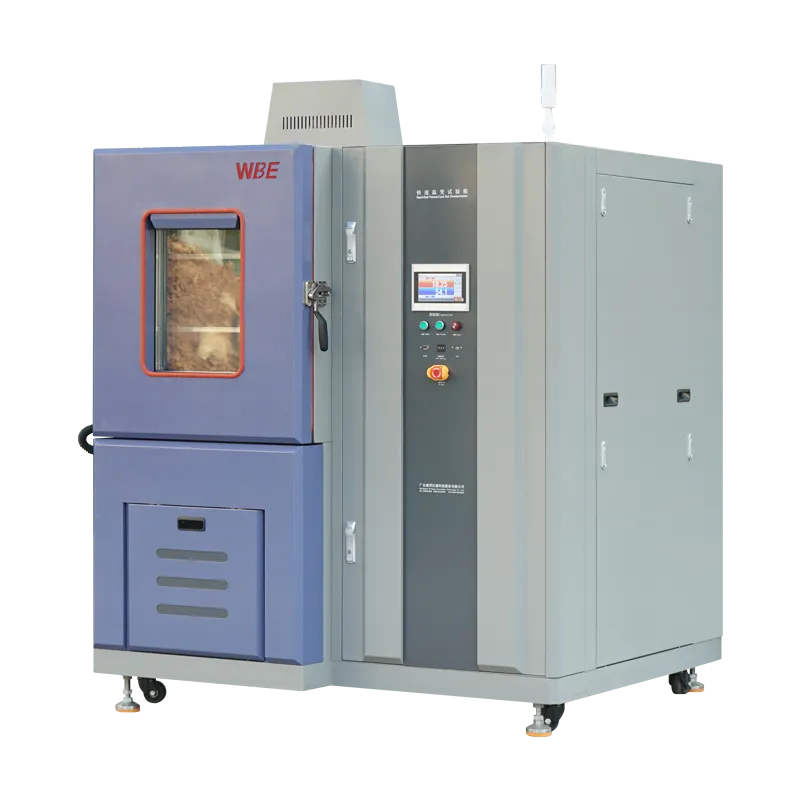
The Critical Role of Environmental Stress in Modern Electronics
In the fast-paced world of semiconductor manufacturing, ensuring the reliability of integrated circuits is paramount. As components become smaller and more powerful, they also become more susceptible to thermal stress and latent defects. A rapid rate temperature exchange chamber serves as an essential tool in the reliability engineer's arsenal, providing the necessary environment to simulate extreme conditions that a device might encounter during its lifecycle. By subjecting semiconductor components to accelerated thermal cycles, manufacturers can identify potential failures before they reach the consumer. This process, often referred to as environmental stress screening (ESS), relies heavily on the precision and speed of the testing equipment.
Traditional environmental chambers often struggle to meet the aggressive ramp rates required for modern semiconductor burn-in testing. However, a high-performance rapid rate temperature exchange chamber is designed to transition between temperature extremes at speeds ranging from 5 to 20 degrees Celsius per minute, or even higher in specialized configurations. This rapid transition is not merely about saving time; it is about inducing thermal expansion and contraction stresses that reveal weaknesses in wire bonds, packaging materials, and solder joints. Without such rigorous testing, the risk of "infant mortality" in electronic products increases significantly, leading to costly recalls and damage to brand reputation.
Understanding the Mechanics of a Rapid Rate Temperature Exchange Chamber
The engineering behind a rapid rate temperature exchange chamber involves sophisticated refrigeration and heating systems working in perfect synchronization. Unlike standard climatic chambers, these units utilize high-volume airflow systems and powerful compressors to achieve linear or non-linear temperature changes. For semiconductor burn-in testing, linear control is often preferred as it ensures a consistent rate of change throughout the entire temperature range, providing more predictable stress data. The internal architecture of the chamber must also account for the thermal load of the test specimens, which, in the case of powered semiconductors, can generate significant heat of their own.
Advanced control interfaces allow engineers to program complex multi-step profiles, simulating hours or days of real-world use in just a fraction of the time. This efficiency is what makes the rapid rate temperature exchange chamber an indispensable asset for high-volume manufacturing lines.
Furthermore, the materials used in the construction of the inner tank are typically high-grade SUS304 or SUS316 stainless steel to resist corrosion and withstand the rapid expansion and contraction of the air inside. Insulation is another critical factor; high-density polyurethane foam or ultra-fine glass fiber is used to ensure that the exterior remains safe to touch while the interior maintains extreme temperatures. Precision sensors, often PT100 platinum resistance thermometers, provide real-time feedback to the PLC (Programmable Logic Controller), ensuring that the actual temperature closely tracks the set profile with minimal deviation.
Optimizing Semiconductor Reliability Through Strategic Testing
When integrating a rapid rate temperature exchange chamber into a semiconductor production workflow, several strategic factors must be considered. First is the "Loading Effect." Since semiconductor wafers or packaged chips have thermal mass, the chamber must have enough "cooling capacity reserve" to maintain the ramp rate even when fully loaded. Professional-grade chambers are often customized to match the specific thermal footprint of the user's products. This level of customization prevents the temperature lag that can lead to insufficient stress testing, which would ultimately result in failed quality assurance metrics.
-
Linear vs. Non-linear: Understanding whether your test protocol requires a constant rate or just an average rate over time is crucial for choosing the right compressor configuration.
-
Airflow Uniformity: Ensuring that every component on a large burn-in board experiences the same thermal profile is essential for statistical validity in testing.
-
Energy Efficiency: Modern chambers utilize electronic expansion valves and frequency-modulated compressors to reduce energy consumption without sacrificing performance.
Another insight involves the synchronization between the chamber and the electrical testing equipment. During burn-in, devices are often powered and monitored for performance anomalies. The rapid rate temperature exchange chamber must provide EMI-shielded cable ports to allow for clean signal transmission between the internal test socket and the external tester. This holistic approach to reliability testing—combining thermal stress with electrical functional testing—is the gold standard for high-reliability industries like aerospace, automotive, and medical electronics.
Why Choose WBE for Your Environmental Testing Needs?
WBE has established itself as a premier global manufacturer of advanced environmental and mechanical testing solutions. With a focus on precision engineering and customer-centric design, WBE provides industry-leading equipment that helps companies meet the most stringent international standards. Our expertise in thermal dynamics and structural integrity allows us to produce chambers that are not only high-performing but also durable and easy to maintain.
Our flagship rapid rate temperature exchange chamber series is specifically engineered for the semiconductor and new energy industries. These units feature intelligent control systems and modular refrigeration units that can be tailored to your specific ramp rate requirements. Beyond thermal testing, WBE offers a comprehensive range of products, including:
- View Our Full Range of Environmental Chambers
- Semiconductor Push-Pull Testing Machines
- Thermal Shock Test Chambers
- HAST Accelerated Aging Test Chambers
At WBE, we understand that every laboratory has unique challenges. Whether you require a walk-in environmental chamber for large-scale systems or a compact benchtop unit for small components, our team is dedicated to providing the technical support and guidance necessary to optimize your testing process. We invite you to explore our company's advantages and see how our commitment to quality can benefit your production line.
Frequently Asked Questions
Q1: What is the primary advantage of using a rapid rate temperature exchange chamber over a standard chamber?
The primary advantage is the ability to induce higher levels of thermal stress in a shorter period. This allows for the identification of latent manufacturing defects that might not appear under slower temperature changes, significantly shortening the testing cycle for semiconductors.
Q2: Can a rapid rate temperature exchange chamber handle both heating and cooling at the same rate?
Yes, most high-end chambers are designed to achieve symmetrical ramp rates for both heating and cooling. However, cooling usually requires more energy and more complex refrigeration hardware to maintain a linear rate at lower temperatures.
Q3: How does the airflow design affect the performance of a rapid rate temperature exchange chamber?
Airflow is critical for temperature uniformity. A well-designed chamber uses high-velocity horizontal or vertical airflow to ensure that air reaches all parts of the test specimen quickly, preventing localized hot or cold spots during rapid transitions.
Q4: What maintenance is required for a rapid rate temperature exchange chamber used in 24/7 operations?
Regular maintenance includes checking the refrigeration system's pressure, cleaning the condenser coils, inspecting door seals for leaks, and calibrating the temperature sensors. Given the high stress on components during rapid cycles, periodic inspections of the heating elements and fans are also recommended.
Q5: Is it possible to integrate remote monitoring with a rapid rate temperature exchange chamber?
Absolutely. Most modern WBE chambers come equipped with Ethernet or RS485 interfaces, allowing engineers to monitor real-time data, receive alerts, and even control the chamber from a centralized laboratory management system or mobile device.
Ensure Your Product Reliability Today
Investing in the right testing equipment is the first step toward achieving world-class quality standards.