


- 2026-08-10 15:29:26
- admin
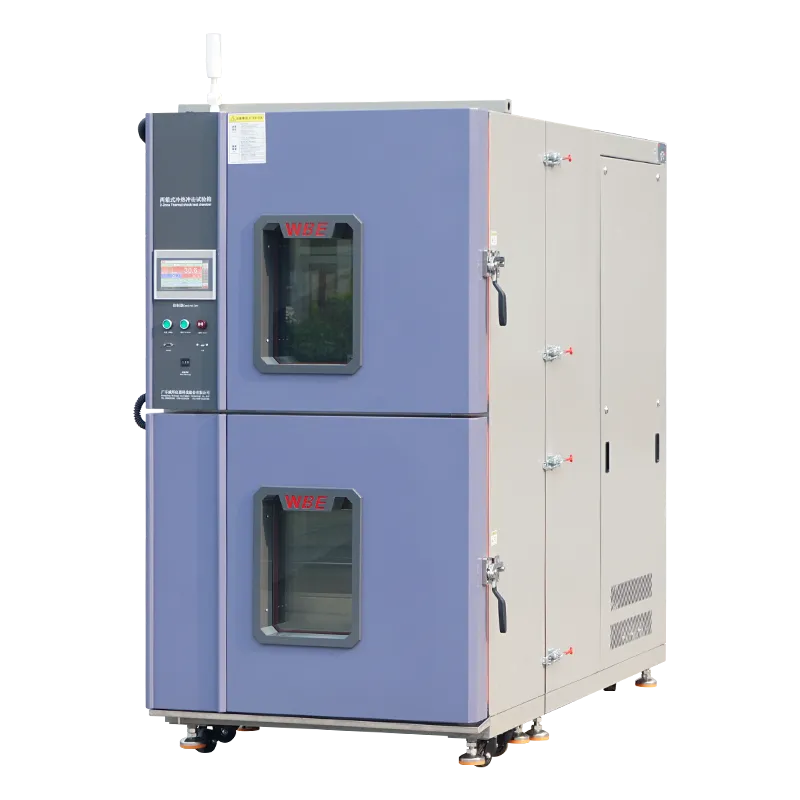
An in-depth exploration into the engineering, methodology, and critical reliability insights provided by advanced thermal simulation technology.
The Critical Necessity of Thermal Reliability
In the modern manufacturing landscape, the durability of a product is often determined by its ability to withstand volatile environmental conditions. Whether it is a semiconductor chip in a smartphone or a critical sensor in an electric vehicle, materials expand and contract at different rates when exposed to heat and cold. This phenomenon, known as the coefficient of thermal expansion mismatch, is the primary cause of structural failure in integrated circuits and mechanical assemblies. To combat these risks, engineers rely on the thermal shock test chamber to replicate the most grueling temperature fluctuations in a controlled laboratory environment.
A thermal shock test chamber is not merely a high-end refrigerator or oven; it is a sophisticated piece of reliability testing equipment designed to transition a test sample between extreme temperature peaks within seconds. This rapid shift creates intense localized stress, forcing latent defects to the surface before a product ever reaches the consumer. By simulating months or even years of environmental wear in a matter of days, manufacturers can ensure that their designs are robust enough for global distribution across various climates.
Understanding the Core Mechanics of a Thermal Shock Test Chamber
The simulation of extreme temperature changes requires a complex mechanical orchestration. Most high-performance systems, such as those developed by WBE, utilize one of two primary methods for achieving these transitions: the two-zone air-to-air method or the three-zone air-to-air method. In a two-zone thermal shock test chamber, the equipment consists of an upper hot chamber and a lower cold chamber. A high-speed motorized basket carries the test specimen between these two environments. The transfer typically occurs in less than 10 seconds, ensuring that the specimen experiences an immediate thermal "shock."
Alternatively, a three-zone system introduces a middle "ambient" zone. This allows the specimen to stabilize at room temperature between the hot and cold exposures, which is required by certain international testing standards like MIL-STD-883. The precision required to maintain these temperatures—often ranging from -70 degrees Celsius to +150 degrees Celsius—demands advanced refrigeration cycles and powerful heating elements. The internal air circulation must be optimized to ensure that the "recovery time" (the time it takes for the specimen to reach the target temperature after transfer) is kept to an absolute minimum, providing a consistent and repeatable test environment.
Furthermore, the internal construction of the chamber must be resilient. Since the chamber itself is subjected to these massive temperature swings, high-grade SUS304 stainless steel and specialized insulation materials are used to prevent structural warping and energy loss. This engineering excellence is what separates a standard environmental chamber from a specialized thermal shock system designed for high-stress reliability auditing.
How Rapid Transition Reveals Hidden Material Defects
Why is the "shock" aspect so important? When a material is heated slowly, it has time to distribute the thermal energy evenly. However, in a thermal shock test chamber, the rapid cooling or heating causes the outer surface of the material to change temperature much faster than the inner core. This creates a temperature gradient that induces massive mechanical stress. If a solder joint in a PCB is weak, or if the bonding between two different materials is insufficient, the resulting expansion and contraction will cause cracks, delamination, or electrical opens.
In the electronics industry, this is particularly vital for detecting "infant mortality" in components. Tiny microscopic cracks in ceramic capacitors or poorly bonded wire leads in microchips might pass a standard functional test at room temperature. However, after just a few cycles in a thermal shock environment, these weaknesses are magnified, leading to failure. By identifying these failure modes early in the R&D phase, companies can adjust their material selection or manufacturing processes, significantly reducing warranty claims and protecting their brand reputation.
Modern testing often involves hundreds or even thousands of cycles. The ability of the thermal shock test chamber to perform these cycles autonomously, with precise logging of every temperature data point, allows quality control teams to perform "Accelerated Life Testing." This data-driven approach provides a mathematical model of how long a product will last in the field, even under the most extreme conditions imaginable on Earth.
Industrial Applications: Where Thermal Shock Testing is Non-Negotiable
Different industries have varying requirements for thermal resilience. In the automotive sector, components located near the engine or braking systems must endure rapid heat spikes followed by immediate cooling from road splash or ambient winter air. An automotive-grade thermal shock test chamber must be large enough to accommodate complete sensor arrays or battery modules. As the world shifts toward electric vehicles (EVs), the demand for testing high-voltage batteries under thermal stress has never been higher.
In the aerospace and defense sectors, the stakes are even higher. Equipment on an aircraft can transition from the sweltering heat of a desert runway to the sub-zero temperatures of high-altitude flight in minutes. Failure of a communication module or navigation system is not an option. Consequently, these industries follow strict MIL-STD and IEC standards that dictate the exact parameters of the thermal shock process. A reliable test chamber ensures that these rigorous compliance benchmarks are met with zero margin for error.
Beyond electronics, the packaging and plastics industries also utilize this technology. They test the integrity of seals, the clarity of optical plastics, and the brittleness of polymers. By subjecting these materials to the thermal shock test chamber, manufacturers can ensure that their products won't degrade, yellow, or shatter when moved between different climate zones during international shipping.
WBE: Your Partner in Professional Reliability Solutions
When it comes to sourcing a high-quality thermal shock test chamber, precision, stability, and after-sales support are paramount. WBE (Guangdong Yuanyao Test Equipment Co., Ltd.) has established itself as a global leader in the environmental testing industry. With decades of expertise, WBE specializes in designing equipment that meets the most demanding international standards, including ISO, ASTM, and DIN. Our commitment to innovation ensures that our chambers are not only accurate but also energy-efficient and user-friendly.
Our product lineup is extensive, catering to various laboratory sizes and testing requirements. For those needing versatile solutions, we offer the two-slot thermal shock test chamber, which provides rapid transfer for high-throughput testing. If your compliance needs require a three-zone configuration, our three-slot thermal shock test chamber provides an ambient dwell period for superior stress analysis. For more specialized applications, we even provide the liquid tank thermal shock test chamber, which offers even faster heat transfer rates than air-based systems.
At WBE, we believe that reliability testing is the cornerstone of great engineering. That is why our thermal shock test chamber systems are equipped with state-of-the-art PLC controllers, touch-screen interfaces, and remote monitoring capabilities. We don't just sell equipment; we provide a comprehensive testing solution that includes installation, calibration, and lifelong technical support. Choosing WBE means choosing peace of mind for your quality assurance department.
Frequently Asked Questions
Q1: How does a thermal shock test chamber differ from a standard temperature cycling chamber?
While both chambers manipulate temperature, the primary difference is the rate of change. A standard chamber might change temperature at 5 to 15 degrees per minute. In contrast, a thermal shock test chamber achieves the transition almost instantly (usually within seconds) by moving the product between pre-heated and pre-cooled zones, creating much higher levels of mechanical stress.
Q2: What is the typical "Recovery Time" in a thermal shock test chamber?
Recovery time refers to how long it takes the air temperature (or specimen temperature) to return to the set point after a transfer. Most high-quality thermal shock test chamber units aim for a recovery time of less than 5 minutes, ensuring the test remains compliant with strict industrial standards.
Q3: Can a thermal shock test chamber handle liquid-to-liquid testing?
Yes, there are specialized liquid-to-liquid thermal shock test chamber models. These use fluids like silicone oil to transfer heat even faster than air, which is particularly useful for certain military-grade components that require extreme stress levels.
Q4: Is a three-zone thermal shock test chamber better than a two-zone one?
"Better" depends on your testing standard. A three-zone thermal shock test chamber allows for an ambient temperature soak between the extremes, which is a requirement for many MIL-STD tests. A two-zone chamber is more compact and faster for simple high-to-low shock transitions.
Q5: How do I choose the right size for a thermal shock test chamber?
You should consider the dimensions of your largest test specimen and allow for adequate airflow around it. Overloading the basket in a thermal shock test chamber can negatively impact the temperature recovery time and the uniformity of the test results.
Ready to Elevate Your Quality Control?
Don't leave your product reliability to chance. Contact the experts at WBE today for a customized consultation and find the perfect thermal shock solution for your laboratory.