


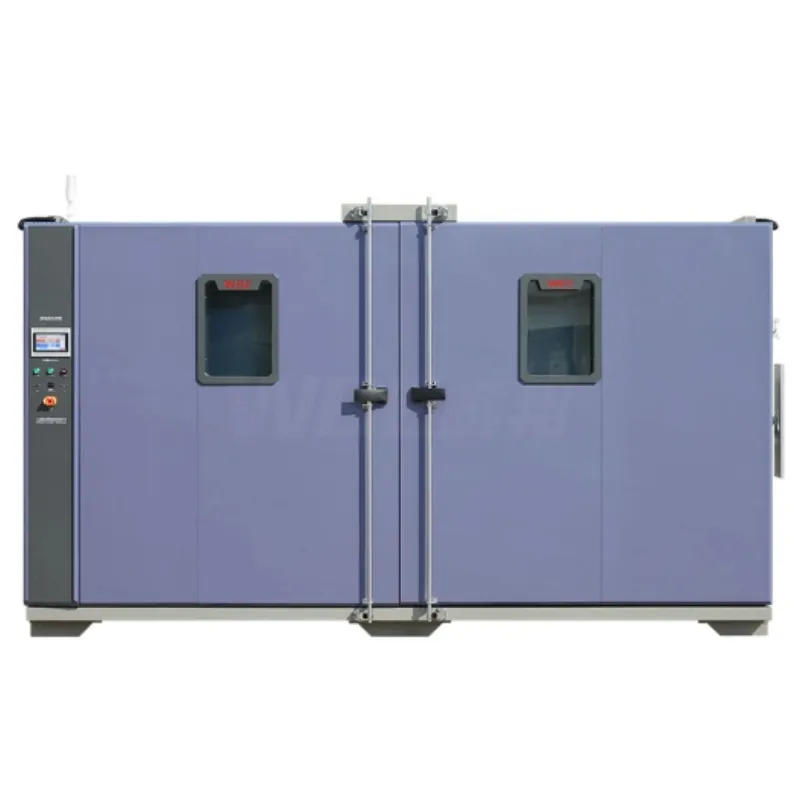
In the competitive landscape of modern manufacturing, the difference between a market leader and a struggling brand often comes down to one factor: product reliability. High-performance reliability testing equipment serves as the frontline defense against unexpected product failures, ensuring that every component meets the highest standards before reaching the end consumer.
Understanding the Critical Role of Reliability Testing Equipment
The primary objective of reliability testing is to determine how a product will perform under various environmental and mechanical stresses over a specific period. Without the proper use of reliability testing equipment, manufacturers are essentially guessing how their products will behave in the real world. This equipment allows engineers to simulate years of wear and tear in just a few days or weeks, providing invaluable data that can be used to refine designs and choose more durable materials. By subjecting products to controlled extremes, such as rapid temperature fluctuations, intense vibrations, or high humidity, manufacturers can identify the exact point of failure and the underlying cause of that failure.
Moreover, the integration of these tools into the Research and Development (R&D) phase helps in building a culture of quality. It is far more cost-effective to identify a structural weakness during the prototyping stage than to deal with a massive product recall after thousands of units have been sold. Professional reliability testing equipment provides the precision and repeatability required to validate complex systems, particularly in sensitive industries like aerospace, medical devices, and automotive electronics. By using these advanced instruments, companies can confidently guarantee the lifespan of their products, which in turn strengthens brand loyalty and market position.
The depth of analysis provided by modern testing systems goes beyond simple pass/fail metrics. They provide granular insights into material fatigue, chemical degradation, and electrical stability. For instance, a circuit board might function perfectly at room temperature but fail when exposed to the moisture levels common in tropical climates. Identifying this vulnerability early allows for the application of protective coatings or the redesign of the housing to prevent moisture ingress. This proactive approach to quality control is only possible through the systematic application of high-quality testing protocols.
Simulating Environmental Extremes to Uncover Hidden Defects
One of the most effective ways to prevent product failure is through environmental simulation. Environmental test chambers are a staple in the world of reliability testing equipment because they can mimic almost any climate on Earth. Whether it is the freezing temperatures of the upper atmosphere or the scorching heat of a desert, these chambers provide a controlled environment to see how products react. For electronics, temperature cycling is particularly crucial. Components expand and contract at different rates, and these thermal stresses can lead to solder joint fractures or internal delamination over time.
Furthermore, humidity testing is essential for products that contain sensitive mechanical or electronic parts. Excess moisture can lead to corrosion, short circuits, and the growth of mold, all of which are common causes of early-life failures. High-quality testing systems allow for the precise control of relative humidity and temperature simultaneously, creating conditions like "damp heat" that accelerate the natural degradation process. By observing how materials hold up under these conditions, engineers can make informed decisions about sealing techniques and material selection, effectively "designing out" potential failure modes before the manufacturing process even begins.
Another specialized area is thermal shock testing. Unlike standard temperature cycling, which changes temperature gradually, thermal shock involves moving a product between extreme hot and extreme cold environments almost instantaneously. This sudden change puts an immense amount of physical stress on the product, quickly revealing any weaknesses in its structural integrity or material bonding. Such rigorous testing is vital for components used in automotive engines or aerospace systems, where rapid temperature transitions are a regular occurrence during operation. Without the data provided by these specialized chambers, manufacturers would remain blind to risks that only manifest under extreme conditions.
The Strategic Impact of Mechanical Strength Testing
While environmental factors are significant, mechanical stresses are equally responsible for product failures. Mechanical testing involves assessing how much physical force a product can withstand before it breaks or deforms. This includes tensile strength, compression, and shear testing. In the semiconductor and electronics packaging industries, bond testing is a critical component of the quality assurance process. The tiny wires and solder balls that connect microchips to their substrates must be incredibly strong and resilient. Advanced push-pull testing machines are used to measure the force required to break these bonds, ensuring they can survive the mechanical shocks and vibrations of daily use.
Vibration testing is another key pillar of mechanical reliability. Products are often subjected to constant vibrations during shipping or while being used in vehicles and machinery. Over time, these vibrations can loosen screws, fatigue metal components, and cause electrical connectors to drift apart. By using electromagnetic vibration tables, manufacturers can simulate these real-world vibrations in a lab setting. This allows them to identify resonant frequencies that might cause excessive stress and to reinforce the product accordingly. The result is a more rugged product that is less likely to fail during transport or operation, leading to fewer customer complaints and lower return rates.
Mechanical reliability testing equipment also plays a vital role in material science. When developing new alloys or polymers, manufacturers need to know exactly how these materials will behave under load. Stress-strain curves generated by universal testing machines provide the foundational data needed for computer-aided engineering (CAE) simulations. This ensures that the digital models used to design products are based on accurate, real-world physical properties. By bridging the gap between theoretical design and physical reality, mechanical testing helps create products that are both efficient and incredibly durable.
Accelerated Life Testing and Its Economic Benefits
Manufacturers cannot afford to wait ten years to see if a product will last a decade. This is where Accelerated Life Testing (ALT) comes into play. By using reliability testing equipment to increase the severity of stresses—such as higher temperatures or increased voltages—engineers can induce failures more quickly than they would occur under normal use conditions. Mathematical models are then used to extrapolate these results to predict the product's actual lifespan in the field. This process is essential for calculating warranty periods and for ensuring that the product meets the longevity expectations of the target market.
The economic benefits of ALT are profound. By identifying "weak links" in the design early, companies can avoid the astronomical costs associated with large-scale failures. A single failure in a critical component of an electric vehicle or a satellite could cost millions of dollars in damages and lost revenue. Investing in high-end reliability testing equipment allows companies to mitigate these risks. Furthermore, it allows for "leaner" designs. When you know exactly how much stress a part can take, you can avoid over-engineering it, which saves on material costs without compromising safety or reliability.
In addition to cost savings, reliability testing enhances a company's reputation for quality. In today's interconnected world, a single viral report of a failing product can severely damage a brand's image. Conversely, a reputation for making "indestructible" or "highly reliable" goods is a powerful marketing tool. Customers are often willing to pay a premium for products they know will last. Therefore, the use of sophisticated testing instruments is not just a technical necessity; it is a strategic investment in the brand's future and long-term profitability.
WBE: Your Partner in Advanced Reliability Solutions
WBE has established itself as a global leader in the design and manufacture of high-precision testing systems. With years of expertise in environmental and mechanical simulation, WBE provides a comprehensive suite of solutions tailored to meet the rigorous demands of modern industry. Our commitment to innovation and quality has made us a trusted partner for companies in sectors ranging from semiconductor manufacturing to automotive and aerospace engineering. We understand that every product is unique, and we offer customizable equipment to address specific testing requirements.
Our product lineup includes some of the most advanced reliability testing equipment available today. For those requiring extreme thermal analysis, our thermal shock test chambers offer unmatched performance in simulating rapid temperature transitions. We also specialize in HAST high-voltage accelerated aging test chambers, which are essential for validating the long-term reliability of electronic components under high pressure and humidity. For mechanical validation, our push and pull testing machines provide the precision needed for bond and shear force analysis.
WBE's advantages lie in our deep technical knowledge and our focus on user-friendly design. Our equipment is equipped with intuitive control systems, robust data logging capabilities, and advanced safety features to ensure reliable operation in any laboratory setting. By choosing WBE, you are not just buying a machine; you are gaining a partner dedicated to helping you achieve zero-defect manufacturing. We also offer specialized solutions like walk-in temperature and humidity chambers for large-scale product testing and explosion-proof chambers for the growing battery and new energy sectors.
Whether you are looking to improve your current quality control processes or are setting up a new laboratory from scratch, WBE provides the tools and support you need to succeed. Our global service network ensures that you have access to expert maintenance and calibration services, keeping your equipment running at peak performance for years to come. Explore our full range of products at our official product gallery and discover why top-tier manufacturers choose WBE for their reliability testing needs.
Conclusion
In conclusion, the use of reliability testing equipment is an indispensable part of the modern product lifecycle. By simulating environmental extremes, assessing mechanical strength, and conducting accelerated life tests, manufacturers can proactively identify and eliminate failure points. This leads to safer products, lower costs, and a much stronger brand reputation. In an era where quality is the primary differentiator, having the right testing partner is more important than ever. WBE stands ready to provide the advanced technology and expertise required to ensure your products can withstand the test of time and the rigors of the real world.
Ready to Enhance Your Product Reliability?
Contact WBE today to discuss your specific testing requirements and find the perfect equipment solution for your laboratory.
Frequently Asked Questions
Q1: What is the most common use of reliability testing equipment in electronics?
Reliability testing equipment in the electronics sector is primarily used to conduct thermal cycling, humidity testing, and vibration analysis. These tests help identify potential failures such as solder joint cracking, insulation breakdown, and component fatigue caused by environmental stress and mechanical vibration during use.
Q2: How does reliability testing equipment simulate extreme environmental stress?
Reliability testing equipment uses advanced climate control systems to manipulate temperature, humidity, and pressure within a sealed chamber. By utilizing refrigeration compressors, heating elements, and ultrasonic humidifiers, it can recreate environments ranging from -70 degrees Celsius to +180 degrees Celsius and humidity levels up to 98 percent.
Q3: Why is reliability testing equipment essential for the automotive industry?
The automotive industry requires reliability testing equipment to ensure that components like sensors, infotainment systems, and battery packs can survive harsh road conditions. This includes exposure to extreme weather, constant engine vibration, and rapid temperature changes, ensuring passenger safety and vehicle longevity.
Q4: What are the key features to look for in modern reliability testing equipment?
When selecting modern reliability testing equipment, look for features such as high-precision sensors, programmable controllers with touchscreen interfaces, robust data logging for traceability, and safety protections like over-temperature alarms and automatic shut-off mechanisms.
Q5: How can reliability testing equipment reduce long-term manufacturing costs?
By identifying design flaws and material weaknesses early in the R&D stage, reliability testing equipment prevents expensive mass production failures, reduces the volume of warranty claims, and minimizes the risk of product recalls, which can save a company millions of dollars in the long run.