


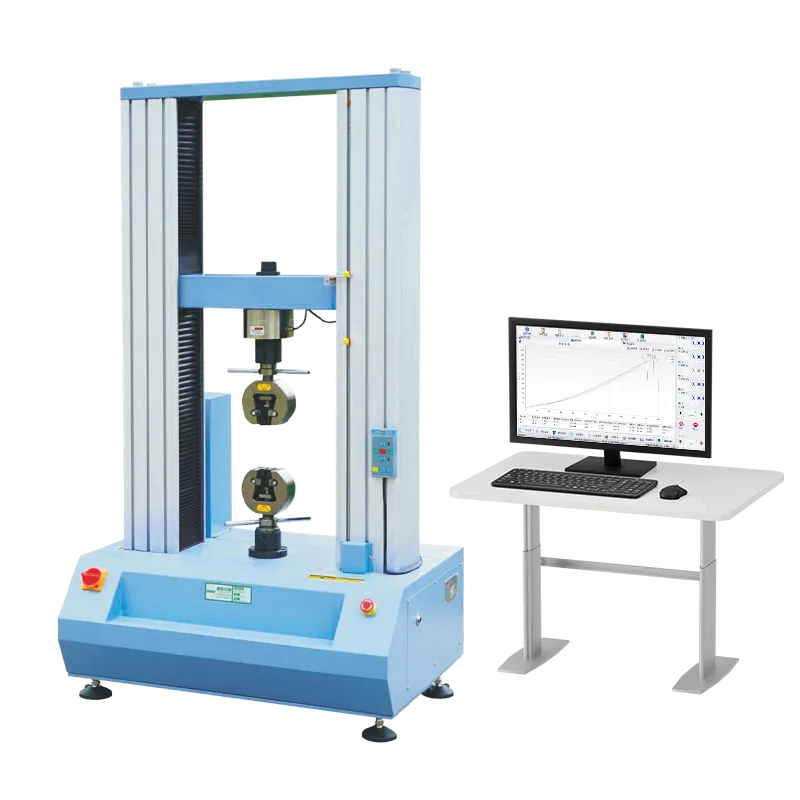
A comprehensive guide to material characterization, mechanical validation, and the versatility of the modern Universal Testing Machine in global manufacturing.
Introduction to Material Integrity and Mechanical Testing
In the contemporary landscape of industrial manufacturing and material science, the structural integrity of components is paramount. Whether it is a tiny semiconductor wire or a massive aerospace fuselage, understanding how a material responds to external forces is the difference between product success and catastrophic failure. This is where the Universal Testing Machine (UTM) enters the fold. Often referred to as a materials testing machine or tensile tester, the Universal Testing Machine is a versatile piece of equipment designed to evaluate the mechanical properties of materials across various industries. Its name, "universal," originates from its unique ability to perform a wide spectrum of tests, including tensile, compression, bending, shearing, and peeling, simply by changing the grips and fixtures used during the operation.
The logic behind investing in a high-quality Universal Testing Machine lies in the pursuit of quantifiable data. Engineers and quality control specialists rely on this data to establish safety margins, comply with international standards such as ISO and ASTM, and innovate with new composite materials. As industries evolve toward "lighter and stronger" requirements, the demand for precision in mechanical testing has never been higher. A Universal Testing Machine provides the empirical evidence needed to validate theoretical models, ensuring that every batch of raw material meets the rigorous demands of its intended application. Throughout this guide, we will explore the intricate workings of these machines and the diverse range of tests they enable.
The Anatomy and Functionality of a Universal Testing Machine
Understanding the architecture of a Universal Testing Machine is essential for any professional involved in quality assurance. At its core, the machine consists of two main parts: the load frame and the control system. The load frame is the skeletal structure that provides the necessary force to the specimen. It can be a single-column or dual-column design depending on the force requirements. Within this frame, a movable crosshead travels vertically, driven by precision screws or hydraulic actuators. The crosshead is responsible for applying the load to the material being tested. To measure this load accurately, a high-precision load cell is integrated into the system, converting physical force into an electrical signal that can be analyzed by software.
Beyond the hardware, the software and sensing components are what truly make the Universal Testing Machine a sophisticated tool. Modern UTMs utilize extensometers to measure the strain or deformation of the specimen with micrometer precision. The control system regulates the speed of the crosshead, ensuring that the test is performed at a constant rate of displacement or load, as specified by testing standards. This level of control allows for the generation of a stress-strain curve, which serves as the "fingerprint" of the material's mechanical behavior. By examining this curve, experts can identify the elastic limit, the yield point, and the ultimate tensile strength. The synergy between robust mechanical engineering and advanced digital processing is what allows a modern Universal Testing Machine to deliver repeatable and reliable results in laboratory and production environments.
Tensile Testing: Measuring the Limits of Material Strength
The most common application of a Universal Testing Machine is the tensile test. In this procedure, a specimen is gripped at two ends and pulled apart until it fractures or reaches a specific deformation point. This test is vital for determining how a material will behave under tension, which is a critical force in everything from bridge cables to consumer electronics. During the test, the Universal Testing Machine continuously records the applied load and the increase in the specimen's length. This data is then converted into stress and strain values. The resulting stress-strain diagram reveals the material's modulus of elasticity, which indicates how stiff the material is and how well it will return to its original shape after the load is removed.
Furthermore, tensile testing provides insights into the ductility and toughness of the material. For instance, in the automotive industry, engineers must ensure that the metals used in a car's frame can absorb energy during an impact without snapping prematurely. A Universal Testing Machine allows them to measure the "elongation at break," providing a clear indication of how much the metal will stretch before failing. In the world of polymers and textiles, tensile testing helps in assessing the strength of fibers and the integrity of adhesive bonds. By utilizing different types of grips, such as wedge grips for metals or pneumatic grips for films, the Universal Testing Machine adapts to the specific physical characteristics of the sample, ensuring that the force is applied uniformly and without slippage, which is crucial for obtaining accurate, standard-compliant data.
Compression and Flexural Testing: Evaluating Structural Stability
While tensile testing focuses on pulling materials apart, compression testing involves pushing them together to determine their ability to withstand crushing loads. This is particularly important for brittle materials like concrete, ceramics, and foam plastics. When using a Universal Testing Machine for compression, the sample is placed between two flat platens. The machine applies a downward force, and the resulting data helps determine the material's compressive yield strength and its behavior under static or dynamic loads. This is a foundational test for the construction industry, where the load-bearing capacity of columns and support structures must be verified to prevent structural collapse.
Flexural or "bend" testing is another critical capability of the Universal Testing Machine. This test typically involves a three-point or four-point loading system where a material is supported at two ends and loaded at the center or at two intermediate points. This induces both tensile and compressive stresses within the specimen, allowing engineers to measure the flexural modulus and flexural strength. Bend testing is essential for evaluating the performance of composite panels, circuit boards (PCBs), and consumer device housings. For example, a smartphone manufacturer might use a Universal Testing Machine to simulate the force of a user accidentally sitting on their device, ensuring that the internal components and the screen can withstand the bending force without cracking. This versatility makes the UTM an indispensable tool for holistic product durability testing.
The Power of Environmental Integration in Mechanical Testing
One of the most significant advancements in testing technology is the integration of mechanical force application with environmental conditioning. Standard room-temperature tests provide a baseline, but materials often perform very differently when subjected to extreme heat or freezing cold. To address this, many high-end systems are configured as a Universal Testing Machine with a temperature chamber. By enclosing the testing area in a thermal chamber, researchers can evaluate how temperature fluctuations affect a material's tensile strength, brittleness, and elasticity. This is critical for sectors like aerospace and new energy vehicle (NEV) batteries, where components must function reliably in environments ranging from -70 degrees Celsius to over 150 degrees Celsius.
When a Universal Testing Machine is paired with an environmental chamber, it allows for "Real-World Simulation." For instance, rubber seals used in outdoor power equipment must remain flexible in winter but resist melting in summer. Testing these seals using a Universal Testing Machine at varying temperatures ensures they will not fail in the field. Similarly, in the semiconductor industry, gold wires and solder joints are tested for their pull strength under thermal stress to prevent fatigue-related failures. This combined approach reduces the need for separate environmental and mechanical testing phases, streamlining the R&D process and providing a more accurate prediction of product lifespan under harsh operating conditions. It represents the pinnacle of reliability testing for modern high-tech industries.
WBE: Your Expert Partner in Precision Testing Solutions
As a professional manufacturer with over 20 years of experience, WBE (Dongguan Weibang Instrument Equipment Co., Ltd.) has established itself as a leader in the environmental and mechanical testing industry. Headquartered in the "World Factory" of Dongguan, China, WBE is a high-tech enterprise dedicated to the research, development, and production of top-tier testing equipment. Our commitment to innovation and quality has allowed us to serve prestigious clients, including state-owned enterprises like AVIC Precision Machinery, and global leaders in the semiconductor, new energy, and 5G communications sectors. We pride ourselves on providing not just machines, but comprehensive solutions that help our clients achieve global quality standards.
Our product portfolio is designed to meet the most demanding testing requirements. For those seeking advanced mechanical validation, our electronic universal testing machine offers unparalleled accuracy for tensile and compression analysis. Furthermore, we specialize in the intersection of environmental and mechanical forces, offering the universal testing machine with temperature chamber, which allows for precise material characterization under extreme thermal conditions. For specialized applications in the electronics sector, our environmental tensile tester ensures that your components can withstand the stresses of modern operation. At WBE, we also offer a wide range of climate chambers, from thermal shock test chambers to walk-in environmental systems, ensuring that we are a one-stop shop for all your reliability testing needs.
Choosing WBE means choosing reliability. Our equipment is built with high-quality components and undergoes rigorous calibration to ensure data integrity. Whether you are in the automotive industry, aerospace, or consumer electronics, our team of experts is ready to assist you in selecting the right equipment for your specific needs. We invite you to explore our full range of products and discover how WBE can enhance your quality assurance process. For more information or to request a quote, please visit our product catalog or contact our technical support team directly.
Conclusion: The Vital Role of the Universal Testing Machine
In summary, the Universal Testing Machine is more than just a piece of laboratory equipment; it is a critical gatekeeper of quality and safety in the global supply chain. By providing a standardized method for evaluating the mechanical limits of materials, it enables engineers to design products that are safer, more efficient, and more durable. From the initial R&D of new alloys to the final quality check of a production run, the UTM offers the precision and versatility required to navigate the complexities of modern engineering. Its ability to perform multiple types of tests—tensile, compression, and flexural—within a single platform makes it one of the most cost-effective and essential investments for any material testing facility.
As technology continues to advance, the Universal Testing Machine will evolve to include even more sophisticated automation, higher precision sensors, and deeper integration with digital twin modeling. For companies looking to stay competitive in industries like aerospace, automotive, and electronics, staying at the forefront of testing technology is not optional—it is a necessity. Partnering with experienced manufacturers like WBE ensures that you have access to the latest innovations and the technical support needed to maximize the value of your testing investment. By placing a high-quality Universal Testing Machine at the heart of your quality control strategy, you are investing in the long-term success and reputation of your brand.
Frequently Asked Questions
Q1: What is the primary function of a Universal Testing Machine?
The primary function of a Universal Testing Machine is to evaluate the mechanical properties of materials by applying various types of physical forces. It can perform tensile, compression, flexural (bending), and peel tests. By measuring how a material reacts to these forces, the machine provides critical data such as strength, elasticity, and durability, which are essential for quality control and material research.
Q2: How to ensure the accuracy of a Universal Testing Machine?
Ensuring the accuracy of a Universal Testing Machine requires regular calibration and maintenance. Calibration should be performed by certified professionals using traceable reference standards for both load and displacement. Additionally, using high-quality load cells and extensometers, and ensuring the machine is installed on a stable, level surface, are key factors in maintaining data integrity over time.
Q3: Can a Universal Testing Machine perform environmental tests?
Yes, when integrated with a thermal chamber, a Universal Testing Machine can perform environmental tests. This configuration allows for the evaluation of mechanical properties at extreme high or low temperatures. This is vital for materials used in aerospace or automotive applications where components must maintain their structural integrity across a wide range of environmental conditions.
Q4: Which industries rely most on a Universal Testing Machine?
The Universal Testing Machine is widely used across multiple industries, including aerospace, automotive manufacturing, construction, plastics and polymers, textiles, and electronics. Any industry that produces or utilizes structural materials or consumer products needs a UTM to verify that their products meet safety standards and perform as expected under stress.
Q5: What are the key components of a modern Universal Testing Machine?
A modern Universal Testing Machine consists of a robust load frame (single or dual column), a movable crosshead driven by a motor or hydraulic system, a precision load cell for force measurement, and specialized grips or fixtures. It also includes advanced software for control and data analysis, and often features external sensors like extensometers for precise strain measurement during the testing process.
Ready to Elevate Your Quality Assurance?
Contact WBE today for a professional consultation and find the perfect testing solution for your industry.
Get a Free Quote Now