


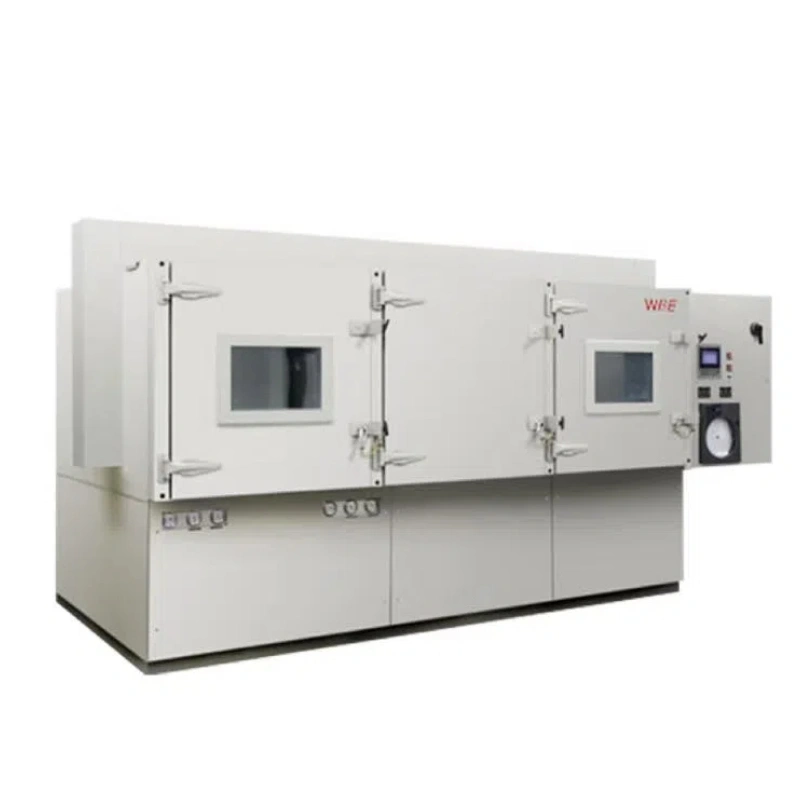
Ensuring long-term product durability is a key challenge for manufacturers in electronics, automotive, aerospace, and industrial sectors. Products must withstand mechanical stress, temperature fluctuations, humidity, vibration, and other environmental factors over extended periods. Reliability Testing Equipment provides controlled testing environments to simulate these real-world stresses and evaluate product performance, allowing manufacturers to improve quality, durability, and customer satisfaction.
This article explores how reliability testing equipment helps ensure long-term product durability, including the types of equipment, their applications, and the benefits they provide.
The Importance of Reliability Testing
Products exposed to harsh operational environments may experience early failures if not properly tested. Reliability testing allows manufacturers to:
- Detect weak points in materials and components
- Evaluate the effects of long-term environmental exposure
- Validate design choices and manufacturing processes
- Reduce warranty claims and improve product reputation
By using reliability testing equipment, companies can predict potential failures before products reach the market, ensuring long-term durability and customer confidence.
Key Types of Reliability Testing Equipment
1. Thermal Shock Test Chambers
Thermal shock chambers simulate rapid temperature transitions, testing how products react to sudden heat and cold. This identifies stress points that could lead to cracking, delamination, or solder joint failure.
Applications:
- Electronics and connectors
- Automotive sensors and modules
- Aerospace components
Benefits:
- Detects weaknesses caused by rapid temperature changes
- Accelerates failure analysis and product life assessment
2. Environmental Test Chambers
Environmental test chambers provide controlled conditions of temperature, humidity, and sometimes vibration to test products under prolonged exposure.
Applications:
- Consumer electronics
- Industrial machinery
- Plastics and composites
Benefits:
- Simulates long-term environmental conditions
- Assesses endurance and material stability
- Supports compliance with ISO and IEC standards
3. Push-Pull Testing Machines
Push-pull machines evaluate the tensile and compressive strength of connectors, terminals, and mechanical assemblies. They ensure components can withstand repeated stress during operation.
Applications:
- Electrical connectors and cables
- PCB-mounted components
- Small mechanical assemblies
Benefits:
- Accurate measurement of insertion and extraction forces
- Identifies weak connections before field use
- Ensures mechanical reliability of products
4. Vibration Testing Equipment
Vibration testers apply oscillating forces to products to simulate operational stress, transportation, or accidental shocks.
Applications:
- Automotive electronics
- Aerospace modules
- Portable consumer devices
Benefits:
- Detects structural weaknesses
- Prevents failures caused by mechanical stress
- Supports reliability and durability evaluation
5. Universal and Mechanical Testing Machines
Universal Testing Machines (UTM) measure tensile, compressive, bending, and shear properties of materials and components, ensuring structural integrity.
Applications:
- Electronic enclosures and PCBs
- Plastic or composite components
- Industrial machinery parts
Benefits:
- Provides precise material and component analysis
- Supports design verification and process improvement
- Enhances long-term durability of products
How Reliability Testing Equipment Ensures Long-Term Durability
- Simulating Real-World Stresses
By replicating operational conditions such as temperature fluctuations, humidity, vibration, and mechanical loads, manufacturers can identify potential failure modes. - Early Failure Detection
Testing reveals weak components, poor assembly, or substandard materials before products reach the market. - Data-Driven Design Improvements
Engineers use test data to refine product design, material selection, and manufacturing processes for improved durability. - Compliance with Industry Standards
Reliability testing ensures products meet international standards such as ISO, IEC, and UL, guaranteeing performance and safety. - Reducing Field Failures
Identifying and correcting weaknesses during testing reduces warranty claims, recalls, and product downtime.
About WBE Instrument Technology
Guangdong WBE Instrument Technology Co., Ltd. specializes in Reliability Testing Equipment for electronics, automotive, aerospace, and industrial applications. WBE provides Thermal Shock Test Chambers, Environmental Test Chambers, Push-Pull Testing Machines, Vibration Testing Equipment, and Universal Testing Machines.
With advanced control systems, programmable cycles, and precise monitoring, WBE’s equipment helps manufacturers simulate real-world stresses, detect potential failures early, and ensure long-term product durability. WBE’s solutions support quality control, regulatory compliance, and enhanced product performance across diverse industries.
FAQ
Q1: What is reliability testing equipment?
Reliability testing equipment simulates environmental and mechanical stresses on products to assess durability, performance, and long-term reliability.
Q2: How does reliability testing ensure product durability?
By replicating real-world stresses, detecting weak points, and providing data for design improvements, products are optimized for long-term use.
Q3: Which industries use reliability testing equipment?
Electronics, automotive, aerospace, consumer devices, and industrial manufacturing industries commonly use reliability testing equipment.
Q4: Can reliability testing prevent product failures in the field?
Yes, early detection of weaknesses reduces field failures, warranty claims, and recalls, improving customer satisfaction.
Q5: What types of reliability testing equipment are most commonly used?
Thermal Shock Test Chambers, Environmental Test Chambers, Push-Pull Testing Machines, Vibration Testing Equipment, and Universal Testing Machines are widely used for electronics and industrial components.