


In the contemporary manufacturing landscape, where product lifecycles are shrinking and consumer expectations for quality are skyrocketing, Accelerated Life Testing (ALT) has emerged as a cornerstone of engineering excellence. At the heart of this methodology lies specialized reliability testing equipment, which enables engineers to compress years of environmental and operational stress into a matter of days or weeks. By subjecting components to conditions far exceeding their normal operating parameters, manufacturers can predict longevity, identify potential failure modes, and ensure that their products withstand the rigors of real-world use.
The integration of advanced simulation technology allows for a proactive approach to quality assurance. Instead of waiting for field failures to occur, which can lead to costly recalls and brand damage, companies utilize high-precision instruments to simulate heat, humidity, vibration, and pressure. This strategic use of reliability testing equipment ensures that every design iteration is validated against rigorous standards, providing a data-driven foundation for product release and warranty estimations.
The Mechanics of Accelerated Life Testing and Simulation
Accelerated Life Testing is based on the principle that the chemical and physical processes leading to failure can be accelerated by increasing the stress levels applied to a product. To perform these tests accurately, engineers require sophisticated reliability testing equipment capable of maintaining precise control over environmental variables. For instance, the Arrhenius model is often used to calculate how much faster a product will age when exposed to higher temperatures. Without the ability to hold a specific temperature within a fraction of a degree, the resulting data would be unreliable and potentially misleading.
Modern testing systems go beyond simple temperature control. They incorporate multi-axis vibration, rapid thermal cycling, and high-pressure environments to mimic the most hostile conditions on Earth—and beyond. By using these tools, manufacturers in the aerospace, automotive, and semiconductor industries can observe the "infant mortality" phase of a product and the subsequent "wear-out" phase in a controlled laboratory setting. This allows for the optimization of material selection and structural design long before the mass production phase begins.
Furthermore, the data acquisition systems integrated into these chambers provide real-time feedback. Engineers can monitor the exact moment a solder joint cracks or a seal fails under pressure. This granular level of insight is only possible through the deployment of professional-grade reliability testing equipment, which serves as a bridge between theoretical design and practical durability.
Essential Categories of Reliability Testing Systems
To support a comprehensive ALT program, a variety of specialized chambers and machines are utilized. Each piece of reliability testing equipment is designed to target specific failure mechanisms. For electronic components, Highly Accelerated Stress Test (HAST) chambers are indispensable. These units use high pressure and high humidity to force moisture into encapsulated devices, revealing corrosion issues and insulation breakdowns in a fraction of the time required by standard humidity tests.
Thermal Shock Chambers: These systems move samples between extreme hot and cold zones almost instantaneously. This induces severe mechanical stress due to differential thermal expansion, perfect for testing the integrity of bonded materials and welded joints.
Rapid Rate Temperature Exchange Chambers: Unlike standard chambers, these provide transition rates of 10°C, 15°C, or even 20°C per minute. This speed is crucial for uncovering defects that only manifest during volatile temperature swings.
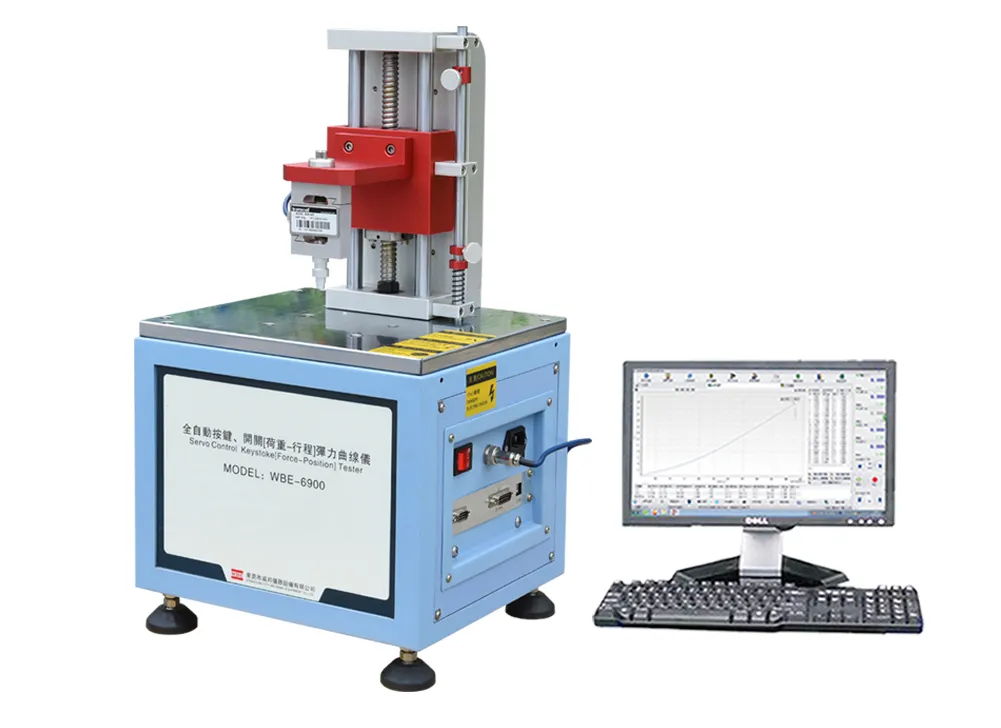
Mechanical Push-Pull Testers: Reliability is not just about the environment; it is about physical strength. These machines measure the force required to break connections, ensuring that connectors and semiconductor bonds meet specified safety margins.
By combining these different types of reliability testing equipment, a company can create a "stress profile" that accurately reflects the life of the product. Whether it is a smartphone that must survive accidental drops and tropical humidity, or an automotive sensor that must endure decades of engine heat and road vibration, the right equipment makes validation possible.
Strategic Implementation of Testing Protocols
Success in ALT requires more than just purchasing reliability testing equipment; it requires a strategic framework for its application. Engineers must first define the "use environment" and the desired "service life." Once these parameters are established, the testing intensity is calculated. It is a delicate balance: if the stress is too low, the test takes too long; if it is too high, it may trigger "unnatural" failure modes that would never occur in the real world.
A best-practice approach involves step-stress testing, where variables are increased incrementally until failure occurs. This helps in identifying the specific design margins of a product. Utilizing programmable controllers within modern testing units allows for complex, multi-stage cycles to be automated, ensuring repeatability across different batches. This level of consistency is what separates industry leaders from their competitors, as it ensures that "quality" is a measurable, reproducible metric rather than a vague promise.
The Tangible Benefits of Advanced Reliability Testing
Reduced Time-to-Market
By accelerating the aging process, companies can move from prototype to final production months earlier than through traditional testing methods. This speed is vital in fast-paced industries like consumer electronics.
Cost Mitigation
Identifying a design flaw in the lab costs a fraction of what it costs to fix a failure in the field. Effective use of testing equipment reduces warranty claims and protects the bottom line.
Enhanced Brand Reputation
Products that consistently perform well in harsh conditions build consumer trust. Reliability becomes a key selling point that differentiates the brand from lower-quality alternatives.
Regulatory Compliance
Many industries, such as medical and defense, have strict mandates for durability. High-end testing systems provide the certified documentation needed to pass audits and gain market access.
Partnering with WBE for Global Reliability Standards
At WBE, we understand that precision is the foundation of innovation. As a leading manufacturer of environmental and mechanical testing solutions, we specialize in providing the high-performance reliability testing equipment required to execute complex Accelerated Life Testing protocols. With over two decades of industry experience, WBE serves global leaders in semiconductors, new energy vehicles, and aerospace, delivering equipment that meets international standards such as MIL-STD, IEC, and ISO.
Our diverse product portfolio is designed to address every stage of the validation process. For instance, our HAST test chamber series offers unparalleled efficiency for semiconductor aging, while our thermal shock test chamber solutions provide the rapid transitions necessary to detect latent structural weaknesses. For those requiring physical force validation, WBE’s mechanical testing machine lineup ensures that every bond and connector is built to last.
Choosing WBE means more than just buying a machine; it means gaining a partner dedicated to your product's success. From our walk-in environmental chambers for large-scale systems to our desktop units for precision components, we offer custom engineering services to tailor our solutions to your specific laboratory needs. Our commitment to quality and technical support ensures that your investment in testing products yields accurate, actionable data for years to come.
Frequently Asked Questions
Q1: Why is reliability testing equipment essential for the semiconductor industry?
Semiconductors are prone to microscopic failures like electromigration and moisture-induced corrosion. Specialized testing equipment allows for high-pressure and high-temperature environments that reveal these defects quickly, ensuring chips can last for the intended 10-20 year lifespan in critical applications.
Q2: How does reliability testing equipment help in determining warranty periods?
By using ALT data collected from the equipment, engineers can apply mathematical models to predict the Mean Time To Failure (MTTF). This allows the company to set warranty periods that are both attractive to customers and financially sustainable for the manufacturer.
Q3: Can reliability testing equipment simulate multiple environmental stresses simultaneously?
Yes, advanced systems like vibration-integrated temperature chambers (AGREE chambers) can apply thermal stress and mechanical vibration at the same time. This multi-stress testing is much more effective at finding failures that occur during combined shipping and operational conditions.
Q4: What should I look for when sourcing reliability testing equipment?
Key factors include temperature uniformity, control precision, safety features (especially for battery testing), and ease of maintenance. It is also important to ensure the manufacturer provides calibration services to maintain the accuracy of the test results over time.
Q5: How does WBE support the maintenance of its reliability testing equipment?
WBE provides comprehensive after-sales support, including remote diagnostics, on-site calibration, and spare parts availability. Our goal is to ensure that your testing facility experiences minimal downtime, allowing your R&D and QA processes to remain on schedule.
Ready to Elevate Your Product Durability?
Don't leave your product quality to chance. Invest in precision-engineered solutions that provide the insights you need to lead the market. Contact the experts at WBE today for a customized consultation on your testing requirements.