


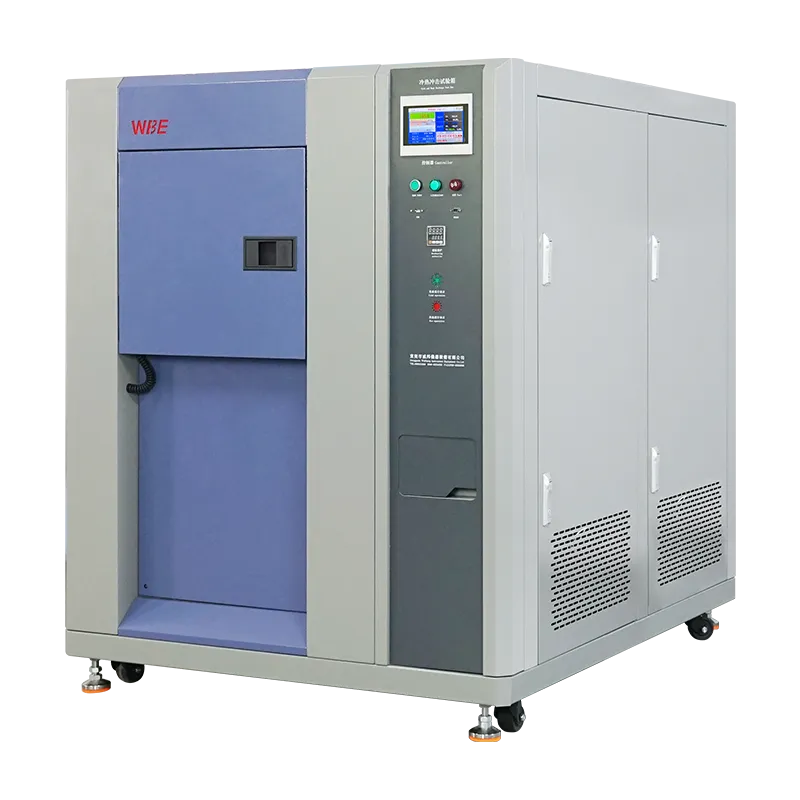
In modern manufacturing, products are often exposed to extreme and rapidly changing environmental conditions. Electronics, automotive components, aerospace modules, and industrial equipment must maintain performance under these stresses. Thermal Shock Test Chambers are essential for assessing product durability, simulating rapid temperature changes, and ensuring long-term reliability.
This article explores how thermal shock test chambers improve product reliability, their applications, and the benefits they offer in quality assurance and product development.
Understanding Thermal Shock Testing
Thermal shock testing evaluates how products react to sudden temperature changes. By cycling components between high and low temperatures rapidly, manufacturers can identify weaknesses such as:
- Material cracking or warping
- Solder joint failure
- Delamination in layered materials
- Connector or assembly loosening
Thermal shock chambers provide a controlled environment to simulate these conditions, ensuring that products can withstand real-world operational stresses.
Working Principle of Thermal Shock Test Chambers
Thermal shock test chambers typically consist of two or more temperature zones:
- High-Temperature Zone: Products are exposed to elevated temperatures to test heat resistance.
- Low-Temperature Zone: Rapid transfer to a cold zone simulates extreme cooling conditions.
- Rapid Transition: Products are quickly moved between hot and cold zones, either mechanically or via air transfer, creating thermal shock conditions.
- Monitoring and Data Acquisition: Sensors track temperature, cycle times, and product response to identify mechanical or electrical failures.
This rapid cycling accelerates potential failures, allowing engineers to observe how materials and assemblies behave under extreme thermal stress.
Applications of Thermal Shock Test Chambers
1. Electronics and Semiconductors
Electronic devices, connectors, and PCBs are sensitive to temperature variations. Thermal shock testing ensures that solder joints, connectors, and components maintain integrity during rapid temperature changes.
2. Automotive Components
Automotive sensors, connectors, and modules must withstand hot engine environments and cold startup conditions. Thermal shock testing ensures durability and reliable performance in extreme climates.
3. Aerospace and Defense
Aerospace electronics and mechanical components experience rapid temperature changes at high altitudes. Thermal shock testing validates material performance and assembly integrity under harsh environmental conditions.
4. Industrial and Consumer Products
From industrial machinery to household electronics, thermal shock testing identifies potential failure points caused by rapid environmental changes, ensuring product longevity and user safety.
Benefits of Thermal Shock Test Chambers
- Enhanced Product Reliability: Identifies weaknesses early in the design or manufacturing process.
- Accelerated Life Testing: Rapid cycles simulate years of environmental stress in a short period.
- Quality Assurance: Confirms that products meet industry standards and customer expectations.
- Failure Analysis: Provides insights into material, component, or assembly failure modes.
- Versatile Applications: Suitable for electronics, automotive, aerospace, and industrial products.
By simulating extreme environmental conditions, thermal shock chambers help manufacturers design more robust products and reduce field failures.
Best Practices for Thermal Shock Testing
- Proper Sample Placement: Ensure products are securely mounted to prevent movement during rapid cycling.
- Controlled Cycle Parameters: Set temperature extremes and dwell times according to material and industry standards.
- Regular Calibration: Maintain sensor and chamber calibration to ensure accurate temperature transitions.
- Data Monitoring: Continuously track product behavior to identify early signs of failure.
Implementing these practices ensures accurate, repeatable, and meaningful testing results.
About WBE Instrument Technology
Guangdong WBE Instrument Technology Co., Ltd. is a leading manufacturer of advanced testing equipment, including Thermal Shock Test Chambers, Environmental Test Chambers, Walk-in Chambers, and Mechanical Testing Machines.
WBE serves industries such as electronics, automotive, aerospace, and industrial manufacturing, providing equipment that simulates real-world environmental stresses. With precise temperature control, rapid cycling, and robust monitoring systems, WBE’s thermal shock chambers help manufacturers improve product reliability, enhance quality control, and reduce potential failures.
FAQ
Q1: What is a Thermal Shock Test Chamber?
A Thermal Shock Test Chamber is a testing device that subjects products to rapid temperature changes between hot and cold zones to assess material and component durability.
Q2: Why is thermal shock testing important for product reliability?
It helps identify weaknesses in materials, solder joints, connectors, and assemblies, ensuring products can withstand extreme temperature changes in real-world applications.
Q3: Which industries use thermal shock chambers?
Electronics, automotive, aerospace, industrial machinery, and consumer electronics industries commonly use thermal shock testing to improve product reliability.
Q4: How are products tested in a thermal shock chamber?
Products are rapidly cycled between high-temperature and low-temperature zones while monitoring their mechanical, electrical, or structural response.
Q5: How does thermal shock testing reduce field failures?
By simulating extreme and rapid environmental changes, manufacturers can detect potential failure points early, allowing for design improvements and increased product durability.