


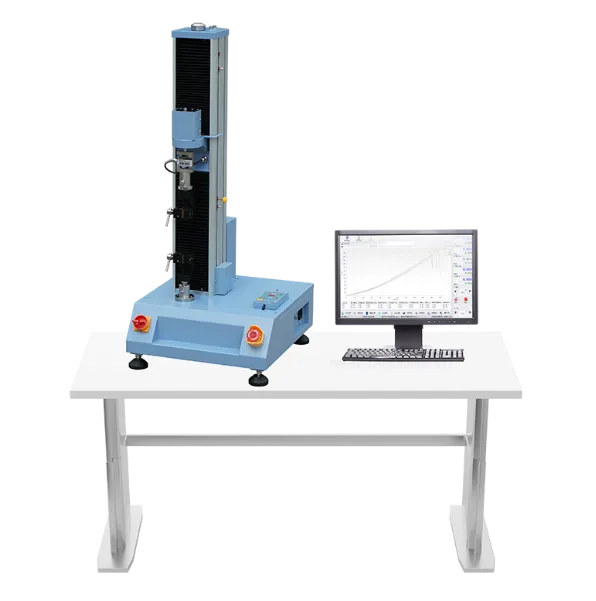
The evolution of modern manufacturing is deeply intertwined with the development of high-performance polymers and composite materials. From aerospace components to everyday consumer electronics, the reliability of these materials is paramount. To ensure that these substances can withstand the rigors of their intended environments, engineers rely heavily on a sophisticated mechanical testing machine. These instruments are not merely measuring tools; they are the gatekeepers of structural integrity, providing the quantitative data necessary to validate material properties under tension, compression, and various environmental stressors. As industries push the boundaries of what plastics and composites can achieve, the precision of evaluation becomes the deciding factor between innovation and failure.
Understanding the Role of Mechanical Testing in Polymer Science
Polymer science has transitioned from basic plastics to complex, reinforced composites that often replace traditional metals. This shift requires a deep understanding of viscoelasticity, fatigue life, and thermal expansion. A high-quality mechanical testing machine allows researchers to simulate real-world conditions, applying controlled loads to specimens to observe their deformation behavior. In the context of plastics, testing is not just about finding the breaking point; it is about mapping the entire stress-strain curve. This includes identifying the yield point, where the material begins to deform plastically, and the ultimate tensile strength. For composites, the complexity increases as the interface between the resin and the reinforcement fibers must be scrutinized for delamination or fiber pull-out.
Modern evaluation techniques demand high resolution and repeatability. When testing brittle composites, even a slight misalignment in the testing apparatus can lead to inaccurate results. Therefore, the mechanical testing machine must be equipped with advanced load cells and precision-aligned grips. WBE has long recognized that the accuracy of material evaluation is the cornerstone of research and development. By utilizing state-of-the-art technology, we enable manufacturers to predict how their products will behave over years of service, reducing the risk of costly recalls and ensuring safety in critical applications such as automotive fuel systems or medical implants.
Primary Testing Modalities for Composite Materials
Composite materials are anisotropic by nature, meaning their mechanical properties vary depending on the direction of the applied force. This characteristic necessitates a multi-faceted testing approach. Tensile testing is perhaps the most common, where the specimen is pulled until failure to determine its modulus of elasticity. However, for many structural applications, flexural testing (three-point or four-point bending) is equally vital. This test evaluates the stiffness of the composite and its resistance to bending moments, which is a frequent stressor in construction and transport sectors. A versatile mechanical testing machine should be able to switch between these modalities with minimal downtime, utilizing interchangeable fixtures and modular software.
In addition to static tests, dynamic mechanical analysis and fatigue testing are essential for composites used in vibrating environments. These tests measure how the material dissipates energy and how many cycles of stress it can endure before micro-cracks coalesce into a catastrophic failure. Advanced systems integrate environmental chambers with the testing frame, allowing for evaluation at extreme temperatures or high humidity. This is where WBE's expertise shines, as we provide integrated solutions that combine force measurement with climate control, ensuring that the material is tested in the exact conditions it will face in the field.
Key Components of an Advanced Mechanical Testing Machine
To achieve industry-leading precision, the architecture of a mechanical testing machine must be robust. The frame itself must have high axial stiffness to ensure that the measured displacement is a result of specimen deformation rather than frame deflection. Inside, the drive system—typically a high-precision ball screw powered by a servo motor—must provide smooth, jitter-free motion even at ultra-low speeds. This level of control is necessary for plastics that exhibit creep, where deformation occurs over time under a constant load. Furthermore, the electronic control system must have a high sampling rate to capture the rapid fracture events typical of high-modulus composites.
Data acquisition software is the brain of the operation. It must not only record raw data but also perform complex calculations based on international standards such as ASTM D638 for plastics or ASTM D3039 for polymer matrix composites. Modern interfaces now include real-time graphing, automated calibration routines, and comprehensive reporting tools. By streamlining the workflow from specimen setup to report generation, a professional testing system increases laboratory throughput and reduces the margin for human error. This technical sophistication is a hallmark of the equipment designed for high-stakes industrial research.
Standardization and Regulatory Compliance
In the global marketplace, consistency is key. Material specifications must be comparable across different labs and continents. This is achieved through strict adherence to ISO and ASTM standards. A professional mechanical testing machine is built to comply with these regulations, ensuring that every Newton of force and every micron of extension is calibrated against traceable standards. For manufacturers of plastics and composites, compliance is not optional; it is the baseline for entering the aerospace, medical, and automotive industries.
The evaluation process often involves rigorous validation of the testing procedure itself. This includes the use of extensometers—devices that attach directly to the specimen to measure strain with far greater accuracy than crosshead travel. Whether using contact extensometers or advanced non-contact video extensometers, the integration with the main testing unit must be seamless. This level of technical rigor ensures that the data generated can be used for finite element analysis (FEA) and other predictive modeling tools, allowing engineers to optimize designs for weight and strength without compromising safety.
Why Choose WBE for Your Material Testing Needs
WBE stands at the forefront of environmental and mechanical simulation technology. We understand that a mechanical testing machine is an investment in your company's reputation for quality. Our equipment is designed to meet the most demanding specifications, offering unparalleled reliability and precision. We provide a wide range of solutions, including our electronic universal testing machine, which is perfectly suited for a variety of plastic and composite applications.
Our commitment to excellence extends beyond just force measurement. Many materials behave differently under varying climate conditions, which is why we offer specialized units like the universal testing machine with temperature chamber. This integration allows for comprehensive reliability testing in a single setup. For smaller-scale needs, our small tensile testing machine provides a compact yet powerful solution for component-level validation. At WBE, our advantage lies in our deep technical expertise and our ability to provide customized solutions that fit the unique needs of the semiconductor, automotive, and aerospace industries.
Frequently Asked Questions
Q1: What are the primary functions of a mechanical testing machine in plastic manufacturing?
In plastic manufacturing, these machines are used to determine the material's strength, elasticity, and durability. They help in quality control by ensuring that each batch of polymer meets the required specifications for tensile strength, elongation at break, and impact resistance.
Q2: How does a mechanical testing machine evaluate composite durability?
It evaluates composites by applying multi-axial loads and simulating long-term stress through fatigue testing. It also checks for common composite failures like delamination or fiber breakage under controlled environmental conditions.
Q3: Can a mechanical testing machine perform tests at extreme temperatures?
Yes, many advanced systems can be integrated with environmental chambers (like those provided by WBE) to test materials from -70°C to +300°C, which is critical for aerospace and automotive components.
Q4: Is calibration necessary for a mechanical testing machine?
Absolutely. Regular calibration is essential to maintain the accuracy of the load cells and displacement sensors. This ensures that the data is valid and complies with international quality standards like ISO 9001 and ISO/IEC 17025.
Q5: How do I choose the right capacity for my mechanical testing machine?
Choosing the right capacity depends on the maximum expected force required to break your strongest specimen. It is generally recommended to operate within 20% to 80% of the load cell's capacity for the best precision and longevity of the equipment.
Conclusion
The rigorous evaluation of plastics and composites is no longer a luxury but a fundamental necessity in modern engineering. By employing a high-precision mechanical testing machine, companies can unlock new possibilities in material science, creating products that are lighter, stronger, and more durable than ever before. WBE remains dedicated to providing the tools and expertise required to navigate this complex landscape, ensuring that your innovations are built on a foundation of verifiable data and superior quality.
Ready to enhance your material validation process?
Contact WBE Experts Today