


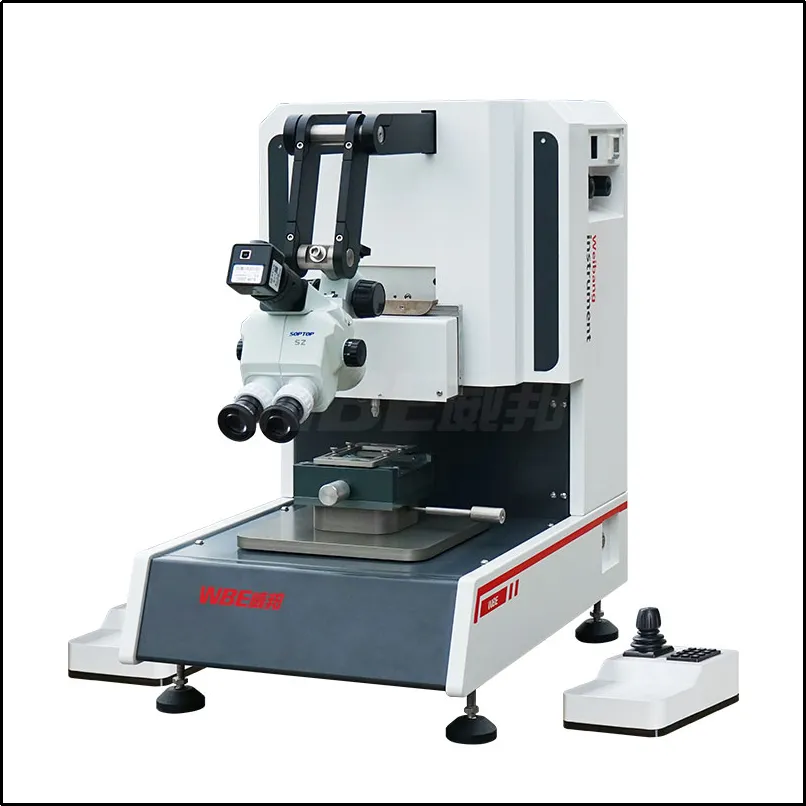
In the semiconductor and electronics industry, component reliability and connection integrity are critical. Devices such as connectors, cables, terminals, and microelectronic modules must withstand repeated mechanical stresses during manufacturing, assembly, and operational use. Push-pull Testing Machines play a vital role in evaluating the mechanical strength and durability of these components, helping manufacturers ensure quality, safety, and performance.
This article examines the applications of push-pull testing machines in semiconductor and electronic testing, highlighting their benefits and practical uses in quality control and R&D processes.
Importance of Mechanical Testing in Electronics
Electronic devices rely on connectors, terminals, and small mechanical components for proper function. Failure of these elements can result in:
- Signal loss or intermittent connections
- Component detachment during assembly or use
- Reduced device lifespan and reliability
Mechanical testing, including push-pull testing, provides a controlled method to assess the tensile and compressive strength of electronic components, ensuring they meet design specifications and industry standards.
How Push-Pull Testing Machines Work in Electronics
Push-pull testing machines operate by applying precise tensile (pull) or compressive (push) forces to components:
- Secure Clamping: The electronic component, connector, or cable is clamped into the fixture.
- Force Application: Motorized or hydraulic systems apply controlled pull or push forces along a specified axis.
- Force Measurement: Load cells record applied forces accurately in real time.
- Displacement Monitoring: Movement, elongation, or compression of the sample is monitored to detect failure points.
- Data Analysis: The software generates force-displacement curves and peak load values for evaluation.
This process ensures repeatable and reliable testing for a wide range of semiconductor and electronic components.
Applications in Semiconductor and Electronic Testing
1. Connector Testing
Push-pull testing evaluates insertion and extraction forces of wire-to-board, wire-to-wire, and board-to-board connectors. This ensures that connectors can withstand repeated mating and unmating cycles without mechanical failure.
2. Terminal and Cable Testing
Electrical terminals and cables are subjected to tensile stress to verify durability and prevent disconnection during operational use. Push-pull testing provides accurate measurements of pull-out force, confirming compliance with design specifications.
3. Microelectronic Component Evaluation
Components such as chip carriers, IC sockets, and PCB-mounted connectors are tested for mechanical strength. Push-pull testing ensures these parts maintain structural integrity during assembly and operation.
4. Consumer Electronics
Devices like smartphones, laptops, and home appliances undergo push-pull testing to ensure connectors and assembly components endure repeated use and handling.
5. Semiconductor Module Testing
High-reliability semiconductor modules and electronic packages are tested under controlled tensile and compressive forces to verify mechanical stability and bonding integrity.
Benefits of Push-Pull Testing Machines in Electronics
- Accurate Force Measurement: Ensures connectors and terminals meet mechanical design specifications.
- Early Detection of Weakness: Identifies potential failures before components reach assembly or market.
- Compliance with Industry Standards: Helps meet IEC, UL, and automotive electronic component standards.
- Repeatable and Reliable Testing: Automated testing cycles reduce human error and provide consistent results.
- Versatile Applications: Can be used for connectors, terminals, cables, PCB-mounted components, and small mechanical assemblies.
By using push-pull testing machines, electronics manufacturers improve reliability, reduce product failures, and optimize quality control procedures.
Best Practices for Electronics Testing
- Use Appropriate Fixtures: Ensure clamps are compatible with the component size and type.
- Control Testing Speed: Simulate real-world mechanical stress with appropriate pull and push speeds.
- Regular Calibration: Maintain accurate force and displacement measurements.
- Analyze Data Carefully: Evaluate force-displacement curves to identify weak points or inconsistencies.
Following these best practices ensures meaningful and reliable testing results for semiconductor and electronic components.
About WBE Instrument Technology
Guangdong WBE Instrument Technology Co., Ltd. specializes in high-precision testing equipment for electronics, semiconductor, and industrial applications. WBE provides Push-Pull Testing Machines, Universal Testing Machines, Mechanical Testing Machines, and Environmental Test Chambers.
Serving industries including electronics, automotive, aerospace, and consumer devices, WBE delivers equipment that offers accurate force measurement, programmable cycles, and robust fixtures. These machines help manufacturers verify connector performance, improve reliability, and maintain consistent quality across all electronic products.
FAQ
Q1: What is a Push-Pull Testing Machine?
A Push-Pull Testing Machine applies controlled tensile (pull) or compressive (push) forces to components, measuring their mechanical strength and durability.
Q2: Why is push-pull testing important for electronics?
It ensures connectors, terminals, and cables can withstand repeated mechanical stresses, maintaining reliable electrical connections.
Q3: Which components are commonly tested using push-pull machines?
Connectors, terminals, cables, PCB-mounted components, and microelectronic modules.
Q4: How do push-pull testing machines improve quality control?
They detect mechanical weaknesses early, provide accurate data for compliance with standards, and ensure consistent product reliability.
Q5: Can push-pull testing machines be used for semiconductor modules?
Yes, they are used to evaluate the mechanical stability and bonding integrity of high-reliability semiconductor and electronic modules.