


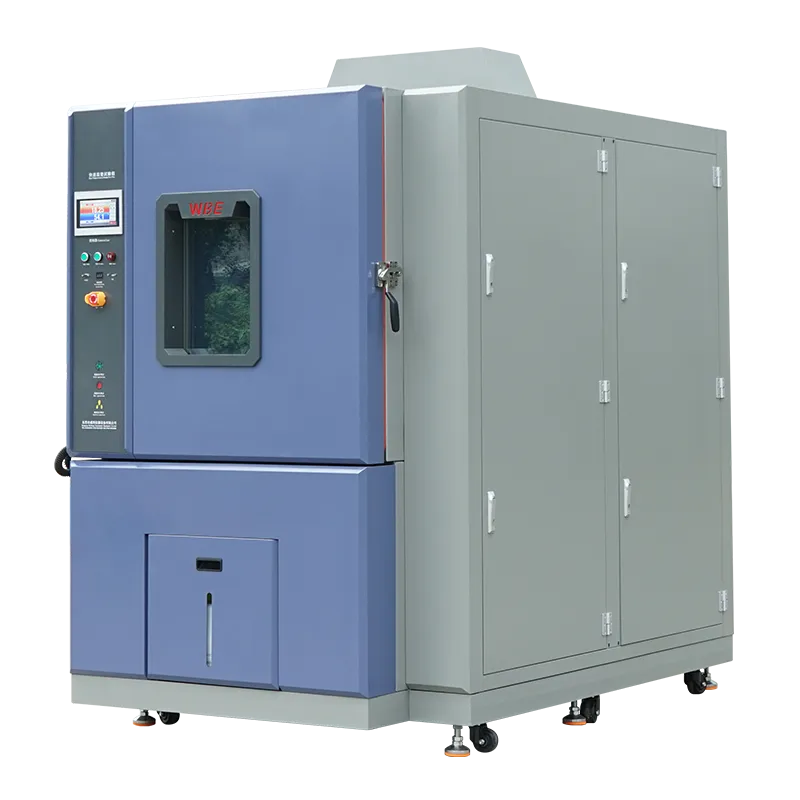
Rapid Rate Temperature Exchange Chamber: A Practical Guide for Reliability Testing
In modern product development, reliability testing has become a critical step for industries facing harsh operating environments and strict quality standards. As electronic components, automotive systems, and industrial devices become more compact and complex, they are increasingly sensitive to rapid temperature fluctuations.
A Rapid Rate Temperature Exchange Chamber is specifically designed to simulate extreme temperature transitions in a short time, enabling engineers to evaluate thermal stress, material fatigue, and potential failure mechanisms more efficiently than with conventional testing equipment.
This article explains what a Rapid Rate Temperature Exchange Chamber is, how it differs from standard temperature chambers, and why high temperature change rates play a vital role in reliability testing across multiple industries.
1. What Is a Rapid Rate Temperature Exchange Chamber?
A Rapid Rate Temperature Exchange Chamber is an advanced environmental testing system capable of achieving very high temperature ramp rates, often ranging from 5 °C/min up to 20 °C/min or more, depending on configuration. Unlike traditional chambers that gradually heat or cool the entire test space, this type of chamber focuses on fast and controlled temperature transitions.
1.1 Basic Working Principle
The core function of a Rapid Rate Temperature Exchange Chamber is to expose test samples to alternating high and low temperatures within a short period. This is typically achieved through:
- High-performance heating systems
- Powerful refrigeration units
- Optimized airflow and thermal circulation design
By rapidly exchanging thermal energy, the chamber can create severe thermal shock–like conditions while maintaining precise temperature control.
1.2 Typical Temperature Profiles
In a standard test cycle, the chamber may:
- Ramp from ambient temperature to a high setpoint (e.g., +125 °C)
- Stabilize briefly for thermal equilibrium
- Rapidly cool to a low setpoint (e.g., −40 °C)
- Repeat the cycle for multiple iterations
These rapid transitions allow engineers to identify weaknesses such as cracking, delamination, solder joint failure, or seal degradation.
1.3 Key Design Characteristics
Compared with conventional equipment, a Rapid Rate Temperature Exchange Chamber features:
- Enhanced insulation to minimize thermal loss
- High-efficiency compressors and heat exchangers
- Advanced control algorithms for precise ramp rate regulation
These features ensure both speed and stability during extreme temperature changes.
2. Rapid Rate Temperature Exchange vs Standard Temperature Chambers
While both chamber types are used for environmental testing, their performance capabilities and application focus differ significantly.
2.1 Temperature Change Rate Comparison
The most obvious difference lies in the temperature ramp rate:
- Standard temperature chambers typically operate at 1–3 °C/min
- Rapid Rate Temperature Exchange Chambers achieve much faster transitions, often exceeding 10 °C/min
This capability makes rapid-rate chambers ideal for accelerated life testing and stress screening.
2.2 Test Efficiency and Time Savings
Because standard chambers require longer heating and cooling periods, test cycles can take several hours or even days to complete. In contrast, a Rapid Rate Temperature Exchange Chamber dramatically shortens testing time.
This time efficiency offers several advantages:
- Faster product development cycles
- Earlier detection of potential failures
- Reduced overall testing costs
For manufacturers operating under tight schedules, this difference is critical.
2.3 Stress Severity and Failure Detection
Standard temperature chambers are suitable for verifying product performance under stable conditions. However, they may not reveal failures caused by rapid thermal expansion and contraction.
A Rapid Rate Temperature Exchange Chamber introduces:
- Higher thermal stress gradients
- More realistic simulation of real-world conditions
- Improved ability to uncover latent defects
As a result, it is often used in reliability qualification and design validation testing.
2.4 Equipment Complexity and Investment
Rapid-rate chambers are technically more complex and typically require a higher initial investment. However, when evaluated over the long term, the benefits often outweigh the cost due to:
- Reduced test duration
- Lower risk of field failures
- Improved product reliability
For many industries, the return on investment is substantial.
Table: Rapid Rate vs Standard Temperature Chambers
|
Feature |
Rapid Rate Temperature Exchange Chamber |
Standard Temperature Chamber |
|
Temperature Change Rate |
High (≥5–20 °C/min) |
Low (1–3 °C/min) |
|
Test Cycle Duration |
Short |
Long |
|
Stress Severity |
High |
Moderate |
|
Failure Detection |
Early and comprehensive |
Limited to gradual effects |
|
Typical Applications |
Reliability, HALT, ESS |
Routine environmental testing |
3. Why High Temperature Change Rates Matter in Reliability Testing
High temperature change rates are not just a technical specification—they directly affect the quality and reliability of test results.
3.1 Accelerated Detection of Weak Points
Rapid temperature transitions create intense thermal stress on materials and interfaces. This stress accelerates failure mechanisms such as:
- Micro-cracking in plastic housings
- Solder joint fatigue in electronic assemblies
- Seal and gasket degradation
By using a Rapid Rate Temperature Exchange Chamber, manufacturers can identify these issues early in the development phase.
3.2 Simulation of Real Operating Conditions
Many products experience sudden temperature changes during actual use. Examples include:
- Automotive electronics exposed to engine heat and cold starts
- Aerospace components transitioning between ground and altitude conditions
- Outdoor electronic devices facing rapid weather changes
High ramp rates better replicate these real-world scenarios than slow, gradual testing.
3.3 Improved Product Reliability and Safety
Early identification of thermal weaknesses leads to design improvements and material optimization. This ultimately results in:
- Longer product lifespan
- Reduced warranty claims
- Enhanced user safety
In regulated industries, such as automotive and electronics, this level of reliability is often mandatory.
3.4 Compliance with Advanced Test Standards
Many modern reliability standards and internal corporate test protocols specify high temperature change rates. A Rapid Rate Temperature Exchange Chamber enables manufacturers to meet these requirements with confidence.
4. Typical Industries Using Rapid Rate Temperature Exchange Chambers
Due to their advanced performance, rapid-rate chambers are widely adopted across multiple sectors.
4.1 Electronics and Semiconductor Industry
Electronics manufacturers use rapid temperature exchange testing to evaluate:
- Printed circuit boards (PCBs)
- Semiconductor packaging
- Consumer electronics assemblies
Thermal stress screening helps prevent early-life failures in mass production.
4.2 Automotive and New Energy Vehicles
Automotive systems must operate reliably under extreme temperature variations. Applications include:
- Electronic control units (ECUs)
- Battery modules
- Sensors and connectors
A Rapid Rate Temperature Exchange Chamber plays a key role in validating durability and safety.
4.3 Aerospace and Defense
In aerospace environments, temperature fluctuations can be severe and unpredictable. Rapid thermal testing ensures components maintain performance under extreme conditions.
4.4 Industrial Equipment and Materials
Industrial manufacturers use rapid-rate chambers to test materials, seals, and assemblies that face repeated thermal cycling during operation.
5. Why Manufacturers Choose WBE for Rapid Temperature Exchange Solutions
As a professional testing instrument manufacturer, Guangdong WBE Instrument Technology Co., Ltd. (WBE) has extensive experience in designing and producing advanced environmental testing equipment, including Rapid Rate Temperature Exchange Chambers.
WBE’s solutions align closely with the critical requirements discussed in this article:
- High and stable temperature change rates
- Precise control and repeatability
- Customization for non-standard test conditions
- Compliance with CE, RoHS, and other international standards
With modern manufacturing facilities exceeding 12,000 square meters and in-house machining and sheet metal production centers, WBE provides integrated services from system design to final delivery. Standard models can be delivered within 15–20 days, supporting efficient project execution.
Supported by ISO9001 and ISO14001 certified quality management systems and an expanding global service network, WBE continues to help customers worldwide achieve reliable and efficient thermal testing.
Conclusion
A Rapid Rate Temperature Exchange Chamber is an essential tool for modern reliability testing, offering faster test cycles, higher stress severity, and earlier detection of potential failures compared to standard temperature chambers. High temperature change rates are critical for simulating real-world conditions and improving product durability across industries.
By choosing a capable and experienced manufacturer like WBE, companies can ensure their testing systems meet demanding performance requirements while supporting long-term product quality and reliability.