


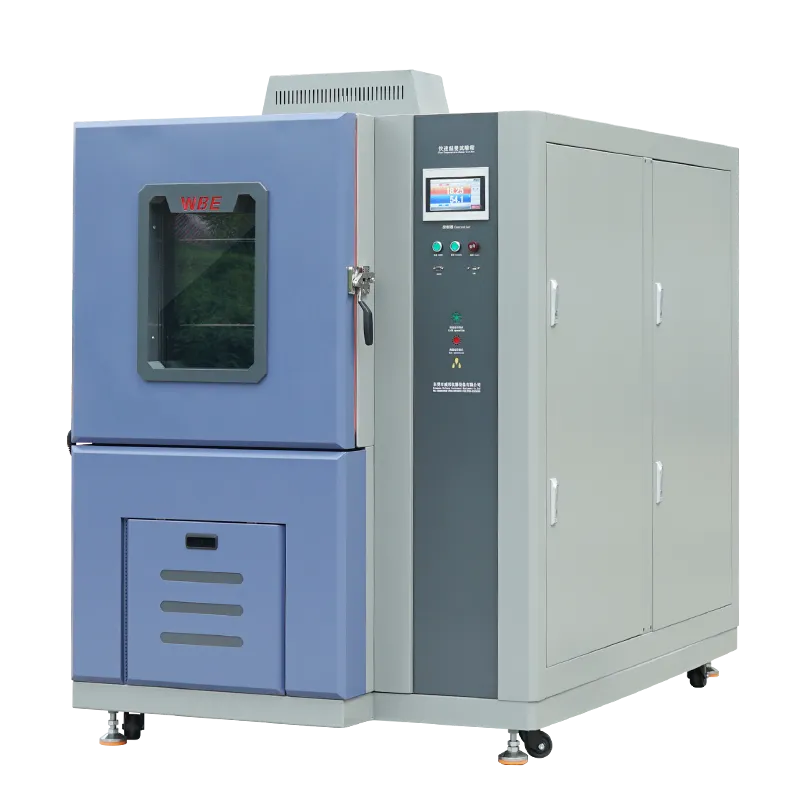
Energy Storage Systems (ESS), including lithium-ion batteries, supercapacitors, and hybrid energy modules, are critical in modern energy, automotive, and industrial applications. The reliability and performance of these systems under extreme environmental conditions directly impact operational safety and lifespan. One of the most effective solutions for evaluating ESS components under stress is the Rapid Rate Temperature Exchange Chamber (RTE Chamber).
RTE Chambers allow manufacturers and research labs to simulate sudden and extreme temperature changes in a controlled environment, providing insight into how ESS modules respond to thermal stress. This article explores the applications, benefits, and maintenance considerations of Rapid Rate Temperature Exchange Chambers for ESS testing.
Why ESS Testing Requires Rapid Temperature Changes
Energy Storage Systems often operate in environments with fluctuating temperatures. Batteries installed in electric vehicles, renewable energy storage, or industrial machinery can experience rapid heating or cooling during operation. If not properly tested, these conditions may result in:
- Thermal runaway in lithium-ion batteries
- Reduced energy efficiency
- Shortened service life
- Component deformation or structural failures
Traditional environmental testing methods, which involve gradual temperature changes, cannot accurately replicate these sudden temperature fluctuations. Rapid Rate Temperature Exchange Chambers address this gap by enabling swift thermal transitions, ensuring realistic testing conditions for ESS components.
Key Features of Rapid Rate Temperature Exchange Chambers
RTE Chambers are specifically designed for rapid temperature transitions while maintaining precision and uniformity. Key features include:
1. Fast Temperature Transition
RTE Chambers can achieve extremely fast heating and cooling rates, sometimes exceeding 10°C per minute, which replicates real-world ESS thermal conditions. This rapid exchange is crucial for stress testing and safety verification.
2. High Temperature Uniformity
Uniform airflow and thermal distribution ensure all components in the chamber experience consistent conditions. This prevents localized overheating and ensures reliable test data.
3. Precise Temperature Control
Advanced control systems allow operators to program complex thermal cycles and set specific temperature ramp-up and ramp-down rates. This precision ensures accurate simulation of real-life ESS operating conditions.
4. Integration with Data Monitoring
Modern RTE Chambers include real-time monitoring systems to record temperature, voltage, and other ESS parameters during testing. This helps engineers analyze performance trends and identify potential failures.
Applications of RTE Chambers in ESS Testing
RTE Chambers are widely used in multiple stages of ESS testing:
1. Battery Module Stress Testing
Battery modules can experience rapid temperature variations during charging, discharging, or operation under extreme climates. RTE Chambers simulate these scenarios to evaluate thermal performance and reliability.
2. Thermal Runaway Prevention
Lithium-ion batteries are susceptible to thermal runaway. By using RTE Chambers to reproduce rapid thermal events, engineers can test protective measures and improve battery safety designs.
3. Component Qualification
RTE Chambers are used to test individual ESS components, such as cells, modules, and thermal management systems. This ensures each component meets industry standards for temperature resistance.
4. Automotive and Renewable Energy Applications
Electric vehicles and renewable energy storage systems require rigorous ESS testing under thermal stress. RTE Chambers replicate real-world temperature swings, verifying system reliability and longevity.
Benefits of Using Rapid Rate Temperature Exchange Chambers
RTE Chambers offer several advantages for ESS testing applications:
Enhanced Safety Testing
Simulating rapid temperature changes allows engineers to identify risks like thermal runaway or material failure before deployment, improving overall safety.
Accelerated Reliability Evaluation
Rapid temperature cycling condenses years of thermal stress into a shorter testing period, allowing faster assessment of ESS durability.
Accurate Simulation of Real-World Conditions
Fast, precise temperature transitions replicate the actual operating conditions of ESS systems more accurately than conventional environmental chambers.
Data-Driven Design Optimization
RTE Chambers provide real-time monitoring and data logging, enabling engineers to analyze performance metrics and optimize battery design for safety and efficiency.
Key Considerations When Selecting an RTE Chamber for ESS Testing
Selecting the right Rapid Rate Temperature Exchange Chamber is critical for obtaining reliable test results. Factors to consider include:
Temperature Transition Rate
Ensure the chamber can achieve sufficient ramp-up and ramp-down speeds to simulate real ESS conditions.
Chamber Size and Load Capacity
The chamber must accommodate the size and quantity of ESS modules to be tested while maintaining uniform environmental conditions.
Control System Accuracy
Advanced programmable controllers allow precise setting of temperature cycles, which is essential for replicable and accurate testing.
Reliability and Maintenance
Choose chambers from manufacturers with proven reliability, low maintenance requirements, and strong technical support.
Maintenance Tips for RTE Chambers
To ensure consistent performance and accurate testing, regular maintenance is required:
- Clean the chamber interior and airflow systems to prevent dust buildup
- Inspect sensors, refrigeration, and heating components regularly
- Verify calibration of temperature sensors periodically
- Monitor and maintain coolant and compressor systems as recommended
Following these practices ensures that the chamber remains accurate and reliable for long-term ESS testing.
About WBE Instrument Technology
Guangdong WBE Instrument Technology Co., Ltd. is a leading manufacturer of environmental and mechanical testing equipment. Since 1995, WBE has specialized in providing advanced solutions for industries such as semiconductors, automotive electronics, renewable energy, and research laboratories.
WBE offers a comprehensive range of testing equipment, including Rapid Rate Temperature Exchange Chambers, Environmental Test Chambers, Thermal Shock Test Chambers, and Universal Testing Machines. With precise control systems, reliable performance, and customizable solutions, WBE helps customers ensure accurate testing results and improved product reliability in critical applications.
FAQ
Q1: What is a Rapid Rate Temperature Exchange Chamber?
An RTE Chamber is a testing device that rapidly changes temperature to simulate extreme thermal conditions for evaluating component reliability.
Q2: Why are RTE Chambers important for ESS testing?
They replicate sudden temperature fluctuations experienced by batteries and energy storage systems, enabling accurate reliability and safety testing.
Q3: What is the typical temperature change rate of an RTE Chamber?
Many RTE Chambers can achieve temperature ramp-up and ramp-down rates exceeding 10°C per minute, depending on model specifications.
Q4: Can RTE Chambers be used for battery safety testing?
Yes, they are widely used to simulate thermal stress, prevent thermal runaway, and validate safety mechanisms in ESS systems.
Q5: How should RTE Chambers be maintained for optimal performance?
Regular cleaning, sensor calibration, and inspection of refrigeration and heating components ensure accurate testing and long-term reliability.