


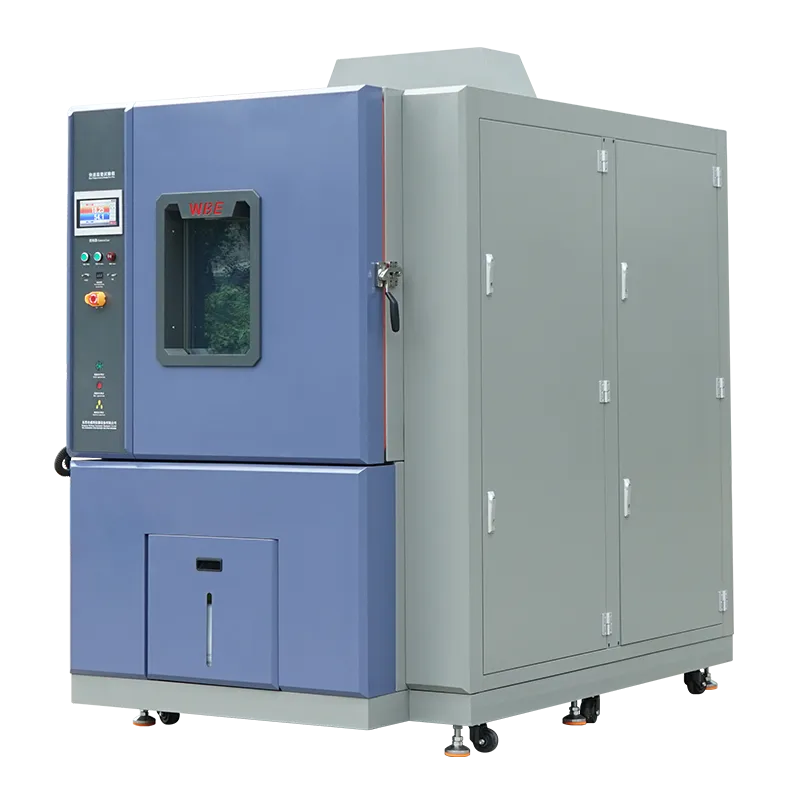
Environmental testing is critical for evaluating the reliability and durability of electronics, energy storage systems (ESS), semiconductors, and automotive components. Two commonly used testing devices are the Rapid Rate Temperature Exchange (RTE) Chamber and the Temperature Cycling Chamber (TCC). While both simulate temperature fluctuations, they have distinct characteristics, advantages, and ideal applications.
This article explores the differences between RTE Chambers and TCCs, helping engineers and testing professionals choose the right solution for their environmental testing needs.
Overview of RTE Chambers
Rapid Rate Temperature Exchange Chambers are designed to simulate sudden and extreme temperature changes. They are particularly effective for testing components that experience rapid thermal stress, such as lithium-ion batteries, ESS modules, and sensitive electronic parts.
Key features include:
- High-speed temperature transitions, often exceeding 10°C per minute
- Precise temperature control for accurate simulation
- Uniform airflow for consistent environmental conditions
- Real-time monitoring of temperature and testing data
RTE Chambers are ideal for applications where rapid temperature change can trigger thermal stress, fatigue, or safety risks. For example, they are widely used in ESS testing to simulate charging, discharging, and sudden environmental shifts that could lead to thermal runaway or material degradation.
Overview of Temperature Cycling Chambers
Temperature Cycling Chambers, also known as TCCs, focus on repetitive heating and cooling cycles over extended periods. They are commonly used to assess long-term product reliability and detect weaknesses caused by thermal expansion and contraction.
Key features include:
- Moderate ramp-up and ramp-down rates
- Long-term cycling capability for extended reliability tests
- Uniform temperature distribution to ensure consistent testing
- Programmable cycles for automated testing sequences
TCCs are ideal for evaluating the durability and structural integrity of components under repeated thermal stress, such as solder joints, semiconductor packages, and circuit boards.
Key Differences Between RTE Chambers and TCCs
|
Feature |
Rapid Rate Temperature Exchange Chamber |
Temperature Cycling Chamber |
|
Temperature Change Rate |
Extremely fast (e.g., 10°C/min or higher) |
Moderate, controlled ramp rates |
|
Purpose |
Simulates sudden thermal shock for safety and stress testing |
Evaluates long-term reliability through repeated thermal cycling |
|
Typical Applications |
ESS modules, lithium-ion batteries, electronics under sudden environmental changes |
Semiconductors, PCBs, connectors, solder joint fatigue |
|
Test Duration |
Short-term tests simulating rapid events |
Long-term testing for multiple cycles over hours or days |
|
Focus |
Thermal shock and immediate stress response |
Fatigue, expansion/contraction, and durability |
By understanding these differences, engineers can select the appropriate testing chamber based on the component type, test goals, and operational requirements.
Applications of Both Chamber Types in Electronics and ESS Testing
RTE Chambers
- Energy Storage Systems: Simulate rapid charging/discharging temperature changes
- Battery Safety Testing: Prevent thermal runaway and detect material vulnerabilities
- High-Speed Electronics: Test components under sudden thermal stress to verify stability
TCCs
- Semiconductor Package Reliability: Evaluate solder joint durability under repeated thermal expansion
- Automotive Electronics: Assess long-term component performance under cyclic environmental stress
- Connector and PCB Testing: Detect fatigue and structural failures due to thermal cycling
In many cases, laboratories and manufacturers use both RTE Chambers and TCCs to gain comprehensive insights into product reliability. Short-term RTE tests can identify immediate thermal risks, while TCCs assess long-term durability under repetitive stress.
Advantages of Using Both Testing Methods
- Comprehensive Reliability Assessment: Combining RTE and TCC testing provides a full picture of component performance under extreme and cyclic conditions.
- Enhanced Safety: Rapid temperature tests can reveal potential hazards like thermal runaway or material breakdown.
- Accelerated Product Development: Early detection of weaknesses reduces design iterations and speeds up time-to-market.
- Compliance with Industry Standards: Both chamber types help meet rigorous testing standards in automotive, aerospace, electronics, and ESS industries.
Tips for Selecting the Right Chamber
- Define Testing Objectives: Determine whether the priority is rapid thermal stress testing or long-term durability evaluation.
- Consider Component Size: Ensure the chamber can accommodate the dimensions and quantity of test samples.
- Check Temperature Control Precision: Accuracy is critical, especially for sensitive electronics and batteries.
- Review Technical Support and Maintenance Requirements: Choose a manufacturer with reliable service and proven performance.
About WBE Instrument Technology
Guangdong WBE Instrument Technology Co., Ltd. specializes in manufacturing environmental and mechanical testing equipment since 1995. WBE provides advanced testing solutions including Rapid Rate Temperature Exchange Chambers, Temperature Cycling Chambers, Environmental Test Chambers, Thermal Shock Test Chambers, and Universal Testing Machines.
With extensive experience in industries such as semiconductors, ESS systems, automotive electronics, and aerospace, WBE helps engineers achieve precise environmental simulation, improve product reliability, and optimize safety standards.
FAQ
Q1: What is the main difference between RTE Chambers and TCCs?
RTE Chambers focus on rapid temperature changes for thermal shock testing, while TCCs are used for long-term reliability testing through repeated temperature cycles.
Q2: Can RTE Chambers be used for battery safety testing?
Yes, they are widely used to simulate sudden thermal events and evaluate ESS module safety.
Q3: Are TCCs suitable for solder joint testing?
Yes, TCCs assess solder joint durability under repeated thermal expansion and contraction cycles.
Q4: Can laboratories use both chambers together?
Absolutely. Combining RTE and TCC testing provides a comprehensive evaluation of both short-term and long-term component reliability.
Q5: How should these chambers be maintained?
Regular cleaning, sensor calibration, and inspection of refrigeration and heating components are essential to maintain accuracy and reliability.