


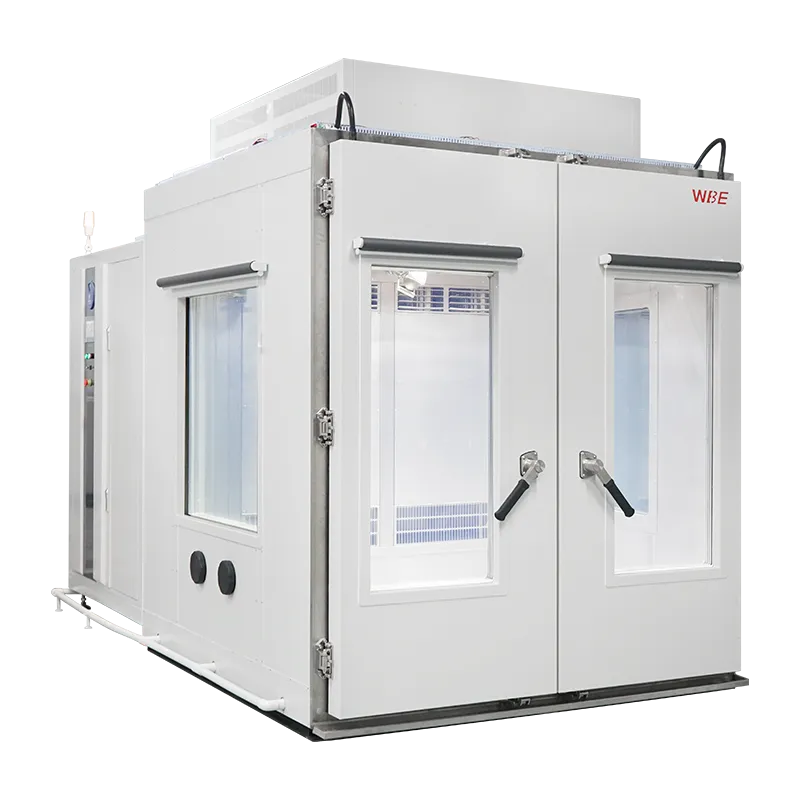
In modern industrial and research applications, testing large products and complex systems under controlled environmental conditions is crucial. From automotive components and aerospace modules to large electronic assemblies, accurate environmental simulation ensures product reliability and safety. Walk-in Environmental Chambers are the ideal solution for such applications, providing spacious, customizable testing environments that accommodate bulky items while maintaining precise temperature, humidity, and environmental control.
This article explores the design, benefits, and practical applications of Walk-in Environmental Chambers for large product and system testing.
Why Walk-in Chambers Are Essential for Large Product Testing
Traditional benchtop environmental chambers are limited in size and cannot accommodate full-scale products or systems. Walk-in chambers, on the other hand, offer several advantages:
- Spacious Interiors: Capable of testing full-size vehicles, industrial equipment, or large electronic assemblies
- Customizable Environmental Conditions: Temperature, humidity, and thermal cycling can be precisely controlled for complex test scenarios
- Ease of Access: Technicians can walk into the chamber to set up, monitor, and adjust testing procedures
Walk-in Environmental Chambers are widely used in automotive, aerospace, electronics, and industrial manufacturing sectors. They ensure that large-scale products meet operational and reliability standards before being deployed in the field.
Key Features of Walk-in Environmental Chambers
1. Large Testing Space
Walk-in chambers are designed to accommodate products or systems that cannot fit in standard environmental chambers. They are available in various sizes, from small walk-in rooms to full-scale industrial units capable of holding entire vehicles or machinery.
2. Flexible Environmental Control
These chambers allow precise regulation of temperature, humidity, and air circulation. Advanced controllers enable programmable cycles, simulating realistic operational environments for long-term testing.
3. Robust Construction
Walk-in chambers are engineered with durable materials, insulated walls, and high-performance doors to maintain stable environmental conditions. This ensures safety and energy efficiency during extended testing periods.
4. Safety and Monitoring Systems
Equipped with alarms, emergency stops, and data monitoring systems, walk-in chambers provide safe working conditions for both personnel and test products.
Applications of Walk-in Environmental Chambers
Walk-in Environmental Chambers are particularly valuable for industries requiring testing of large-scale or integrated systems.
1. Automotive Component Testing
Walk-in chambers can accommodate full vehicles or large automotive components, such as engines and control systems. Simulating extreme temperatures and humidity helps verify the reliability and durability of automotive products.
2. Aerospace and Defense Systems
Large aerospace modules, electronic control systems, and satellite components can be tested in walk-in chambers. This ensures they meet strict operational and safety standards under various environmental conditions.
3. Industrial Equipment Testing
Walk-in chambers are ideal for large industrial machinery, energy systems, and electrical cabinets. Temperature and humidity simulation help evaluate system performance and identify potential failures before deployment.
4. Electronics and ESS Testing
Energy storage systems, battery packs, and large electronic assemblies require consistent environmental testing to validate performance, thermal management, and long-term reliability. Walk-in chambers allow testing without disassembling complete systems.
Benefits of Using Walk-in Environmental Chambers
- Full-Scale Product Testing: Enables testing of large and integrated systems under realistic environmental conditions
- Enhanced Reliability Evaluation: Identifies weaknesses in design, materials, or thermal management early in the development stage
- Flexible Test Programming: Advanced controllers allow simulation of complex environmental cycles
- Cost-Effective Over Time: Reduces the need for repeated partial testing or dismantling of systems
Walk-in chambers provide accurate environmental control for both short-term stress testing and long-term reliability evaluation, making them indispensable for industries where safety and performance are critical.
Maintenance and Best Practices
Proper maintenance is essential for reliable operation of walk-in chambers:
- Regular Cleaning: Ensure chamber walls, airflow systems, and floor surfaces are clean to maintain temperature and humidity stability
- Sensor Calibration: Periodically calibrate temperature and humidity sensors to maintain accurate readings
- Inspection of Components: Check refrigeration, heaters, airflow fans, and insulation regularly for wear and damage
- System Monitoring: Utilize built-in data logging and alarms to detect anomalies early
Routine maintenance ensures consistent testing performance and extends the service life of the chamber.
About WBE Instrument Technology
Guangdong WBE Instrument Technology Co., Ltd. has been a leader in environmental and mechanical testing equipment since 1995. WBE specializes in Walk-in Environmental Chambers, Rapid Rate Temperature Exchange Chambers, Thermal Shock Test Chambers, Environmental Test Chambers, and Universal Testing Machines.
With decades of experience serving automotive, aerospace, electronics, and industrial sectors, WBE provides reliable and precise testing solutions for large-scale products and integrated systems. Customized chambers, advanced control systems, and professional technical support ensure accurate environmental simulation and improved product reliability.
FAQ
Q1: What is a Walk-in Environmental Chamber?
A Walk-in Environmental Chamber is a large testing enclosure that allows full-size products or systems to be tested under controlled temperature, humidity, and environmental conditions.
Q2: Which industries commonly use walk-in chambers?
Automotive, aerospace, electronics, energy storage, and industrial equipment sectors frequently use walk-in chambers for large-scale product testing.
Q3: Can a walk-in chamber simulate both temperature and humidity?
Yes, most walk-in chambers allow precise control of temperature and humidity, with programmable cycles for realistic environmental simulation.
Q4: How often should walk-in chambers be maintained?
Routine maintenance, including cleaning, sensor calibration, and inspection of mechanical components, should be performed according to usage and manufacturer recommendations.
Q5: What are the main advantages of walk-in chambers compared to standard chambers?
They allow full-scale product testing, provide flexible environmental control, enable complex test cycles, and help identify potential failures in large systems before deployment.