


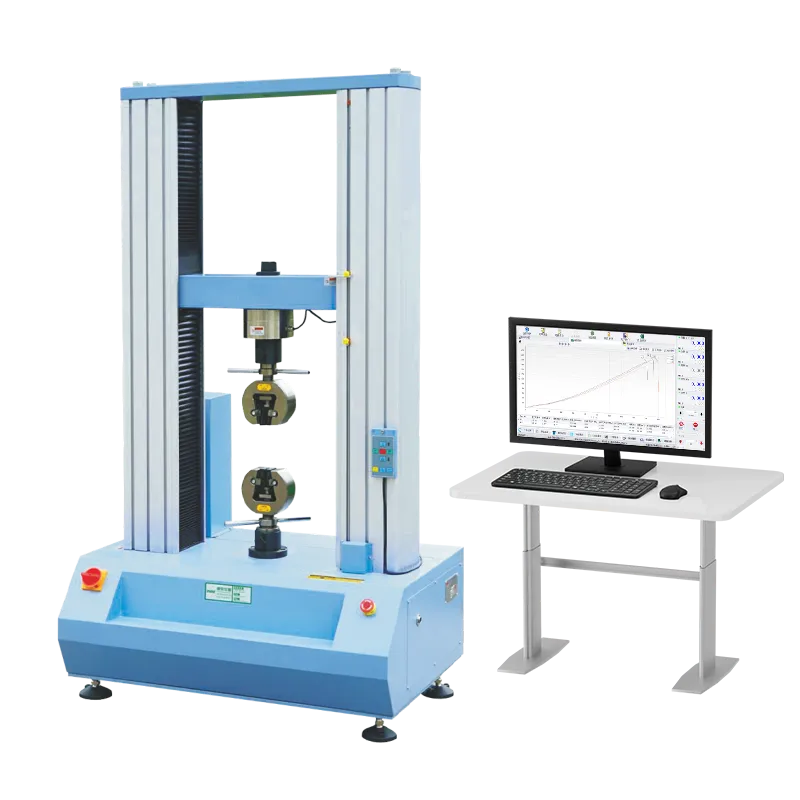
Universal Testing Machine Guide: Types, Working & Benefits
Introduction
In modern manufacturing, construction, research, and quality assurance industries, ensuring material reliability and mechanical performance is no longer optional—it is a necessity. From metals and plastics to rubber, textiles, and composite materials, every product must meet strict performance and safety standards. This is where the Universal Testing Machine plays a critical role.
A Universal Testing Machine (UTM) is a versatile mechanical testing system designed to evaluate the tensile, compressive, bending, shear, and peel properties of materials. It serves as the backbone of material quality control laboratories, enabling manufacturers and researchers to verify whether raw materials, components, and finished products comply with industry regulations and engineering specifications.
This article provides a comprehensive guide to the Universal Testing Machine, covering:
- What Is a Universal Testing Machine and How It Works
- Key Types of Universal Testing Machines: Single Column vs Double Column
- Why Universal Testing Machines Are Essential for Material Quality Control
By the end of this guide, you will clearly understand how to select, apply, and benefit from a Universal Testing Machine in both industrial and research environments.
1. What Is a Universal Testing Machine and How It Works
1.1 Definition of a Universal Testing Machine
A Universal Testing Machine is a mechanical testing device that applies controlled tensile or compressive forces to a test specimen while accurately measuring load, displacement, and deformation. The word universal reflects its ability to perform multiple types of mechanical tests using interchangeable fixtures and accessories.
A typical Universal Testing Machine can perform:
- Tensile tests
- Compression tests
- Flexural (bending) tests
- Shear tests
- Peel and adhesion tests
These tests allow engineers to evaluate fundamental material properties such as tensile strength, yield strength, elongation, modulus of elasticity, compressive strength, and bending resistance.
1.2 Core Components of a Universal Testing Machine
A standard Universal Testing Machine consists of the following main components:
- Load Frame:
The rigid mechanical structure that supports the applied forces and ensures stable testing conditions. - Drive System:
Usually driven by servo motors or hydraulic actuators, enabling precise speed and displacement control. - Load Cell:
Measures the applied force with high accuracy. - Crosshead:
Moves vertically to apply tension or compression to the specimen. - Grips and Fixtures:
Customized accessories used to securely hold various specimen shapes and materials. - Control and Data Acquisition System:
Software-based systems that control testing parameters and record data in real time.
1.3 Working Principle of a Universal Testing Machine
The working process of a Universal Testing Machine can be summarized in three main steps:
1. Specimen Preparation and Clamping
The test sample is prepared according to relevant standards (ASTM, ISO, DIN, JIS, etc.) and mounted into appropriate grips or fixtures.
2. Force Application and Data Collection
The machine applies controlled mechanical load—either tensile or compressive—while sensors continuously record force, displacement, and time.
3. Data Analysis and Evaluation
The collected data is processed to generate stress-strain curves and mechanical performance indicators, which determine whether the material meets required specifications.
This precise and repeatable testing process ensures reliable evaluation of material behavior under real-world conditions.
2. Key Types of Universal Testing Machines: Single Column vs Double Column
Universal Testing Machines are mainly classified by their structural design. The two most common configurations are single column and double column models. Each type is optimized for different load capacities, specimen sizes, and application scenarios.
2.1 Single Column Universal Testing Machine
Single column UTMs feature a compact structure with one vertical support column. They are typically used for low to medium load testing.
Key Characteristics:
- Load capacity: 500 N to 5 kN (some up to 10 kN)
- Compact footprint
- Lightweight frame
- Cost-effective solution
Typical Applications:
- Plastics testing
- Rubber and elastomers
- Thin films and foils
- Textile and yarn testing
- Medical materials
Advantages:
- Easy installation and operation
- Low energy consumption
- Ideal for laboratories and R&D centers
- Budget-friendly
Limitations:
- Limited load range
- Smaller test space
- Not suitable for heavy-duty materials
2.2 Double Column Universal Testing Machine
Double column UTMs feature two vertical columns providing superior rigidity and stability. They are designed for medium to high-load testing environments.
Key Characteristics:
- Load capacity: 10 kN to 2000 kN
- High structural rigidity
- Large test space
- Precision servo drive
Typical Applications:
- Metal testing
- Composite materials
- Construction materials
- Automotive components
- Aerospace parts
Advantages:
- High load capacity
- Excellent alignment accuracy
- Stable long-duration testing
- Wide testing versatility
Limitations:
- Higher investment cost
- Larger installation space required
2.3 Comparison Table: Single Column vs Double Column
|
Feature |
Single Column UTM |
Double Column UTM |
|
Load Capacity |
Low to medium |
Medium to ultra-high |
|
Structural Stability |
Moderate |
Excellent |
|
Testing Space |
Small |
Large |
|
Cost |
Low |
Medium to High |
|
Typical Use |
R&D labs, light materials |
Industrial QC, heavy materials |
3. Why Universal Testing Machines Are Essential for Material Quality Control
3.1 Ensuring Product Safety and Reliability
Every manufactured product must withstand mechanical stress during its service life. A Universal Testing Machine verifies whether materials meet required safety thresholds before they are approved for use.
Industries relying heavily on UTMs include:
- Automotive manufacturing
- Aerospace engineering
- Construction materials
- Electronics and connectors
- Medical devices
Failure to conduct mechanical testing can result in product failure, recalls, and safety hazards.
3.2 Supporting Compliance with International Standards
A Universal Testing Machine ensures compliance with widely recognized international standards such as:
- ASTM
- ISO
- DIN
- JIS
- GB
Compliance not only improves product credibility but also allows manufacturers to access global markets without regulatory barriers.
3.3 Improving Manufacturing Consistency
Through continuous testing, UTMs help identify variations in raw materials, production processes, and assembly procedures. This leads to:
- Reduced defect rates
- Improved production stability
- Lower material waste
- Better cost control
Over time, consistent testing data supports process optimization and predictive maintenance strategies.
3.4 Accelerating Product Development and Innovation
In R&D environments, a Universal Testing Machine enables engineers to:
- Evaluate new materials
- Test prototypes
- Compare design alternatives
- Optimize mechanical structures
By providing precise data, UTMs shorten development cycles and enhance product innovation.
3.5 Enhancing Supplier Qualification and Incoming Inspection
Manufacturers often use Universal Testing Machines for:
- Incoming material inspection
- Supplier quality audits
- Batch verification
This ensures stable supply chain quality and prevents defective materials from entering production lines.
4. Typical Applications Across Major Industries
4.1 Metals and Alloys
Used for:
- Tensile strength testing
- Yield point analysis
- Fatigue testing
- Compression testing
Industries: Automotive, aerospace, construction.
4.2 Plastics and Polymers
Used for:
- Tensile modulus
- Elongation
- Flexural strength
- Peel strength
Industries: Electronics, packaging, medical.
4.3 Rubber and Elastomers
Used for:
- Tensile strength
- Tear resistance
- Compression set
Industries: Automotive seals, hoses, vibration dampers.
4.4 Textiles and Fibers
Used for:
- Yarn strength
- Fabric tear resistance
- Seam strength
Industries: Apparel, technical textiles, industrial fabrics.
5. How to Choose the Right Universal Testing Machine
Selecting the appropriate Universal Testing Machine requires careful evaluation of several technical parameters:
5.1 Load Capacity
Always select a machine with at least 20–30% higher capacity than your maximum test load to ensure safety and accuracy.
5.2 Test Speed and Control Precision
Servo-driven UTMs provide superior speed stability and precise displacement control, essential for advanced materials testing.
5.3 Software and Data Management
Advanced control software allows:
- Automated testing
- Data analysis
- Report generation
- Cloud data storage
This improves efficiency and traceability.
5.4 Fixture Compatibility
Ensure that the machine supports a wide range of grips and accessories to accommodate different materials and test standards.
6. Future Trends in Universal Testing Machine Technology
The next generation of Universal Testing Machines is evolving toward:
- Intelligent automation
- AI-driven data analysis
- Cloud-based data management
- Industry 4.0 connectivity
- Energy-efficient drive systems
These advancements further strengthen the role of UTMs as core quality control instruments in smart manufacturing.
Conclusion
The Universal Testing Machine stands as a cornerstone of modern material testing and quality assurance. By delivering precise, repeatable, and standardized mechanical data, it ensures that materials and products meet stringent safety, performance, and compliance requirements.
Whether used in research laboratories, manufacturing plants, or inspection centers, a well-selected Universal Testing Machine enhances product reliability, accelerates innovation, and strengthens market competitiveness. As manufacturing continues to advance toward automation and intelligence, the role of UTMs will only become more critical in shaping the future of quality-driven production.