
Environmental Test Chambers Explained: Types, Uses, and Benefits
This is a classic production-line problem. While the design is sound, minor variations in components and manufacturing processes (like soldering or potting) can introduce hidden weaknesses that standard functional tests won't catch. How do you find these ticking time bombs before they leave the factory? The solution is a targeted production screen: the Rapid Rate Temperature Exchange Chamber.
The Solution: Forcing Weaknesses to the Surface with ESS
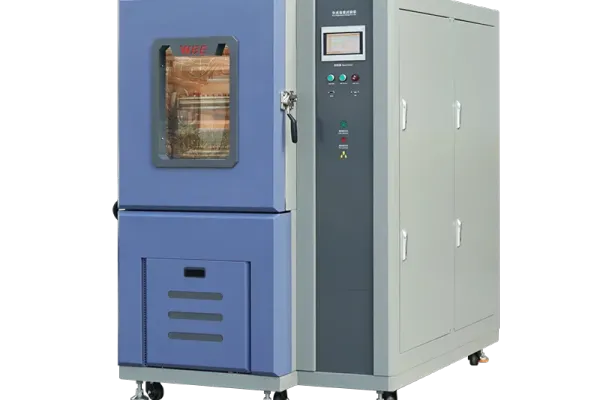
A Rapid Rate Temperature Exchange Chamber, also known as an Environmental Stress Screening (ESS) chamber, is an aggressive testing tool designed for one purpose: to precipitate latent defects into patent, detectable failures.
Unlike a standard temperature chamber that slowly cycles air temperature, an ESS chamber uses a powerful combination of high-capacity heaters, robust refrigeration systems, and high-volume fans to blast the product with rapidly changing air temperatures.
-
The Mechanism of Action: The high-velocity airflow is key. It strips away the insulating thermal boundary layer that surrounds a product, forcing the components themselves—not just the air—to change temperature at an extreme rate (typically 10°C to 30°C per minute).
-
The Result: This rapid expansion and contraction puts immense stress on solder joints, wire bonds, and component connections. A perfect solder joint will withstand this stress. A joint that is "good enough" to pass a functional test but has a microscopic void or crack will fail, allowing you to identify and remove the faulty unit from production.
This process of Environmental Stress Screening is a proven method for dramatically improving the out-of-box quality and long-term reliability of electronic assemblies.
Key Applications Beyond Production Screening
While ESS is its primary application, a rapid rate chamber is also a powerful engineering tool for:
-
HALT/HASS Testing: In Highly Accelerated Life Testing (HALT) and Highly Accelerated Stress Screening (HASS), engineers use the chamber to push products far beyond their specified operational limits to quickly discover the weakest links in the design.
-
Design Margin Discovery: By understanding how much thermal stress a product can take before it fails, engineers can improve the design's robustness.
-
Component Screening: It can be used to weed out weak batches of components from suppliers before they are integrated into a final product.
WBE: The Power and Precision for Advanced Stress Testing
Executing an effective ESS program requires a chamber that is not only powerful but exceptionally reliable. These machines undergo immense stress themselves and must provide consistent performance day after day on the production floor.
Since 1995, WBE has specialized in manufacturing high-end testing instruments built for durability and precision. From our 12,000+ square meter factory in Dongguan, we leverage our status as a National High-Tech Enterprise to engineer some of the most stable and powerful ESS chambers on the market. Our strong non-standard customization capabilities