
Related Products
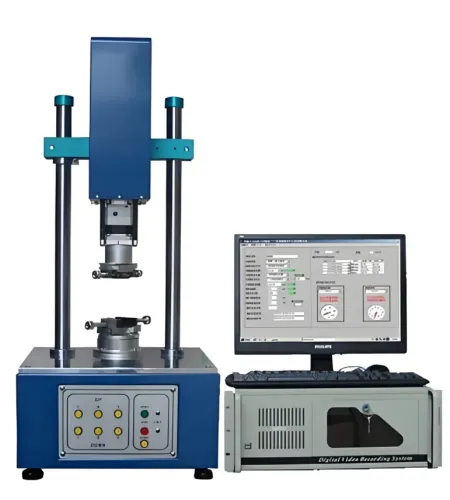
More items about mechanical testing machine

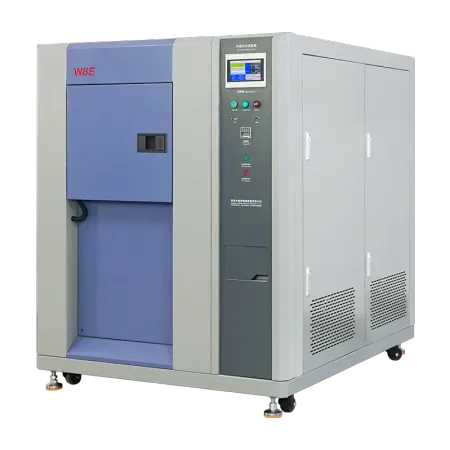
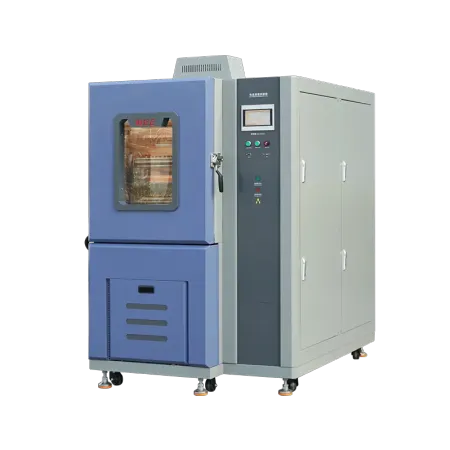
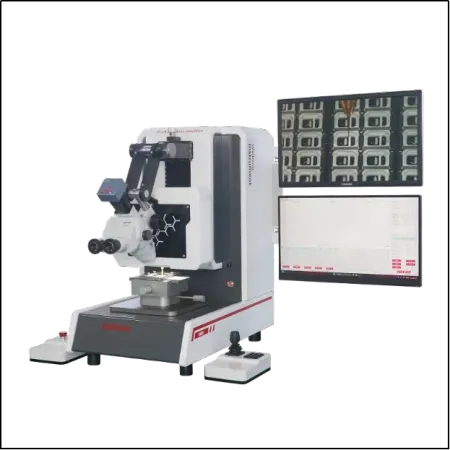
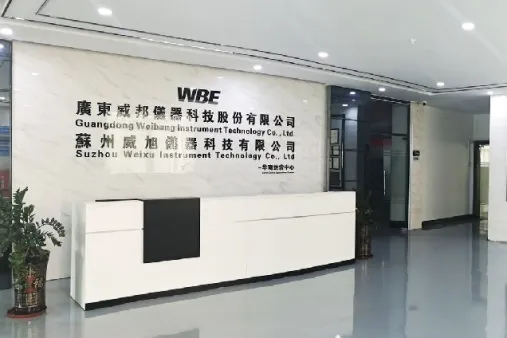
We Have The Best Solutions for Your Business
Originated From
Guangdong WBE Instrument Technology Co., Ltd., abbreviated as WBE, was founded in 1995 and is headquartered in Dongguan, Guangdong Hong Kong Macao Greater Bay Area. It is a high-end testing instrument manufacturer. The company currently has over 12000 square meters of modern independent factories to meet various non-standard customized production needs, and has established five marketing service centers in Beijing, Chongqing, Xi'an, Suzhou, Dongguan and other places across the country, aiming to provide customers with more convenient and efficient services. Our products include various weather resistant environmental testing chambers, large-scale non-standard environmental testing chambers, chip packaging push-pull testing machines, and comprehensive mechanical and environmental non-standard testing machines.
Beyond Stretch: The Nuanced Science of a Mechanical Testing Machine for Rubber
In the world of materials, rubber and elastomers are in a class of their own. Their ability to undergo large, reversible deformations is what makes them indispensable, but it also makes them notoriously difficult to characterize accurately. Using a simple mechanical testing machine for rubber designed for metals or rigid plastics is a recipe for misleading data. From my experience in polymer science, I've learned that obtaining meaningful data on rubber requires an instrument that acts as a sensitive probe of its time-dependent and large-strain behavior. A true mechanical testing machine for rubber must be engineered to deconstruct this complexity, providing insights that go far beyond a simple tensile strength value and into the very heart of how an elastomer will perform under long-term load or dynamic fatigue.
The critical distinction lies in control, measurement, and tooling. A high-quality mechanical testing machine for rubber offers exquisitely precise control over test speed, as the apparent stiffness (modulus) and strength of rubber are highly dependent on strain rate. Furthermore, accurately capturing the large, often non-recoverable deformations requires advanced, non-contact strain measurement. While contact extensometers can slip or indent soft samples, a modern mechanical testing machine for rubber should utilize video extensometers that track gauge marks without physical contact. The grips are equally important; specialized roller or pneumatic grips are essential to prevent premature failure at the jaws, which is a common pitfall in rubber testing.
Ultimately, the value of a mechanical testing machine for rubber is realized when its data directly informs successful product design and manufacturing. Will your rubber seal maintain compression over years of service? Will your elastomeric component resist tearing under cyclic load? These are not questions answered by a single-point test. A WBE mechanical testing machine for rubber, coupled with the right tooling and environmental control (as rubber properties are also temperature-sensitive), provides the platform to answer them. It empowers you to select the right polymer grade, optimize curing parameters, and predict product lifespan with confidence. Investing in a system designed for the nuances of elastomers is an investment in reducing failure, controlling costs, and innovating with certainty in a world reliant on the unique properties of rubber.
User Reviews
What users say about WBE
Frequently Asked Question
Do you have any question?
Rubber is highly extensible and viscoelastic, meaning its properties depend on the speed of testing. A standard mechanical testing machine for rubber may lack the precise, low-speed control needed for accurate modulus measurement, the travel distance for high elongation, and non-contact strain measurement to avoid slippage on the specimen surface.
A comprehensive mechanical testing machine for rubber is used for tensile tests (for modulus, tensile strength, and ultimate elongation), tear strength tests (e.g., Die C, Trouser Tear), compression set tests, and stress relaxation tests. These are essential for predicting performance in sealing and damping applications.
Critical. Contact extensometers can slip or damage soft rubber samples. A sophisticated mechanical testing machine for rubber should be compatible with non-contact video extensometers or laser extensometers that accurately track gauge marks without influencing the test, especially for measuring modulus at low strains.
Key features include: a wide range of precisely controllable speeds to study rate-dependence, low-force load cells for accurate measurement of soft compounds, a long crosshead travel to accommodate high elongation (often 1000%+), and software capable of analyzing complex stress-strain curves and calculating parameters like M100, M300.
Yes, a versatile mechanical testing machine for rubber from WBE can be configured with different load cells and grips to test a vast range of materials, from soft, highly extensible silicones and gels to harder, reinforced compounds like those used in tire treads.
We provide more than just the machine. Our experts offer application support to help you define test methods according to standards like ASTM D412, D624, and ISO 37, recommend the right grips (e.g., roller grips) to prevent slippage, and ensure your mechanical testing machine for rubber is optimized for your specific materials.
Our updates and blog posts
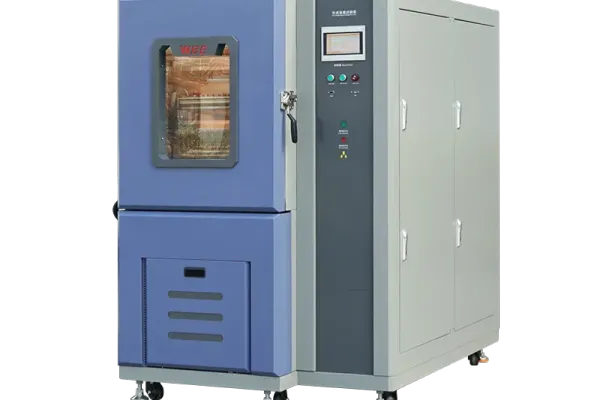
The Production Line Problem: Why Good Designs Still Suffer Early Failures
Explore the complete world of environmental testing. This guide covers the principles, applications, and selection criteria for various test chambers used to ensure product reliability.
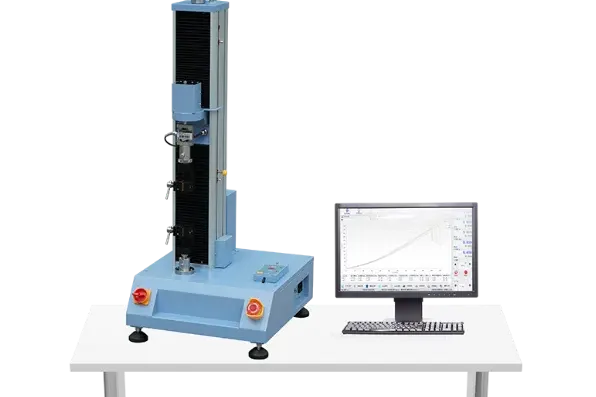
The Ultimate Guide to Environmental Test Chambers
Explore the complete world of environmental testing. This guide covers the principles, applications, and selection criteria for various test chambers used to ensure product reliability.
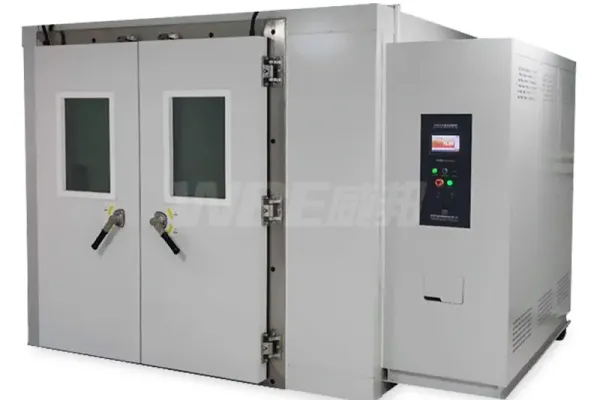
A Buyer's Guide to Specifying Walk-in Environmental Chambers
Planning to buy a walk-in test chamber? Our guide covers the critical decisions you'll need to make, offering a detailed comparison of construction types and design features.