
Related Products
More items about mechanical testing machine
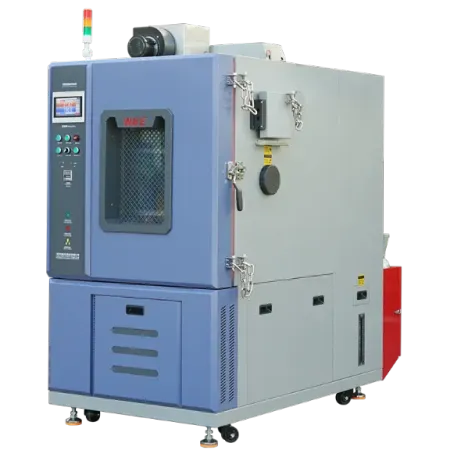
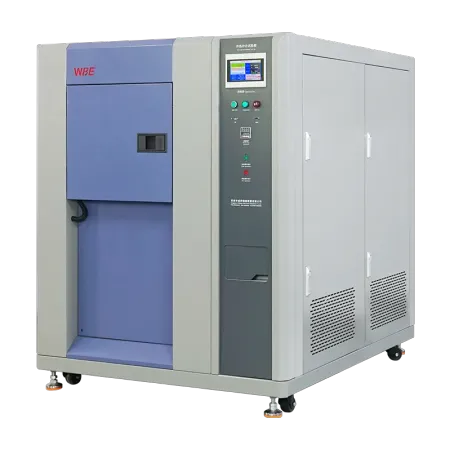
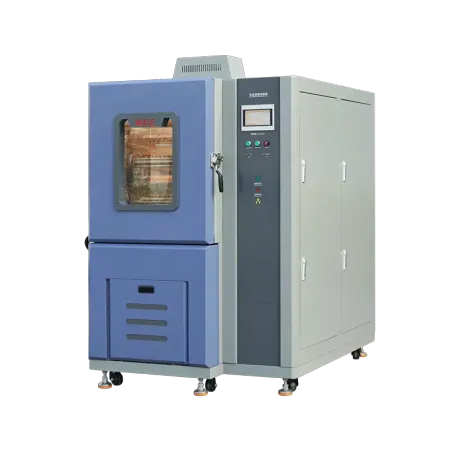
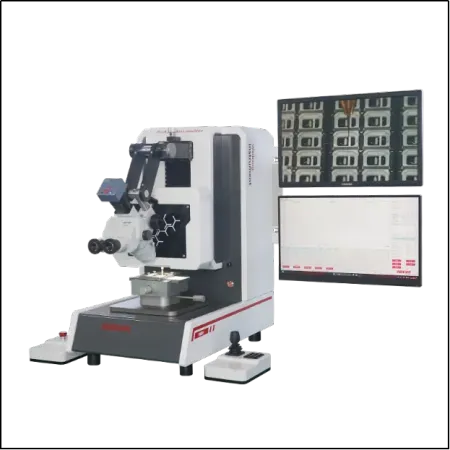
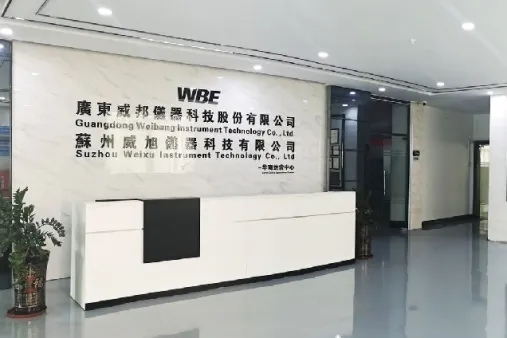
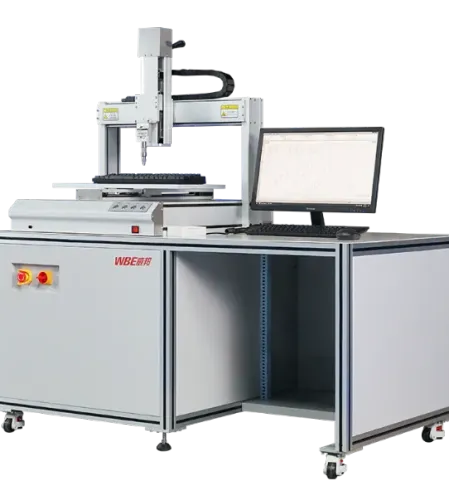
We Have The Best Solutions for Your Business
Originated From
Guangdong WBE Instrument Technology Co., Ltd., abbreviated as WBE, was founded in 1995 and is headquartered in Dongguan, Guangdong Hong Kong Macao Greater Bay Area. It is a high-end testing instrument manufacturer. The company currently has over 12000 square meters of modern independent factories to meet various non-standard customized production needs, and has established five marketing service centers in Beijing, Chongqing, Xi'an, Suzhou, Dongguan and other places across the country, aiming to provide customers with more convenient and efficient services. Our products include various weather resistant environmental testing chambers, large-scale non-standard environmental testing chambers, chip packaging push-pull testing machines, and comprehensive mechanical and environmental non-standard testing machines.
More Than Just Pulling: The Engineering Precision Behind the Mechanical Testing Machine Working Principle
To the uninitiated, a material test might look simple—a machine pulls on a sample until it breaks. However, having spent a career deep in the science of measurement, I can affirm that the reality is a masterpiece of precision engineering. The true mechanical testing machine working principle is a sophisticated dance of control, measurement, and data acquisition, all designed to answer one question with absolute certainty: how does this material respond to force? Understanding this mechanical testing machine working principle is not academic; it's the difference between trustworthy data that can be used to build a safer airplane and unreliable numbers that lead to costly failures.
The journey of a test begins with the command for the crosshead to move. In a modern electric machine, the mechanical testing machine working principle involves a servo controller sending a signal to a motor, which turns a precision ball screw. This converts rotary motion into the linear motion that pulls the specimen. This is where the first layer of the mechanical testing machine working principle comes into play: control. The system isn't just moving; it's maintaining a specific speed or following a complex load profile, ensuring the material is strained at a rate defined by the testing standard. As force develops, the specimen resists. This resistance is transferred through the grips and into the load cell. Here, the core of the mechanical testing machine working principle unfolds: metrology. The microscopic deformation of the load cell's internal strain gauges creates a voltage change proportional to the force, a relationship defined by Hooke's Law, which is the very foundation of the mechanical testing machine working principle.
Ultimately, the culmination of the mechanical testing machine working principle is the transformation of analog physical events into a digital narrative of material behavior. The controller samples the force and strain signals thousands of times per second, weaving them into the iconic stress-strain curve. This curve is the material's fingerprint, revealing its yield strength, ultimate tensile strength, and modulus of elasticity. Every aspect of the mechanical testing machine working principle, from the stiffness of the frame to the calibration of the sensors, is dedicated to ensuring this fingerprint is sharp and unambiguous. At WBE, we obsess over the integrity of this mechanical testing machine working principle because we know that the quality of your data dictates the quality of the products you build, the safety you ensure, and the innovations you bring to life.
User Reviews
What users say about WBE
Frequently Asked Question
Do you have any question?
The basic mechanical testing machine working principle is to grip a material specimen and apply a controlled, uniaxial force (tension or compression) using a moving crosshead. The machine simultaneously measures the applied force with a load cell and the specimen's deformation (strain) with an extensometer, plotting this data to create a stress-strain curve.
The key components executing the mechanical testing machine working principle are: 1) A rigid load frame to react against the applied force; 2) An actuator (electric motor or hydraulic cylinder) to move the crosshead; 3) A precision load cell to measure force; 4) A controller to manage the test; and 5) Grips to hold the specimen.
In the mechanical testing machine working principle, force is measured by a load cell, a transducer that converts force into an electrical signal. As force is applied, strain gauges inside the load cell deform, changing their electrical resistance, which is precisely measured and converted into a force reading (e.g., Newtons or pounds).
While crosshead position gives an approximate measure, the accurate mechanical testing machine working principle for strain measurement requires an extensometer. This device is clamped directly to the specimen and measures the actual elongation or compression within the gauge length, providing precise strain data for modulus calculation.
The controller is the "brain" of the mechanical testing machine working principle. It sends commands to the actuator to control the speed and direction of the crosshead, while simultaneously collecting analog data from the load cell and extensometer, digitizing it, and processing it into engineering units (stress and strain).
A rigid frame is fundamental to the mechanical testing machine working principle because it must not stretch or compress significantly under load. Any frame deflection (compliance) would be misinterpreted as specimen deformation, leading to highly inaccurate calculations of the material's modulus and strain.
Our updates and blog posts
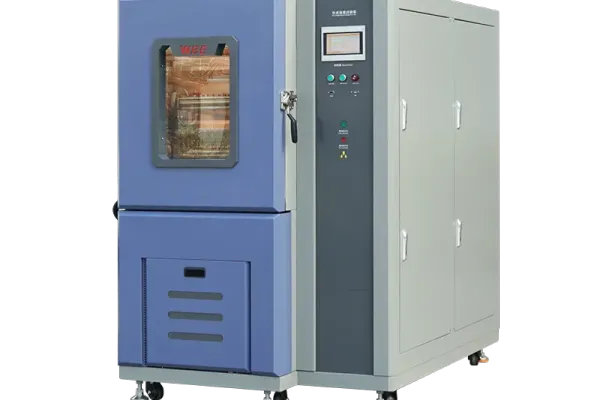
The Production Line Problem: Why Good Designs Still Suffer Early Failures
Explore the complete world of environmental testing. This guide covers the principles, applications, and selection criteria for various test chambers used to ensure product reliability.
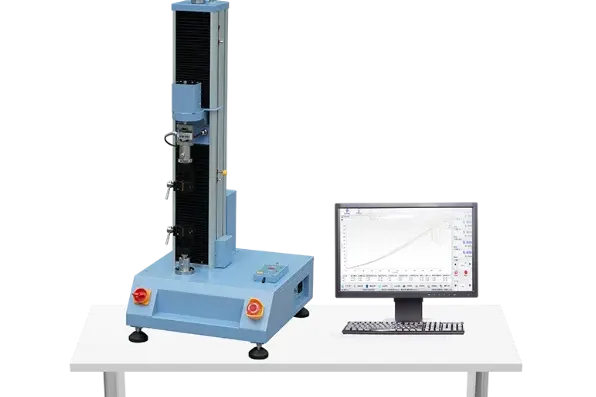
The Ultimate Guide to Environmental Test Chambers
Explore the complete world of environmental testing. This guide covers the principles, applications, and selection criteria for various test chambers used to ensure product reliability.
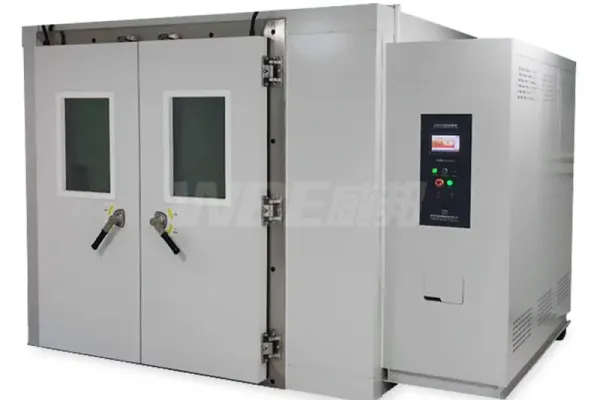
A Buyer's Guide to Specifying Walk-in Environmental Chambers
Planning to buy a walk-in test chamber? Our guide covers the critical decisions you'll need to make, offering a detailed comparison of construction types and design features.