
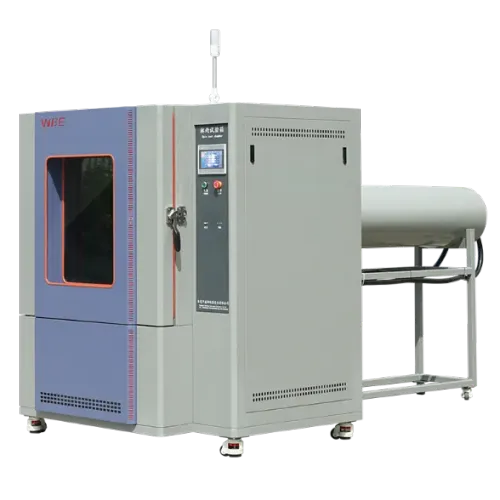
Features
Why Choose WBE?
We Have The Best Solutions for Your Business
Originated From
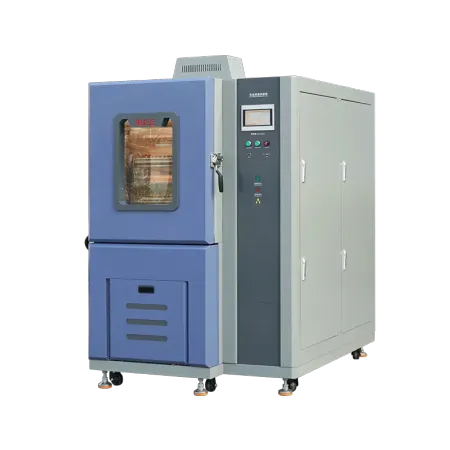
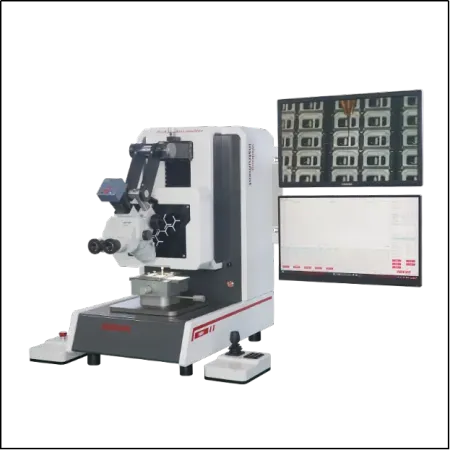
Guangdong WBE Instrument Technology Co., Ltd., abbreviated as WBE, was founded in 1995 and is headquartered in Dongguan, Guangdong Hong Kong Macao Greater Bay Area. It is a high-end testing instrument manufacturer. The company currently has over 12000 square meters of modern independent factories to meet various non-standard customized production needs, and has established five marketing service centers in Beijing, Chongqing, Xi'an, Suzhou, Dongguan and other places across the country, aiming to provide customers with more convenient and efficient services. Our products include various weather resistant environmental testing chambers, large-scale non-standard environmental testing chambers, chip packaging push-pull testing machines, and comprehensive mechanical and environmental non-standard testing machines.
In the landscape of industrial testing, the universal testing machine (UTM) stands as the undisputed cornerstone of the modern materials lab. Its value lies in its name: a single, robust platform capable of universally addressing the most fundamental questions about a material's character. How much can it stretch before it breaks? How much load can it bear before it deforms? How will it react to bending forces? WBE engineers its UTMs to be the definitive source for these answers, providing a powerful combination of versatility, precision, and reliability that empowers industries to innovate with confidence.
A buyer's journey for a universal testing machine often begins with a needs analysis. The primary consideration is the force capacity, which must be matched to the materials being tested. WBE offers a comprehensive range, from low-force benchtop models ideal for plastics and textiles to high-capacity floor models designed for high-strength metals and composites. The next consideration is the physical architecture—a compact single-column frame for flexibility and smaller samples, or a high-stiffness dual-column frame for maximum rigidity and accuracy in high-force tests. At WBE, every frame is precision-machined to minimize deflection, ensuring that the measured results reflect the properties of the material, not the machine itself.
The true versatility of a universal testing machine, however, is unlocked through its ecosystem of accessories. WBE provides an extensive selection of grips, fixtures, and extensometers. Whether a client needs wedge grips for tensile testing metals, compression platens for testing foams, or a three-point bend fixture for testing composites, we provide the tools to perform the test correctly and in accordance with international standards like ASTM and ISO. The machine's intelligence, our advanced control software, seamlessly integrates these components, allowing for easy test setup, real-time data analysis, and comprehensive reporting.
Ultimately, choosing a WBE universal testing machine is a decision to invest in a complete testing solution. It's a commitment to acquiring a tool that is not only capable of performing the tests you need today but is also adaptable enough to meet the challenges of tomorrow. From the rigidity of the frame to the intelligence of the software, every aspect of a WBE UTM is engineered to be a long-lasting, high-return asset for any organization dedicated to the principles of quality and material excellence.
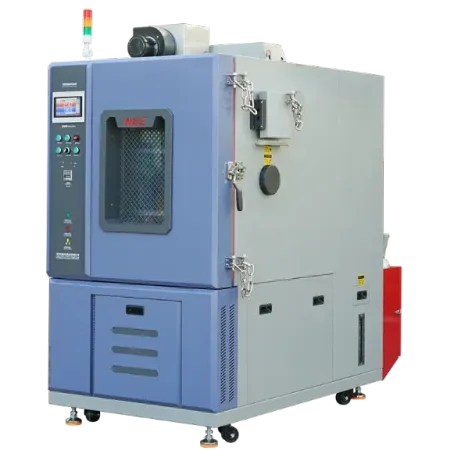
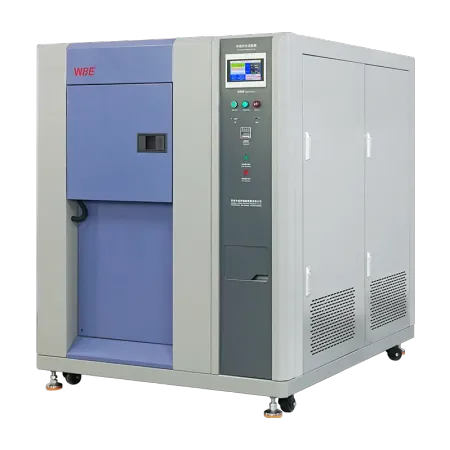
Featured Products
Collection about WBE
User Reviews
What users say about WBE
Frequently Asked Question
Do you have any question?
The term "universal" refers to the machine's ability to perform a wide variety of different mechanical tests on a single frame. A universal testing machine is not limited to just one type of test; it can be configured for tension, compression, bending, shearing, peeling, and other tests, making it a "universal" tool for mechanical material characterization.
The three primary tests performed by a universal testing machine are: Tensile testing, which pulls a sample apart to measure its strength and ductility; Compression testing, which squeezes a sample to determine its behavior under load; and Flexural testing, also known as a bend test, which measures a material's stiffness and bending strength.
To choose the right force capacity, you must know the maximum expected strength of the materials you will test. It is crucial to select a universal testing machine with a maximum force capacity that is comfortably above your strongest sample's breaking point. This ensures the machine is not overloaded and that the load cell operates in its most accurate range. WBE offers a wide range of capacities, from low-force tabletop models to high-force floor models.
Grips and fixtures are the components of a universal testing machine that hold the test specimen in place. Grips are typically used for tensile testing to clamp onto the ends of a sample. Fixtures, such as compression platens or bend fixtures, are used for compression and flexural tests. The proper selection of grips and fixtures is critical for achieving accurate test results.
The main difference is the design of the load frame. A single-column universal testing machine has one vertical column and is typically used for lower-force applications, such as testing plastics, textiles, or medical devices. A dual-column machine has two vertical columns, providing a more rigid frame that is necessary for higher-force testing of materials like metals and composites.
A WBE universal testing machine is a smart investment because it combines precision, durability, and versatility. Our machines are built with high-stiffness frames and high-accuracy sensors, as proven by clients who achieved 0.01mm precision. This leads to tangible results, such as the 35% reduction in reject rates reported by Guangzhou Auto Parts. With WBE, you are investing in reliable data and a quantifiable return on investment.
Our updates and blog posts
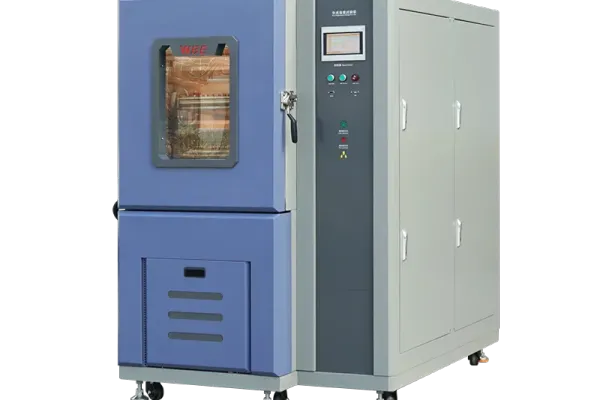
The Production Line Problem: Why Good Designs Still Suffer Early Failures
Explore the complete world of environmental testing. This guide covers the principles, applications, and selection criteria for various test chambers used to ensure product reliability.
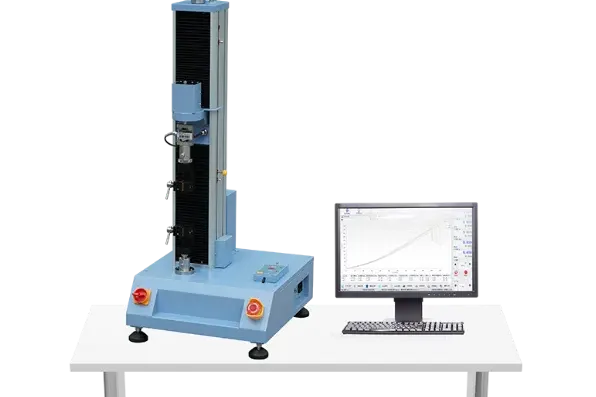
The Ultimate Guide to Environmental Test Chambers
Explore the complete world of environmental testing. This guide covers the principles, applications, and selection criteria for various test chambers used to ensure product reliability.
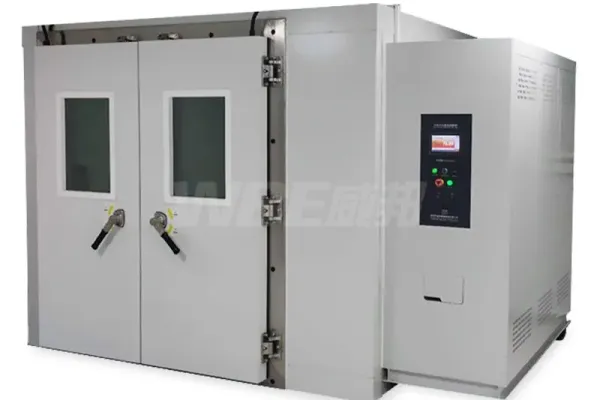
A Buyer's Guide to Specifying Walk-in Environmental Chambers
Planning to buy a walk-in test chamber? Our guide covers the critical decisions you'll need to make, offering a detailed comparison of construction types and design features.