
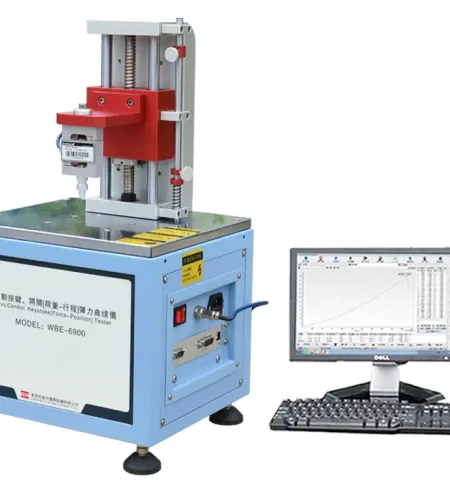
Related Products
More items about mechanical testing machine
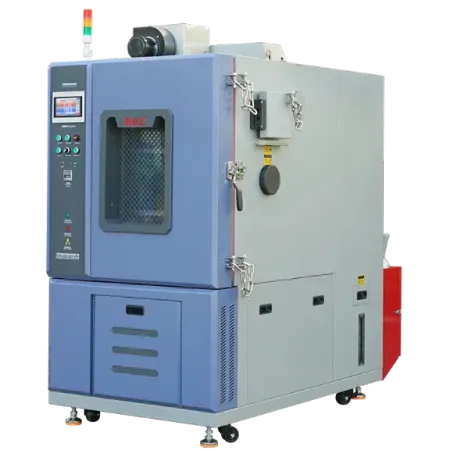
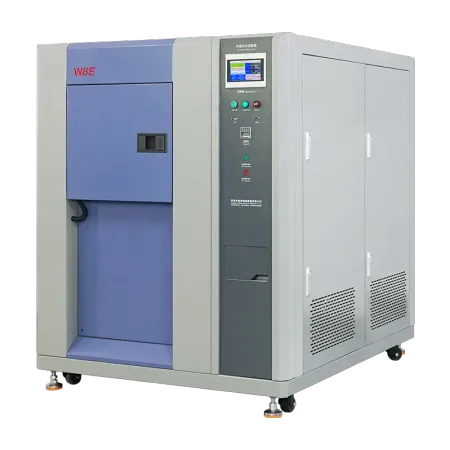
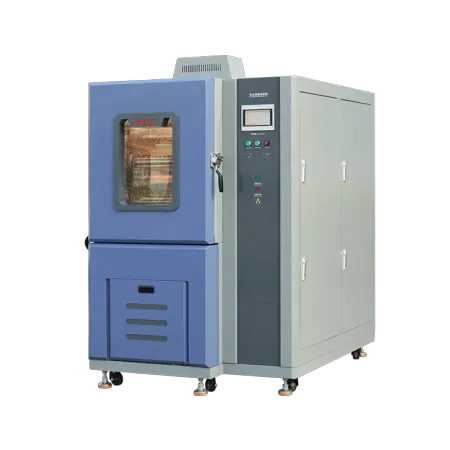
We Have The Best Solutions for Your Business
Originated From
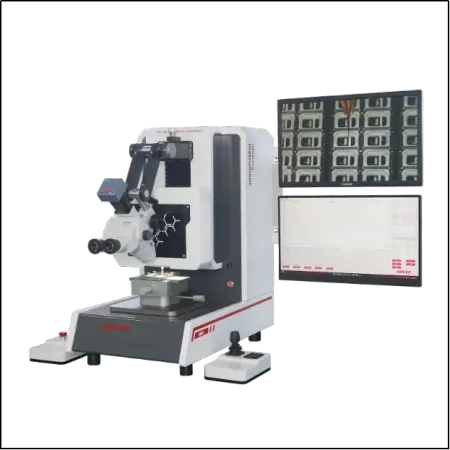
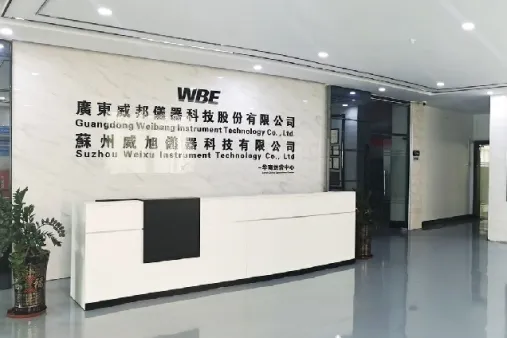
Guangdong WBE Instrument Technology Co., Ltd., abbreviated as WBE, was founded in 1995 and is headquartered in Dongguan, Guangdong Hong Kong Macao Greater Bay Area. It is a high-end testing instrument manufacturer. The company currently has over 12000 square meters of modern independent factories to meet various non-standard customized production needs, and has established five marketing service centers in Beijing, Chongqing, Xi'an, Suzhou, Dongguan and other places across the country, aiming to provide customers with more convenient and efficient services. Our products include various weather resistant environmental testing chambers, large-scale non-standard environmental testing chambers, chip packaging push-pull testing machines, and comprehensive mechanical and environmental non-standard testing machines.
The Precision Mandate: Why a Specialized Mechanical Testing Machine for Composites Testing is Non-Negotiable
The adoption of composite materials has revolutionized industries from aerospace to automotive, but this revolution is built on a foundation of data. The complex, layered, and often non-homogeneous nature of composites means that generating this data requires an instrument of exceptional capability. In my experience, attempting to use a general-purpose tester for these advanced materials is the most common source of costly and misleading results. A true mechanical testing machine for composites testing is not defined by its force capacity alone, but by its architectural stiffness, its control fidelity, and its compatibility with a suite of specialized tooling. This specialized mechanical testing machine for composites testing is the only tool that can reliably deconstruct the multi-directional strength of a laminate and provide the engineering insights needed for safe and innovative design.
The core challenge in composites testing is capturing the material's true behavior without the instrument itself influencing the results. A frame with insufficient stiffness acts like a spring, absorbing energy and leading to an underestimation of the material's modulus and an over-dramatization of its failure. This is why the foundation of a WBE mechanical testing machine for composites testing is a massively rigid load frame, designed to minimize compliance. Furthermore, the anisotropic nature of composites makes them highly sensitive to misalignment. Even minor angular or axial misalignment can induce bending stresses that invalidate a tensile test. Our mechanical testing machine for composites testing integrates precision-machined, self-aligning fixtures and couplings to ensure pure, uniaxial loading, which is paramount for generating the accurate stress-strain curves that form the basis of finite element analysis and structural simulation.
Ultimately, the value of a mechanical testing machine for composites testing is realized when its data drives confident decision-making. Whether you are qualifying a new material batch, validating a manufacturing process, or generating design-allowable data for a primary aircraft structure, the integrity of your test results is everything. A WBE mechanical testing machine for composites testing, paired with the correct fixtures and strain measurement, provides an unassailable foundation for this data. It empowers you to push the boundaries of lightweight design, ensure regulatory compliance, and deliver products that are both lighter and stronger. Investing in the right mechanical testing machine for composites testing is not merely a capital expense; it is a strategic commitment to leading the market through validated material performance.
User Reviews
What users say about WBE
Frequently Asked Question
Do you have any question?
Composites are very stiff and often fail in a brittle manner. A standard mechanical testing machine for composites testing may have too much system compliance (frame deflection, etc.), which can store energy and lead to inaccurate modulus calculations and uncontrolled, violent failures that damage the specimen and the fixtures. A high-stiffness frame is essential.
A comprehensive mechanical testing machine for composites testing is used for tensile, compression, and flexure (3-point and 4-point bend) tests. It can also be configured for shear tests (like ILSS), bearing tests, and fatigue testing, providing a full picture of the material's mechanical properties.
They are critically important. Improper gripping can induce premature failure at the tabs. A proper mechanical testing machine for composites testing requires specialized hydraulic or pneumatic wedge grips, anti-buckling fixtures for compression, and precisely aligned fixtures for shear testing to ensure the specimen fails in the gauge section, not at the grips.
Beyond ultimate strength, a mechanical testing machine for composites testing must accurately capture tensile and compressive modulus, Poisson's ratio, strain-to-failure, and inter-laminar shear strength (ILSS). This requires high-resolution load cells and, crucially, a high-quality extensometer or strain gauge system.
Absolutely. Our mechanical testing machine for composites testing models are available with high-load capacities to test the strongest carbon fiber composites. The key is the combination of a high-stiffness load frame and robust, well-aligned tooling to safely and accurately apply these high forces.
Yes. We provide extensive application support. Our engineers can help you select the right mechanical testing machine for composites testing, recommend the appropriate fixtures and strain measurement devices, and assist in developing test methods based on standards like ASTM D3039, D6641, and D7264.
Our updates and blog posts
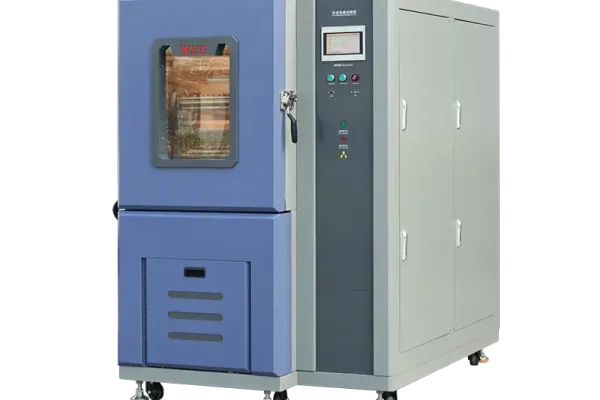
The Production Line Problem: Why Good Designs Still Suffer Early Failures
Explore the complete world of environmental testing. This guide covers the principles, applications, and selection criteria for various test chambers used to ensure product reliability.
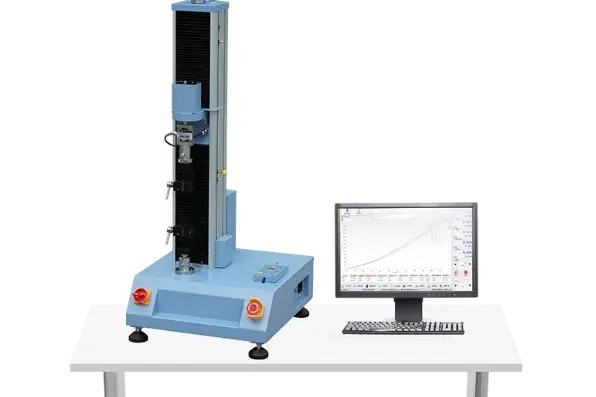
The Ultimate Guide to Environmental Test Chambers
Explore the complete world of environmental testing. This guide covers the principles, applications, and selection criteria for various test chambers used to ensure product reliability.
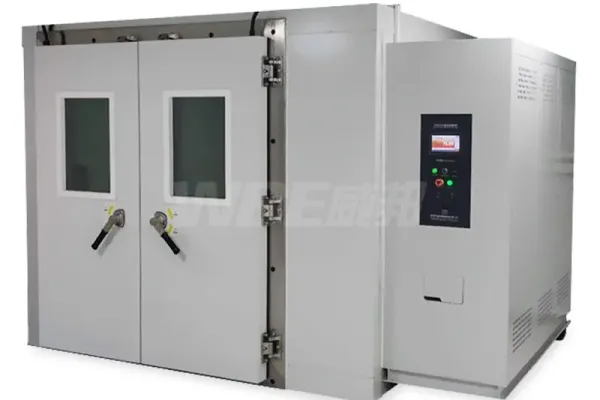
A Buyer's Guide to Specifying Walk-in Environmental Chambers
Planning to buy a walk-in test chamber? Our guide covers the critical decisions you'll need to make, offering a detailed comparison of construction types and design features.